Phoenix summers are not a test of preference, they are a test of survival. When outdoor temps exceed 115°F and your AC runs 10 to 14 hours a day, choosing between Trane and Lennox is not a branding exercise. It is a mechanical and financial decision that will affect your comfort, your electric bill, and your repair costs for the next 15 to 20 years. At Brewer's Air Conditioning and Heating, we have installed and serviced both brands across Tempe, Mesa, Scottsdale, Ahwatukee, and the broader Phoenix metro since 1982. Here is what we know from decades of real-world experience with Trane vs Lennox Phoenix homeowners face every cooling season.
Quick Takeaways
| Key Insight | Explanation |
|---|---|
| Trane prioritizes durability in extreme heat | Trane units are built with Climatuff compressors designed to handle continuous high-load operation, which is exactly what Phoenix summers demand. |
| Lennox leads in SEER2 efficiency ratings | Lennox's XC25 reaches up to 28 SEER2, the highest in the residential market, which translates to real savings on APS or SRP monthly bills. |
| Lennox requires more specialized service | Lennox's advanced electronics and variable-speed components need technicians with brand-specific training. Not every HVAC company in Phoenix is equipped for this. |
| Trane parts are more widely available in Arizona | During a summer heatwave, waiting days for a specialty part is dangerous. Trane's broader distribution network means faster repairs in the Phoenix metro. |
| Both brands offer strong warranties when registered | Trane and Lennox both offer up to 10-year parts warranties, but only if you register within 60 days of installation. Many homeowners miss this window. |
| Upfront cost differs significantly by tier | Entry-level units from both brands are competitive, but Lennox's premium tier costs 10 to 20 percent more upfront than comparable Trane units. |
| Your home's existing ductwork affects which brand performs better | Lennox variable-speed systems perform best in well-sealed, properly sized duct systems. Older Phoenix homes with leaky ducts often see better results from Trane's simpler two-stage systems. |
Why Brand Choice Matters More in Arizona Than Anywhere Else
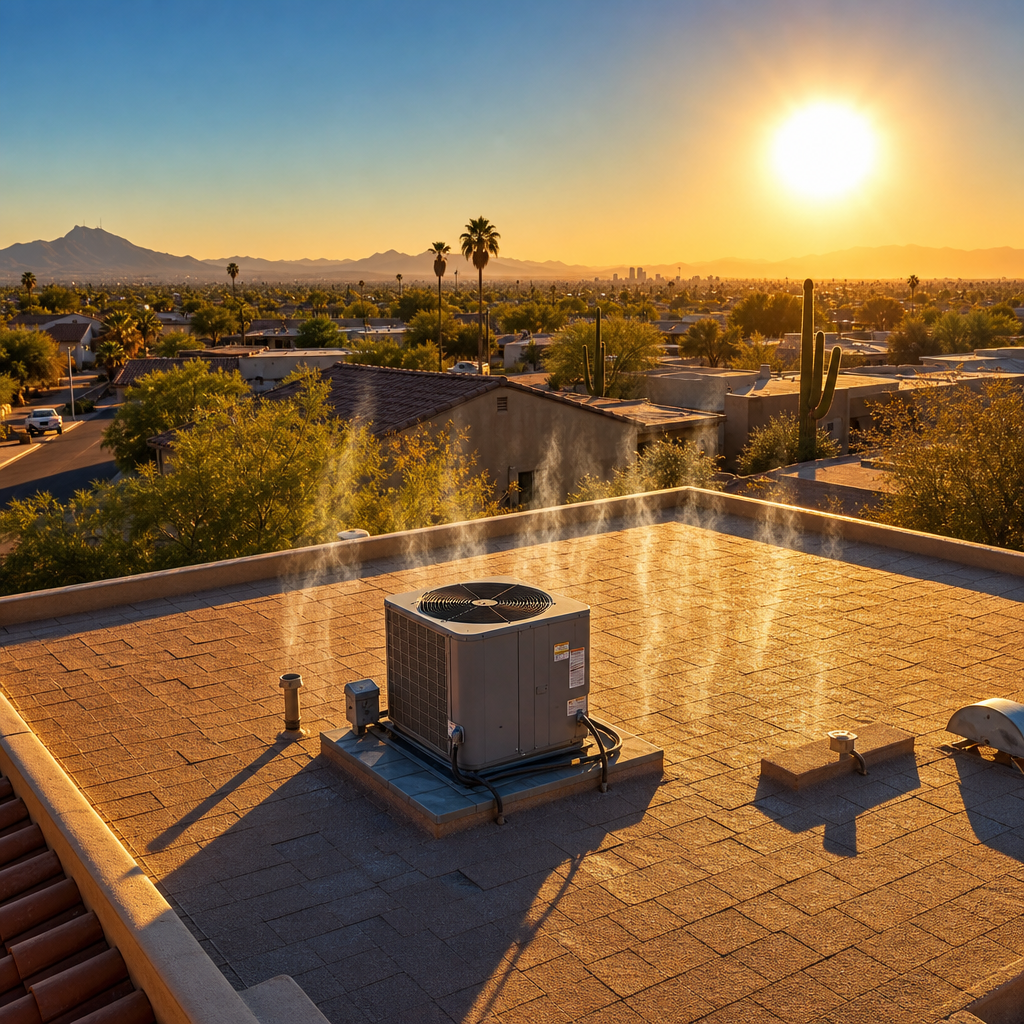
Most AC brand comparisons are written for climates that see moderate summers. Phoenix is not that climate. The average high in July exceeds 106°F, and the Valley of the Sun sees over 100 days per year above 100°F. That means your AC system is not running seasonally, it is running like a commercial unit being used in a residential application.
The stress this places on compressors, capacitors, and refrigerant lines is enormous. A unit rated for 15 years in Chicago may realistically last 12 years in Chandler or Gilbert if it was not designed for desert heat cycles. The brand you choose directly affects how that unit holds up under this kind of sustained thermal pressure.
In practice, we see failure patterns in Phoenix that simply do not show up in national brand reviews. Capacitor failures spike between June and August. Compressors that are borderline in cooler climates blow out completely here. These are not hypothetical risks. They are the service calls our technicians handle every summer across the east valley.
Trane AC: Built Tough, But at What Cost?
Trane has built its brand around one central claim: durability. Their marketing slogan, "It's Hard to Stop a Trane," is not just advertising copy. The engineering behind Trane units backs it up in ways that matter specifically for Arizona homeowners.
Trane's Climatuff Compressor and Spine Fin Coil
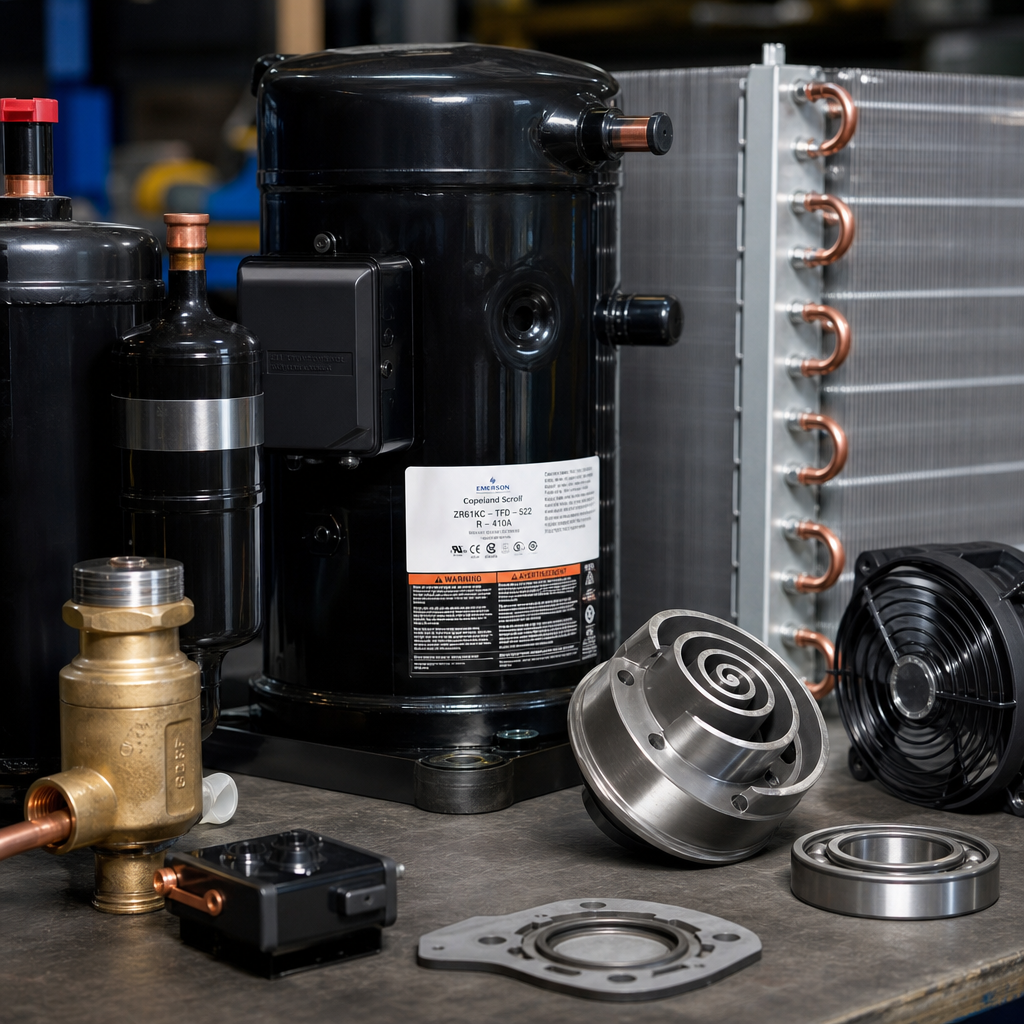
The two components that define Trane's performance in Phoenix are the Climatuff compressor and the Spine Fin coil. The Climatuff compressor is designed to operate under high ambient temperatures without the thermal shutdowns that plague lesser units. This matters when your outdoor unit is sitting in 115°F direct sun on a concrete pad in Tempe.
The Spine Fin coil increases surface area for heat transfer without requiring a larger physical footprint. In a Phoenix installation where clearance around the unit is often limited, this design advantage is practical, not theoretical.
Trane Product Lines Available in Phoenix
Trane's residential lineup in Arizona typically includes the XR series (single-stage, entry-level), the XL series (two-stage, mid-tier), and the XV series (variable-speed, premium). For most Phoenix homes, the XL series hits the best balance of durability and cost. The XV series is excellent but comes at a premium that requires a longer payback period to justify through energy savings.
A common mistake homeowners make is buying the entry-level XR series to save money upfront, then watching it cycle on and off excessively in 110°F heat because it lacks the staging capability to match load. Two-stage operation is worth the investment in Phoenix.
Pro tip: For Phoenix homes over 2,000 square feet, Trane's XL18i two-stage unit is one of the most reliable options we install. It handles peak summer loads without the complexity that makes high-end variable-speed systems harder to service quickly during a heatwave.
Lennox HVAC: High Efficiency, Higher Complexity
Lennox is the efficiency leader in residential HVAC. No other brand consistently pushes SEER2 ratings as high at the premium tier, and for Arizona homeowners with high electricity costs from APS or SRP, that efficiency has real dollar value.
Lennox's SunSource and Variable-Speed Technology
Lennox offers a unique SunSource solar-ready system that integrates with rooftop solar panels, which is directly relevant for Phoenix homeowners who already have or are considering solar. This integration can further reduce cooling costs during peak rate hours, which APS and SRP both charge aggressively.
Lennox's variable-speed compressor technology, found in their XC25 and XC21 lines, adjusts output in small increments rather than cycling fully on and off. This results in more consistent indoor temperatures and meaningfully lower humidity, which matters during Arizona's monsoon season from July through September.
The Service Complexity Trade-Off
The data consistently shows that Lennox systems require more technically skilled service than Trane units. Their iComfort smart thermostat ecosystem and inverter-driven compressors are sophisticated, but that sophistication means a general HVAC technician without Lennox-specific training may misdiagnose a fault code and replace the wrong component.
At Brewer's, our technicians are trained on both platforms. But if you are considering a Lennox installation, you need to verify that whoever you call for service in the future has the same capability. Not every Phoenix HVAC company does.
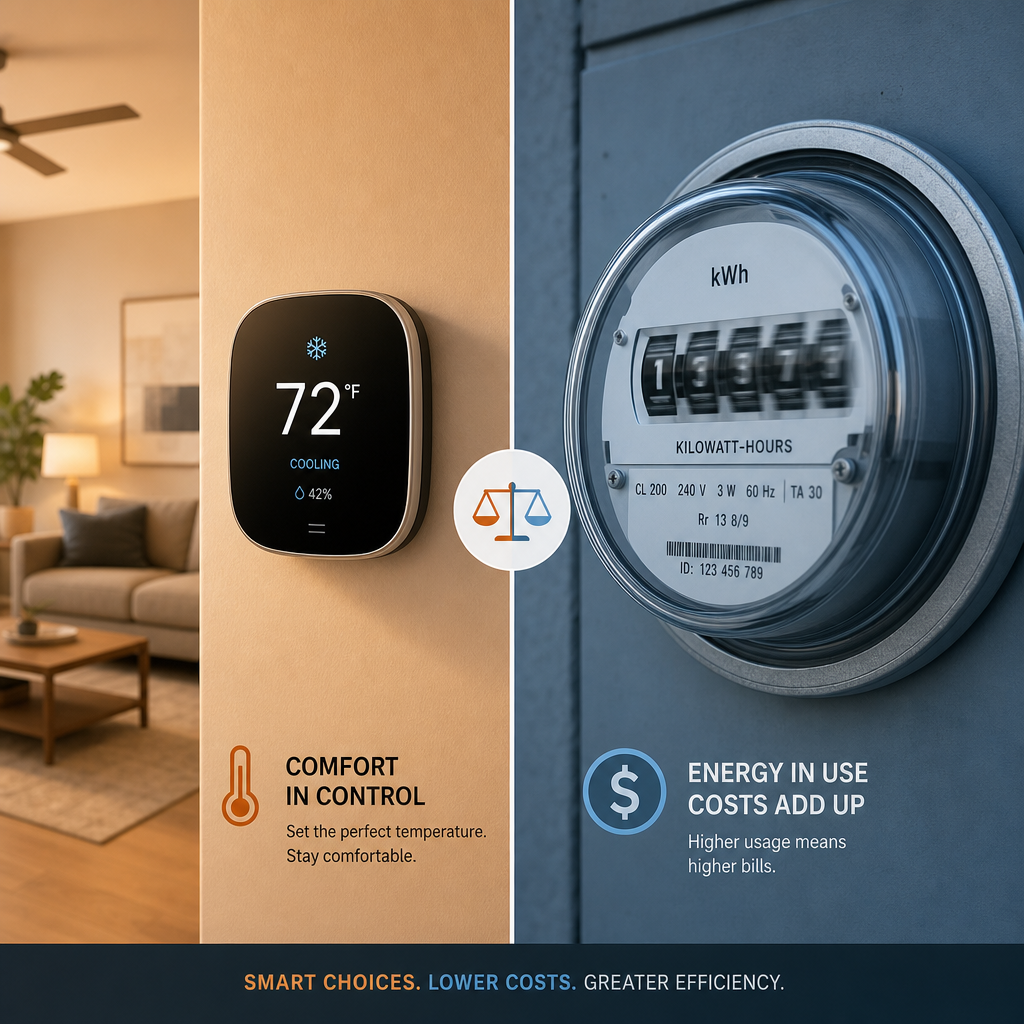
Pro tip: If you install a Lennox XC25 or XC21, pair it with the iComfort S30 thermostat from the start. Retrofitting the smart thermostat later often requires a separate service call and can void certain warranty provisions if done improperly.
Head-to-Head Comparison: Trane vs Lennox in Phoenix Conditions
Rather than vague generalizations, here is how these two brands compare on the factors that specifically affect best AC brand Arizona performance and ownership experience.
| Factor | Trane | Lennox |
|---|---|---|
| Peak Heat Durability | Excellent. Climatuff compressor designed for sustained high-ambient operation. | Good. High-end units handle heat well but variable-speed electronics are more heat-sensitive. |
| Maximum SEER2 Rating | Up to 22 SEER2 (XV20i) | Up to 28 SEER2 (XC25) |
| Parts Availability in Phoenix Metro | High. Widely stocked at local distributors. | Moderate. Some specialty parts require longer lead times. |
| Technician Availability | High. Most certified HVAC companies in Phoenix carry Trane training. | Moderate. Requires brand-specific training for advanced diagnostics. |
| Solar Integration | Compatible but no native solar-ready system. | SunSource system offers native solar panel integration. |
| Warranty (Registered) | Up to 12 years compressor, 10 years parts on select models. | Up to 10 years compressor, 10 years parts on select models. |
| Upfront Cost (Premium Tier) | $4,500 to $8,000 installed depending on tonnage. | $5,000 to $10,000 installed depending on tonnage and model. |
| Monsoon Humidity Control | Good with two-stage units. | Excellent with variable-speed units. |
"HVAC systems in desert climates fail at nearly twice the rate of identical units deployed in moderate climates, primarily due to compressor overload during sustained peak-load periods." - Building Performance Institute, residential energy systems research overview
Installation Costs and What to Expect in Phoenix
For both Trane AC installation Phoenix and Lennox HVAC Arizona, the total cost includes the equipment, the installation labor, any duct modifications, permit fees, and disposal of your old unit. Brewer's uses flat-rate upfront pricing so you know the full number before anyone touches your system.
For a standard 3-ton residential replacement in the Phoenix metro, expect Trane mid-tier installations to fall between $5,000 and $7,500 fully installed. Lennox mid-tier installations in the same tonnage range typically run $5,500 to $9,000 depending on the model tier and any duct modifications needed.
What distorts these numbers is when companies lead with the equipment price and add on labor, permits, and accessories separately. That is how a $4,200 quote becomes a $7,800 invoice. Always ask for a fully installed price that includes everything before you commit to any brand or contractor.
New construction or add-on installations where ductwork does not yet exist cost significantly more and require a proper Manual J load calculation to size the system correctly. Oversized units, regardless of brand, short-cycle and fail earlier in Phoenix heat. This is one of the most common and most preventable installation mistakes we see in new construction across the east valley.
Warranty Coverage and Long-Term Reliability
Both Trane and Lennox offer competitive warranties, but the details matter more than the headline numbers. Trane's Registered Limited Warranty provides up to 12 years on the compressor and 10 years on all other covered components for select models, but only when registration is completed within 60 days of installation. Without registration, you drop to a 5-year parts warranty on most units.
Lennox matches the 10-year parts warranty on registered products but generally caps compressor coverage at 10 years rather than 12. For a system that should last 15 to 18 years in Arizona conditions with proper maintenance, the difference between a 10-year and 12-year compressor warranty is meaningful. Compressor replacements in Phoenix typically cost $1,200 to $2,500 in parts and labor.
In practice, warranty claims in the HVAC industry are more common than most homeowners expect. Consumer Reports data on appliance reliability consistently ranks whole-home cooling systems among the highest-claim product categories. Choosing a brand with better authorized service coverage in your specific zip code is as important as the warranty terms themselves.
At Brewer's, we handle warranty service for both Trane and Lennox equipment we install, which means our customers are not navigating manufacturer call centers while their house is 95 degrees inside. That service continuity is something to factor into your decision, regardless of which brand you choose.
Which Brand Is Right for Your Phoenix Home?
Here is the direct answer: for most Phoenix homeowners, Trane is the better default choice. Its durability record in desert climates, parts availability across the metro, and lower service complexity make it the lower-risk investment over a 15-year ownership period.
Lennox is the right choice for a specific type of Phoenix homeowner. If you have a newer home built after 2005 with well-sealed ducts, you already have or are actively planning solar panels, you prioritize monthly utility savings over simplicity, and you are prepared to use a qualified Lennox dealer for all service, then the XC21 or XC25 makes economic sense. The efficiency premium pays back over time, and the variable-speed humidity control during monsoon season is genuinely superior.
Older Tempe or Ahwatukee homes with original ductwork from the 1980s or 1990s are almost always better served by Trane. The duct inefficiency in those homes limits how much a variable-speed Lennox system can actually deliver on its efficiency promise. You end up paying for premium technology that the rest of your system cannot support.
If you are comparing quotes from Parker and Sons, Goettl, or Penguin Air alongside Brewer's, ask each company specifically which tier of unit they are proposing, what the SEER2 rating is, and whether the quote includes a Manual J calculation. Those three questions will tell you more about what you are actually buying than any brand-level comparison.
Frequently Asked Questions
Is Trane or Lennox more reliable in extreme heat like Phoenix?
Trane has a stronger reliability record specifically in sustained high-ambient conditions. The Climatuff compressor is engineered for the kind of continuous high-load operation that Phoenix summers demand. Lennox performs well but its advanced electronics, particularly in variable-speed models, can be more vulnerable to heat-related stress over a 15-year lifespan in the desert.
Which brand has better energy efficiency for an Arizona home?
Lennox wins on peak efficiency ratings. Their XC25 reaches 28 SEER2, which is the highest available in residential equipment. For Phoenix homeowners paying SRP or APS peak summer rates, that efficiency advantage translates to real monthly savings. However, Trane's two-stage units like the XL18i are still very efficient at 18 SEER2 and easier to service, so the efficiency gap does not automatically make Lennox the better financial choice for every home.
How long does a Trane or Lennox AC last in Phoenix?
With annual preventive maintenance and timely repairs, a properly installed Trane or Lennox system in Phoenix should last 15 to 18 years. Without maintenance, expect closer to 10 to 12 years due to accelerated wear from continuous high-load operation. The single biggest factor in longevity is not brand, it is whether the system receives professional maintenance every spring before summer heat arrives.
What does Trane AC installation cost in Phoenix?
A fully installed Trane replacement in the Phoenix metro typically ranges from $4,500 to $8,500 depending on the tonnage, model tier, and any duct or electrical work needed. Mid-tier two-stage units for a 3-ton application usually fall between $5,000 and $7,000 fully installed. Always get a flat-rate installed price that includes permits, labor, refrigerant, and old-unit disposal so you can compare quotes on equal terms.
Does Lennox integrate with solar panels in Arizona?
Yes. Lennox's SunSource system is specifically designed to work with solar panel installations, which is a meaningful advantage in Phoenix where solar adoption is high and peak electricity rates from APS and SRP make solar-powered cooling financially attractive. Trane units work with solar as part of a whole-home energy setup but do not offer the same native solar integration that Lennox's SunSource provides.
Should I repair my current AC or replace it with a Trane or Lennox?
A general rule used by experienced HVAC technicians is the 5,000 rule: multiply the system's age in years by the repair cost. If that number exceeds $5,000, replacement is usually the better financial decision. A 12-year-old unit needing a $600 repair scores 7,200 and replacement is worth serious consideration. In Phoenix, where systems age faster and repair frequency increases after year 10, this calculation tends to favor replacement sooner than in cooler climates.
Does Brewer's AC install both Trane and Lennox in the Phoenix area?
Yes. Brewer's Air Conditioning and Heating installs, services, and maintains both Trane and Lennox equipment across Phoenix, Tempe, Mesa, Scottsdale, Ahwatukee, Chandler, and Gilbert. Our technicians are trained on both platforms, which means we can give you an honest recommendation based on your specific home, ductwork, budget, and efficiency goals rather than steering you toward only one brand.
About the Author
Mark Ybarra
Mark Ybarra is the owner and leader of Brewer's Air Conditioning & Heating, a trusted HVAC company serving Tempe, Phoenix, Scottsdale, Mesa, and surrounding Arizona communities since 1982. After working in multiple roles within the company, Mark officially took ownership in 2018 and continues to uphold Brewer's long-standing commitment to integrity, exceptional service, and customer satisfaction.
Need HVAC Help?
Serving Phoenix, Tempe, Scottsdale, Mesa & surrounding areas since 1982.