Mesa summers are not forgiving. When temperatures regularly push past 110 degrees Fahrenheit, your air conditioner is not a luxury - it is the difference between a livable home and a dangerous one. The U.S. Department of Energy reports that heating and cooling account for nearly 48 percent of a typical home's energy use, and in Arizona that number skews even higher. The good news is that most AC failures do not come out of nowhere. They follow months of neglected AC maintenance Mesa AZ homeowners could have handled themselves. Here are seven tasks you can start today, no HVAC certification required.
Quick Takeaways
| Key Insight | Explanation |
|---|---|
| Filter changes every 30 days in Mesa summers | Arizona dust and pollen clog filters faster than national averages suggest. Monthly swaps are the minimum during cooling season. |
| Two feet of clearance around the condenser is non-negotiable | Shrubs, oleanders, and desert landscaping block airflow and force your compressor to work harder in extreme heat. |
| A clogged condensate drain causes water damage, not just inefficiency | In Mesa's humid monsoon months, drain lines can back up and flood air handlers, ruining drywall and flooring. |
| Your thermostat placement matters more than its brand | A thermostat near a west-facing window or above a lamp will read falsely high and run your system unnecessarily. |
| Duct leaks cost Mesa homeowners an average of 20-30 percent efficiency loss | The EPA estimates that leaky ducts waste that much conditioned air, especially in attic-routed systems common in Mesa tract homes. |
| Capacitor failure is the number one repair call in Phoenix metro summers | A humming outdoor unit that does not start is almost always a capacitor. You can spot warning signs before it fails completely. |
| DIY maintenance reduces professional repair frequency, not the need for annual tune-ups | These seven tasks extend system life but do not replace a professional inspection of refrigerant levels, electrical connections, and coil cleaning. |
Task 1: Replace Your Air Filter
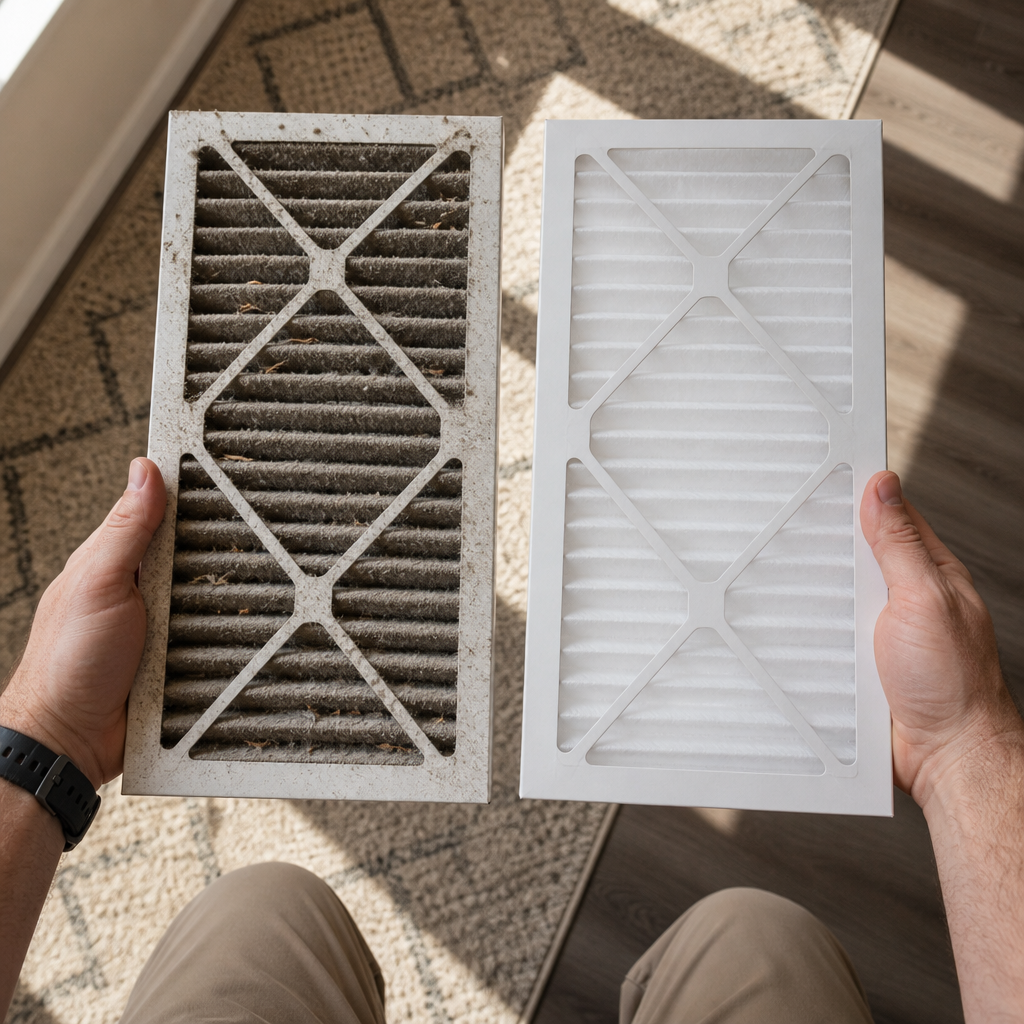
This is the single highest-return task on this list, and it takes under five minutes. A dirty air filter forces your blower motor to work harder, reduces airflow across the evaporator coil, and can eventually cause the coil to freeze - even in 110-degree Mesa heat. In practice, a frozen coil shuts your system down entirely, usually at the worst possible moment.
Most manufacturers and HVAC guides recommend filter changes every 60 to 90 days. That advice was written for moderate climates. In Mesa and the broader East Valley, change your filter every 30 days from April through October. The combination of desert dust, construction particles, and monsoon pollen accelerates clogging significantly faster than a national average would suggest.
Choosing the Right MERV Rating for Mesa Homes
MERV ratings run from 1 to 20. For most residential systems in Mesa, a MERV 8 to MERV 11 filter hits the right balance between filtration quality and airflow. A MERV 13 filter catches more particles but restricts airflow enough to strain older systems, particularly the Trane and Lennox units common in 1990s-era Mesa tract homes.
A common mistake is buying the cheapest fiberglass filter available. These are nearly useless for dust control and do nothing for allergens. Spend the extra two dollars on a pleated filter. You will see the difference in your monthly APS bill within one billing cycle.
Pro tip: Buy a 6-pack of filters and tape one to the inside of your air handler closet door. When you see the supply running low, it is a visual reminder to order more. Consistency here is everything.
Task 2: Clear the Area Around Your Outdoor Unit
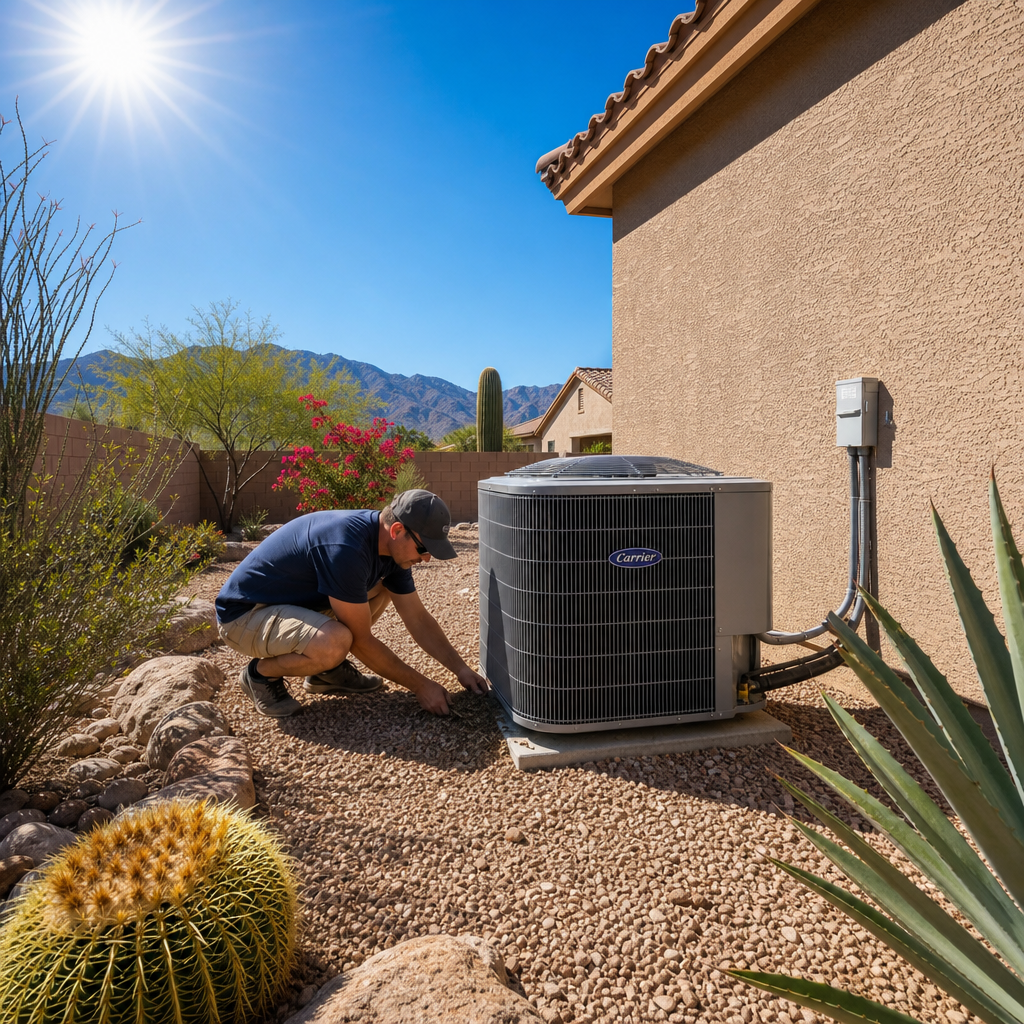
Walk outside right now and look at your condenser unit. If you see oleander branches within 18 inches, a garden hose coiled on top, or a storage bin parked against the side, your system is working harder than it needs to. The condenser rejects heat from your home into the outdoor air, and it needs unrestricted airflow on all sides to do that efficiently.
The minimum clearance is 24 inches on all sides and 5 feet above the unit. In Mesa's extreme summer heat, this matters more than in moderate climates because the temperature differential between indoor and outdoor air is already brutally high. Any additional airflow restriction compounds the problem.
What to Remove and What to Trim
Cut back any desert landscaping, grass, or shrubs to maintain that two-foot buffer. Remove any decorative lattice panels that homeowners sometimes install to hide the unit from street view. These panels can reduce airflow by 20 to 30 percent on their own. If you want to shade the condenser to improve efficiency, do it with a shade structure that sits at least 5 feet above the unit, never a box or enclosure around it.
Also hose down the condenser fins gently from the inside out using a regular garden hose. Do not use a pressure washer. Mesa's dusty winds pack the fins with debris that reduces heat transfer. A quarterly rinse in the off-peak months of March and November keeps the coils functioning properly.
Task 3: Clean Your Condensate Drain Line
Your AC removes humidity from the air as it cools your home, and that moisture has to go somewhere. It drips into a drain pan and exits through a PVC condensate drain line, typically routed to an exterior wall or floor drain. In Mesa, this line matters most during the July through September monsoon season, when indoor humidity spikes and the drain line works overtime.
Algae, mold, and debris build up inside the drain line and eventually create a clog. When that happens, water backs up into the drain pan and overflows - directly above your ceiling drywall or onto your air handler cabinet. The repair bill for water-damaged drywall plus an emergency service call is several hundred dollars more than the cost of prevention.
The Vinegar Flush Method
Once a month during monsoon season, pour a quarter cup of plain white distilled vinegar into the condensate drain access port, usually a small capped PVC fitting near your indoor air handler. Let it sit for 30 minutes, then flush with a cup of water. This kills algae growth before it becomes a blockage.
If you hear a gurgling sound from your drain pan, or see water pooling near your air handler, the line is already partially blocked. At that point, a wet-dry shop vacuum connected to the exterior drain outlet can clear the clog. If water is overflowing actively, call Brewer's for a same-day service call rather than letting it sit.
Pro tip: Check your indoor air handler for a secondary float switch. Many Mesa homes have one installed above the drain pan. If this switch trips, it shuts the system off entirely to prevent flooding. A system that suddenly stops cooling in the middle of monsoon season is often a tripped float switch, not a compressor failure.
Task 4: Check and Clean Your Evaporator Coils
The evaporator coil sits inside your air handler and is the surface where warm indoor air meets cold refrigerant. When it is coated in dust and debris, heat transfer suffers and your system runs longer cycles to reach the set temperature. Over time, this adds wear and raises your electricity costs.
A homeowner-level check involves opening the air handler cabinet panel and visually inspecting the coil. If you see a thick grey layer of dust on the coil surface, it needs cleaning. If you see ice, turn the system to fan-only mode immediately and call for service - ice on the coil indicates either low refrigerant or severely restricted airflow, neither of which is a DIY fix.
Using No-Rinse Coil Cleaner
For light dusty buildup, a can of no-rinse evaporator coil cleaner from any hardware store works effectively. Turn the system off at the thermostat, spray the cleaner onto the coil surface evenly, and allow it to foam and drip into the drain pan below. Do not rinse. The condensation your system naturally produces will carry residue away during normal operation.
Heavy buildup or coils that are bent, corroded, or fully caked require professional cleaning with a coil cleaning solution and proper equipment. This is one area where homeowners often go too far and damage delicate aluminum fins. If the coil looks rough, that cleaning is worth putting on the Brewer's annual tune-up checklist.
Task 5: Test Your Thermostat Settings
Most Mesa homeowners set the thermostat and forget it, which is a missed opportunity. Testing your thermostat takes ten minutes and can reveal calibration issues, placement problems, or programming errors that add 10 to 15 percent to your monthly cooling bill without you knowing it.
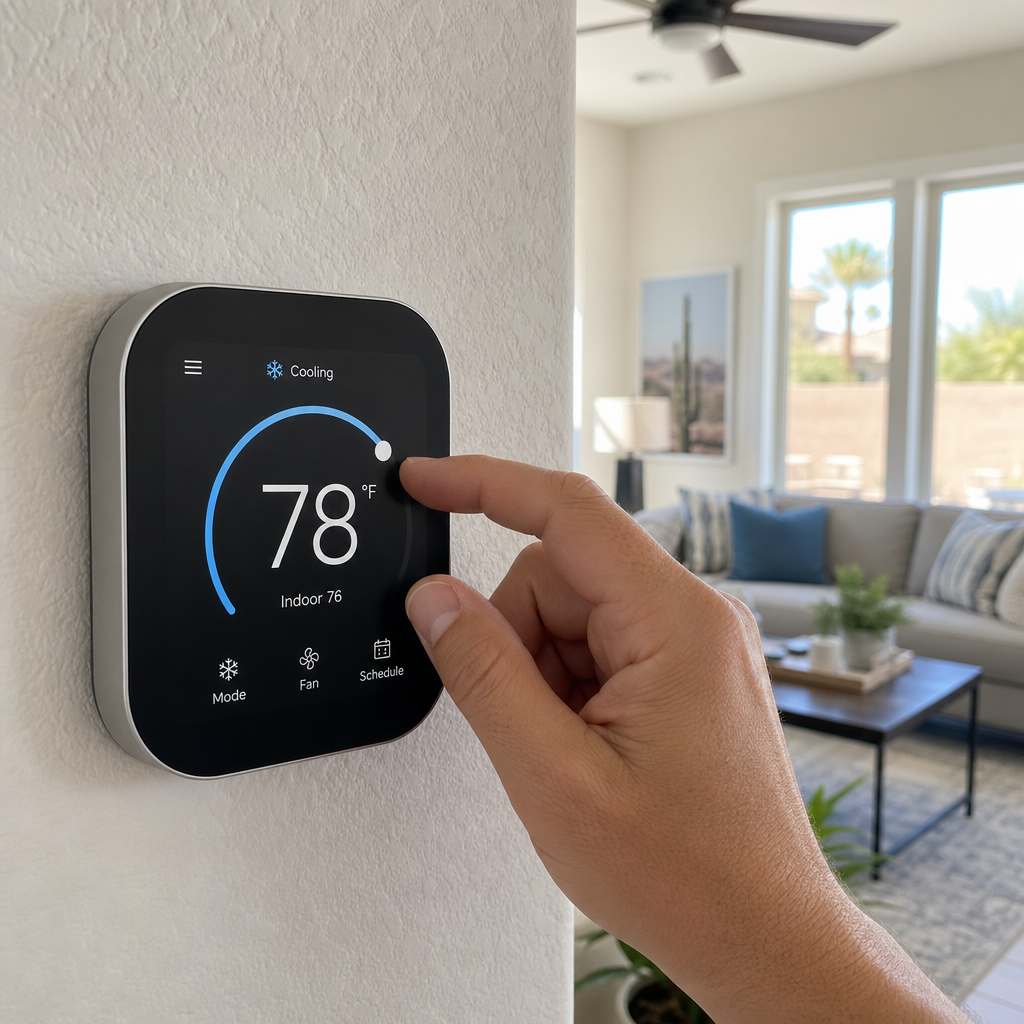
Set your thermostat to 78 degrees Fahrenheit and let the system run for 15 minutes. Then use a separate indoor thermometer placed at the return air vent to verify what temperature the air actually is. If the reading differs by more than two to three degrees from your thermostat setting, either the thermostat is miscalibrated or your system is not delivering the conditioned air it should be.
Thermostat Placement Problems Common in Mesa Homes
The standard thermostat height in many 1980s and 1990s Mesa homes is too close to exterior walls or near west-facing windows. In summer, those surfaces absorb solar radiation all day. A thermostat reading the heat from a nearby west wall will call for cooling more aggressively than your home actually requires.
If your thermostat is not programmable, the upgrade cost is typically 30 to 150 dollars, and the energy savings in an Arizona summer pay for that within one cooling season. Brewer's installs Honeywell and Ecobee smart thermostats and can assess your current placement during any scheduled service call.
"The quickest win for reducing cooling costs in extreme climates is correcting thermostat placement and programming. Most homeowners are cooling an empty house at 72 degrees for eight hours a day because the schedule was never set up." - Energy Star Program, U.S. Environmental Protection Agency guidance on home cooling efficiency
Task 6: Inspect Your Ductwork for Visible Leaks
Mesa homes built in the 1980s and 1990s commonly have ductwork routed through attic spaces where summer temperatures regularly exceed 150 degrees Fahrenheit. When duct connections come loose or duct tape (the original, not metallic tape) fails, conditioned air leaks directly into your attic instead of your living spaces. The EPA estimates that typical homes lose 20 to 30 percent of their conditioned air through duct leaks.
A homeowner can inspect accessible duct connections in the garage, utility closet, and any exposed sections in the home. Feel along duct seams with your hand while the system runs. A noticeable draft near a seam means air is escaping. You can temporarily seal these with metallic foil tape - not regular duct tape, which fails under heat.
Signs Your Attic Ducts Are Leaking
If certain rooms in your home consistently feel warmer than others regardless of airflow adjustments, disconnected or leaking attic ducts are a likely cause. Also watch for unusually high APS bills in June relative to prior years with the same usage patterns. A 15 percent or greater spike in cooling costs is worth investigating at the duct level.
Full duct sealing and testing with a blower door is a professional service. But identifying the obvious accessible leaks and sealing them yourself reduces waste immediately while you schedule a more thorough inspection.
Task 7: Check Your Electrical Disconnect and Capacitor Warning Signs
This task is observational, not hands-on. You should never open your electrical disconnect box or touch internal electrical components. But you can observe warning signs from outside that indicate your system is heading toward an electrical failure, and knowing these signs saves you from a full system-down emergency in mid-July.
The most common failure in Phoenix metro summers is capacitor failure. Capacitors store and release electrical energy to start the compressor and fan motors. High heat degrades them faster in Mesa than anywhere in the country. A capacitor that is starting to fail causes a specific set of symptoms you can detect before it dies completely.
Warning Signs to Watch For
Listen for a humming sound from your outdoor unit when it should be running but the fan is not spinning. This is a classic capacitor symptom. Also watch for the outdoor unit taking longer than usual to start when the thermostat calls for cooling, or cycling off after only a few minutes of operation.
Check the electrical disconnect box on the exterior wall near your condenser. It should be fully closed with no visible burn marks, melted plastic, or tripped breakers. If you see any of these, do not reset anything. Call Brewer's and describe what you see. Electrical issues in an HVAC system escalate fast in summer heat.
DIY vs. Professional Maintenance: What to Compare
Not every maintenance task belongs in the same category. Understanding what you can handle versus what requires a licensed HVAC technician prevents both wasted money and potentially voided equipment warranties. The table below breaks down the most common tasks by approach, appropriate frequency, and realistic cost context for Mesa homeowners.
| Maintenance Task | DIY or Professional | Recommended Frequency for Mesa AZ |
|---|---|---|
| Air filter replacement | DIY | Every 30 days, April through October |
| Outdoor unit clearance and rinse | DIY | Monthly during cooling season |
| Condensate drain vinegar flush | DIY | Monthly during monsoon season (July to September) |
| Thermostat calibration check | DIY | Seasonally, before cooling and heating seasons |
| Accessible duct sealing with metallic tape | DIY (accessible areas only) | Annual inspection, seal as needed |
| Refrigerant level check and recharge | Professional only | Annual or when cooling output drops noticeably |
| Evaporator and condenser deep coil cleaning | Professional for heavy buildup | Annual, ideally before April in Mesa |
| Capacitor and electrical component testing | Professional only | Annual, part of a professional tune-up |
| Full duct leakage test and sealing | Professional only | Every 3-5 years or after major efficiency drops |
The pattern here is consistent. Tasks involving refrigerant, electrical components, or sealed system diagnostics require a licensed technician. Everything else on this list is within reach of a motivated homeowner with basic tools and 30 minutes of time.
Frequently Asked Questions
How often should Mesa homeowners schedule professional AC maintenance?
Once a year is the minimum, and for Mesa the right timing is late February through March, before the heat season starts. This gives a technician time to identify refrigerant issues, failing capacitors, and coil problems before they cause a breakdown during peak summer demand. Brewer's Air Conditioning and Heating offers flat-rate tune-up pricing that covers all the items DIY tasks cannot reach.
What is the most common reason AC systems fail in Mesa during summer?
Capacitor failure is the single most common service call in the Phoenix metro area during summer months. Extreme heat degrades capacitors faster than in moderate climates, and most fail between June and August when the outdoor unit runs the longest daily hours. Annual professional inspections catch weak capacitors before they fail completely.
Can I add refrigerant to my AC system myself?
No. Refrigerant handling requires EPA Section 608 certification under federal law. More importantly, low refrigerant is almost always a symptom of a leak, not a routine consumption issue. Adding refrigerant without finding and fixing the leak is a temporary and expensive fix. This is a professional-only service.
How do I know if my AC is running efficiently enough for a Mesa summer?
Compare your APS bills year over year for the same months. A 10 to 15 percent increase in energy use without a corresponding increase in usage time points to a declining system. Also track how long your system runs to maintain your set temperature. If it is running nearly continuously even at 78 degrees during the evening hours, efficiency has dropped and a tune-up is overdue.
Is it worth maintaining an older AC unit or should I replace it?
If the system is more than 15 years old and requires a repair costing more than 50 percent of the replacement value, replacement is the better financial decision in most cases. A modern high-efficiency unit with a SEER2 rating of 16 or higher will cut your summer cooling bills significantly compared to a 10 SEER unit from 2005. Brewer's can run a cost-benefit comparison based on your specific system and usage before recommending either direction.
What HVAC maintenance tasks are specific to Mesa's monsoon season?
The monsoon season from July through September introduces two specific risks: condensate drain line clogs from elevated humidity, and debris accumulation on your outdoor condenser from dust storms and haboobs. After any major dust storm, rinse your condenser fins with a garden hose and check the condensate drain line for backup. These two checks take less than 15 minutes and prevent the most common post-storm failures.
Do DIY maintenance tasks affect my HVAC warranty?
Filter changes, thermostat adjustments, and clearing debris around the outdoor unit do not affect equipment warranties. However, attempting to clean refrigerant coils with the wrong chemicals, opening refrigerant lines, or making electrical adjustments can void manufacturer warranties from Trane, Lennox, and other major brands. Stick to the seven tasks listed in this article and leave sealed-system work to certified technicians.
If you have tried any of these tasks on your Mesa home's AC system, or have questions about what you found during your inspection, share your experience in the comments - your specific situation might help another East Valley homeowner troubleshoot the same issue.
References
- U.S. Department of Energy - home energy use statistics and HVAC efficiency guidance for residential properties
- U.S. Environmental Protection Agency - Energy Star program resources on duct leakage and home cooling efficiency standards
- ASHRAE - American Society of Heating, Refrigerating and Air-Conditioning Engineers technical standards for HVAC maintenance and indoor air quality
- Forbes Home - cost comparisons and consumer guidance for HVAC repair versus replacement decisions
- Statista - U.S. residential energy consumption data and air conditioning usage statistics by region
About the Author
Mark Ybarra
Mark Ybarra is the owner and leader of Brewer's Air Conditioning & Heating, a trusted HVAC company serving Tempe, Phoenix, Scottsdale, Mesa, and surrounding Arizona communities since 1982. After working in multiple roles within the company, Mark officially took ownership in 2018 and continues to uphold Brewer's long-standing commitment to integrity, exceptional service, and customer satisfaction.
Need HVAC Help?
Serving Phoenix, Tempe, Scottsdale, Mesa & surrounding areas since 1982.