If you live in the Phoenix metro area, you already know July is brutal. But beyond the 110-degree heat baking your car seats, July quietly wages a second assault: your indoor air quality collapses. Indoor air quality Phoenix July conditions combine extreme heat, monsoon dust storms, mold spikes, and a dramatically overworked HVAC system into a perfect storm that most homeowners don't see coming until someone in the house starts coughing, sneezing, or waking up with itchy eyes every morning. This article breaks down exactly why July is the single worst month for air quality inside Phoenix-area homes, and what you can do about it right now.
Quick Takeaways
| Key Insight | Explanation |
|---|---|
| July combines three IAQ threats at once | Extreme heat, monsoon haboobs, and elevated humidity create simultaneous dust, mold, and ozone problems that no single filter can fully address. |
| Monsoon dust carries biological particles | Arizona haboobs don't just carry sand. They carry mold spores, bacteria, and Valley Fever fungal spores that enter your home through gaps and return air ducts. |
| Dirty coils amplify the problem | An AC evaporator coil coated in July dust and bio-debris becomes a mold-growing surface that recirculates contaminated air every time your system runs. |
| MERV 8 filters are not enough in monsoon season | Standard MERV 8 filters miss particles under 3 microns. Valley Fever spores and fine haboob dust average 2-5 microns. MERV 13 or better is the practical minimum for July. |
| Whole-home air purifiers outperform portable units | A portable HEPA unit covers one room. A system-integrated purifier like an iWave or Trane CleanEffects treats every cubic foot of air your home circulates, which in Phoenix July means running 24-plus hours a day. |
| Post-storm filter inspection is non-negotiable | After a major haboob, a filter can load to 80 percent capacity within hours. Running your system on a clogged filter causes coil freeze, motor strain, and blows contaminated air directly into living spaces. |
| UV germicidal lights eliminate what filters miss | UV-C light systems installed at the coil kill mold, bacteria, and viruses that pass through even high-MERV filters, making them especially valuable in Phoenix's July humidity spikes. |
Why July Destroys Indoor Air Quality in Phoenix
Phoenix sits in a low desert basin that naturally traps particulates. The Arizona Department of Environmental Quality consistently logs July as one of the highest PM10 and PM2.5 months of the year, driven almost entirely by monsoon activity and the heat inversions that prevent particles from dispersing upward.
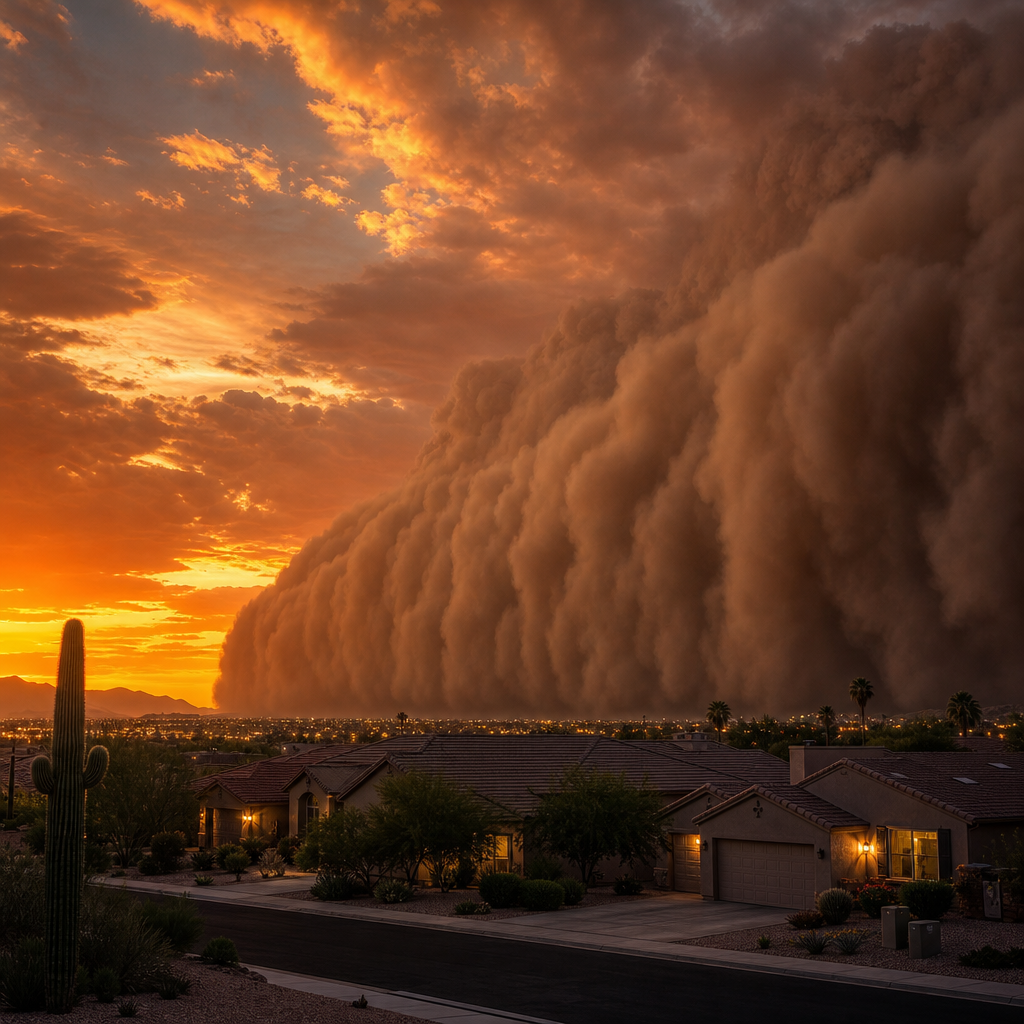
The mechanics work like this. Daytime temperatures above 105 degrees Fahrenheit heat the ground and create intense thermals. When monsoon moisture arrives from the Gulf of California in early July, those thermals collapse into violent outflow boundaries, lifting millions of tons of desert soil into walls of dust that can reach 5,000 feet high. A Phoenix-area haboob in July 2011 was measured at over 100 miles wide and carried an estimated one million tons of particulate matter. That dust doesn't just go away after the storm. It settles on every surface, seeps through every gap, and gets pulled into your home every time your air conditioner cycles on.
Add to that the sudden humidity spike. Phoenix in June might sit at 5 to 10 percent relative humidity. After the monsoon arrives in early July, interior humidity can spike to 40 to 60 percent within 48 hours. That moisture window is long enough to initiate mold growth on evaporator coils, in ductwork, and on any dust that landed on a cool surface. In practice, this is why Tempe and Ahwatukee homeowners often report a musty smell from their vents starting in the second week of July.
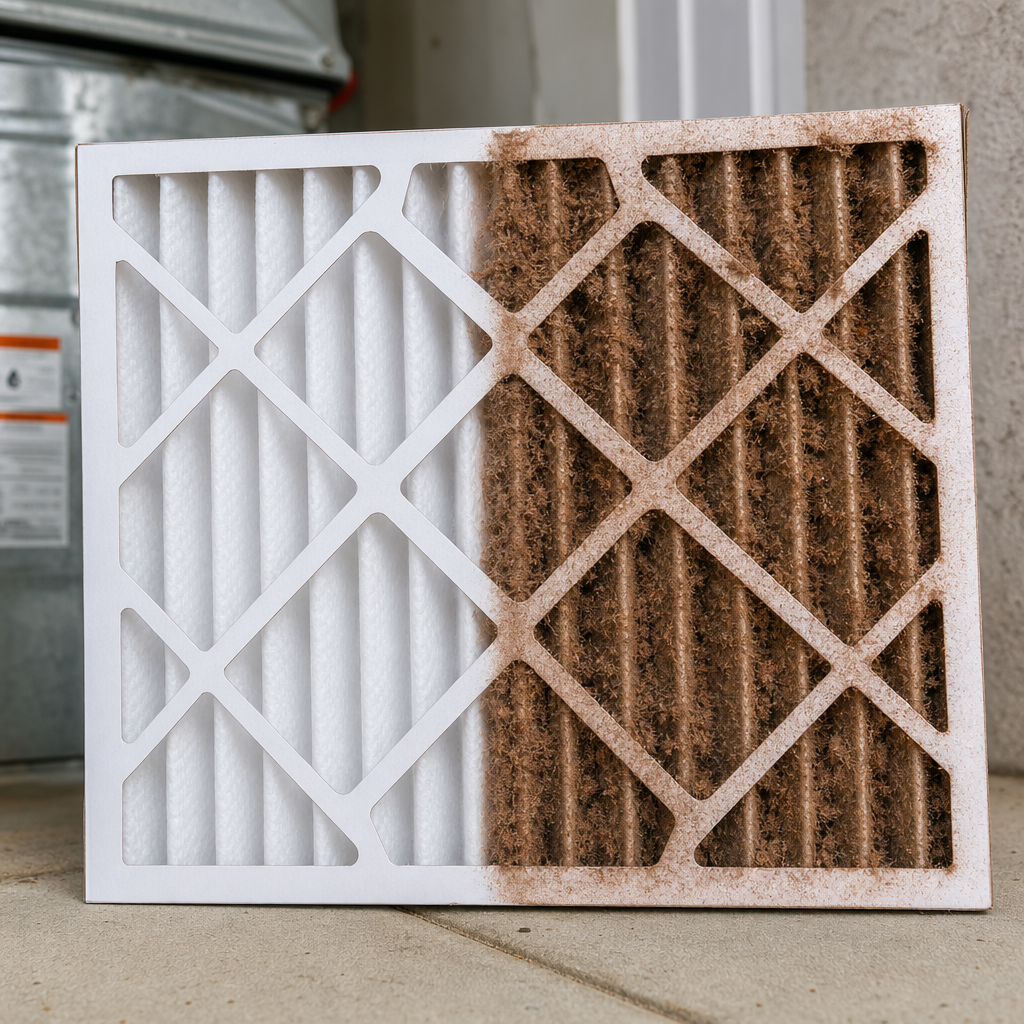
The data consistently shows that indoor air can be two to five times more polluted than outdoor air under normal circumstances, according to the EPA. In Phoenix during July, with a dust-caked filter and a mold-forming coil running 16 or more hours a day, that ratio climbs sharply. Most homeowners are breathing in far more than they realize.
Pro tip: If you can smell your air conditioner when it first kicks on in the morning after a monsoon night, that is not normal. That musty or earthy smell is live mold or bacteria on your evaporator coil being blown directly into your living space. Call a licensed HVAC technician for a coil inspection and cleaning, not just a filter change.
Monsoon Air Quality Arizona: Dust, Mold, and Particulates
The monsoon season in Arizona officially runs June 15 through September 30, but July is statistically the most active month for dust storms. The National Weather Service Phoenix office records an average of three to five significant haboobs per July. Each one is an indoor air quality event, not just a weather event.
Valley Fever Is Not Just an Outdoor Risk
Coccidioides, the fungus that causes Valley Fever (coccidioidomycosis), lives in Arizona desert soil. When haboobs disturb the top six inches of desert ground, they aerosolize Coccidioides spores. The Maricopa County Department of Public Health reports hundreds of Valley Fever cases annually, with July through September representing the highest incidence period. These spores measure roughly 2 to 5 microns in diameter, small enough to pass straight through a standard MERV 8 filter and land in your lungs.
For a household in Mesa, Chandler, or Gilbert, which sit closer to undeveloped desert edges, this is a real respiratory risk. A high-efficiency filter combined with post-storm duct inspection is not overcautious. It is the responsible minimum.
How Monsoon Dust Loads Your Return Ducts
Your return air system draws air from inside the home back to your air handler for cooling and recirculation. During a haboob, fine particles penetrate through door gaps, window seals, and recessed light fixtures. That settled dust then gets pulled into return grilles and distributed throughout the duct system. In older homes across east Phoenix and Tempe, where ductwork runs through unconditioned attic spaces, July attic temperatures above 150 degrees Fahrenheit cause duct seals to soften and leak, pulling unconditioned dusty attic air directly into the supply stream.
A common mistake is treating July air quality as a single-event problem. One good filter change after a storm solves nothing if your duct system is leaking or your coil hasn't been cleaned since last season's maintenance visit.
How Your HVAC System Makes Things Worse in July
Your air conditioner runs almost continuously in July. An average Phoenix home with a properly sized system will see daily runtime of 14 to 18 hours during peak summer. A home that is slightly undersized, has duct leaks, or has a dirty coil can run 22 or more hours per day. That runtime means whatever is in your air gets circulated, filtered, and recirculated dozens of times per day.
Evaporator Coil Contamination
The evaporator coil sits inside your air handler, chilling the air before it moves into your ductwork. At 40 to 55 degrees Fahrenheit, it is cold enough to condense moisture from Phoenix's July humidity spikes. That condensation, combined with any organic material from July dust storms, creates a nutrient-rich wet surface where mold, bacteria, and algae thrive. The EPA notes that mold can begin growing on a moist surface within 24 to 48 hours. In Phoenix July conditions, that clock starts immediately after the first monsoon moisture arrives.
Brewer's Air Conditioning and Heating technicians regularly find heavily contaminated coils during summer service calls in Scottsdale and Tempe homes that skipped their spring maintenance visit. The fix is not complicated, but it does require a licensed technician with the right coil-safe cleaning agents. Household cleaners will damage the coil fins and void equipment warranties.
Filter Bypass and Duct Leaks
A filter that fits loosely in its housing allows unfiltered air to bypass the media entirely. This is extremely common in older Phoenix homes where standard one-inch filter slots have worn housing edges. The entire filtering system becomes cosmetic, not functional. Duct leaks in attic-run systems compound the issue by introducing unfiltered 150-degree attic air that carries accumulated monsoon dust directly into living spaces.

Pro tip: Hold a tissue or piece of thin paper near your return air grille when your system is running. If it pulls firmly against the grille, your return static pressure is in normal range. If the pull is weak, you likely have a filter bypass or duct leak reducing system performance and allowing unfiltered air into your home.
HVAC Air Quality Solutions Phoenix Homeowners Should Know
Fixing indoor air quality in Phoenix during July is not about buying one product. It is about layering solutions that address dust, biological growth, and humidity at the same time. Here is what works in practice for Tempe, Mesa, Chandler, and Ahwatukee homeowners.
Upgrade to MERV 13 Filtration
MERV 13 filters capture particles as small as 0.3 to 1.0 microns at 75 percent efficiency or better. That covers the majority of fine haboob dust, mold spores, and Valley Fever particles that MERV 8 filters miss. The tradeoff is airflow restriction. Before upgrading, have an HVAC technician confirm your system's static pressure capacity. Installing MERV 13 in a system designed for MERV 8 can reduce airflow enough to damage the compressor over a long Phoenix summer.
Brewer's AC flat-rate maintenance visits include a static pressure check and filter compatibility assessment precisely for this reason. Getting the right filter for your specific system matters more than buying the highest-rated filter at the hardware store.
Whole-Home Air Purification Systems
Products like the Trane CleanEffects, Lennox PureAir, and iWave ionization systems integrate directly into your existing ductwork and treat air as it moves through the system. The Trane CleanEffects, for example, claims to remove 99.98 percent of airborne particles as small as 0.1 microns, which puts it well beyond any MERV-rated filter. For a household in Scottsdale or east Phoenix with allergy sufferers or immune-compromised members, these systems are not luxury items. They are a measurable health upgrade during monsoon season.
UV-C Germicidal Lights at the Coil
UV-C germicidal lights installed at the evaporator coil destroy mold, bacteria, and viruses at the DNA level, preventing biological growth on the coil surface. They do not replace filtration, but they directly address the mold-on-coil problem that is so common in July. A coil-mounted UV light system typically costs between $300 and $600 installed, a fraction of the cost of a full coil cleaning after a major mold contamination event.
Post-Monsoon Coil and Duct Inspection
After any significant haboob, schedule a system inspection that includes a coil check, drain pan inspection, and filter replacement. This is not an upsell. It is maintenance timed to the actual threat calendar of Arizona summers. Brewer's Air Conditioning, serving Phoenix and the east valley since 1982, offers flat-rate service calls that cover exactly this type of seasonal inspection without surprise charges.
"Particulate matter from Arizona dust storms can penetrate deep into the lungs and trigger respiratory events in healthy adults, not just those with pre-existing conditions. The indoor environment during monsoon season requires active filtration management, not passive reliance on standard residential filters." - Arizona Department of Environmental Quality Air Quality Division
Comparing Air Quality Solutions: What Actually Works
| Solution | What It Addresses | Phoenix July Effectiveness |
|---|---|---|
| MERV 13 Filter Upgrade | Fine dust particles, mold spores, Valley Fever spores, pollen | High for particulates above 0.3 microns. Requires system compatibility check. Replace every 4-6 weeks during monsoon season, not every 90 days as the package says. |
| Whole-Home Electronic Air Cleaner (Trane CleanEffects, Lennox PureAir) | Submicron particles, smoke, VOCs (Lennox PureAir), biological particles | Very high. Removes particles down to 0.1 microns. Best long-term solution for Phoenix families with allergy or asthma sufferers. Requires annual cleaning of collection cells. |
| UV-C Germicidal Coil Light | Mold, bacteria, viruses growing on evaporator coil and in drain pan | High for biological threats specifically. Does not filter dust. Works best as a complement to upgraded filtration, not a standalone solution. Bulb replacement needed every 1-2 years. |
Frequently Asked Questions
Why is July specifically worse than August for indoor air quality in Phoenix?
July is when the monsoon establishes itself and haboob frequency peaks, often catching homeowners with summer-dirty filters still in place from June. August typically brings more rain with the dust events, which actually suppresses some particulates. July delivers dry, violent dust storms before the moisture catches up, meaning maximum dust penetration into homes with minimum rainfall to wash surfaces clean.
How often should I change my air filter in Phoenix during monsoon season?
During June through September, inspect your filter weekly and replace it when it reaches 50 to 70 percent visual loading. After any major haboob, inspect immediately and replace regardless of how recently you installed it. Using a 90-day replacement schedule during Phoenix monsoon season is one of the most common and costly mistakes homeowners make. A clogged filter causes coil freeze, system strain, and actively worsens your indoor air quality.
Can my existing HVAC system handle a MERV 13 filter without damage?
Many can, but not all. Older systems designed around lower-resistance filters may experience reduced airflow with MERV 13 media, leading to coil freeze or compressor strain. The correct answer depends on your specific air handler's fan motor, existing duct sizing, and static pressure readings. Have a licensed HVAC technician measure static pressure before upgrading. Brewer's AC technicians carry the gauges to test this during any service visit.
Does monsoon humidity in Phoenix actually cause mold inside homes?
Yes, but primarily in specific locations. The evaporator coil, drain pan, and ductwork near the air handler are the highest-risk zones because they combine moisture, darkness, and organic material from circulated air. Living space mold from monsoon humidity alone is less common in Phoenix because July humidity spikes typically last 12 to 48 hours before drying out. But coils stay wet longer due to continuous operation, making them the primary mold target inside Phoenix homes in July.
What is Valley Fever and how does my HVAC system relate to it?
Valley Fever is a lung infection caused by inhaling Coccidioides fungal spores found in Arizona desert soil. Your HVAC system can pull these spores indoors through return air infiltration during or after a haboob, and a standard MERV 8 filter will not capture them reliably. MERV 13 or a whole-home electronic air cleaner significantly reduces the spore load your household breathes. People with compromised immune systems, the elderly, and pregnant women face the highest risk from Valley Fever and should prioritize upgraded filtration before July each year.
Is an iWave ionization system worth installing for Phoenix air quality?
The iWave is a legitimate product and a reasonable addition to an existing filtration system. It generates positive and negative ions that cause particles to clump together and fall out of the air or get captured by your existing filter. It does not replace high-MERV filtration. For Phoenix July conditions, the best approach is iWave or similar ionization paired with a MERV 13 filter, not iWave as a standalone solution. Ionization alone will not address the fine particulate load that a major haboob deposits into your duct system.
Have you noticed a difference in your home's air quality after a haboob, and what has worked for your household in Phoenix? Share your experience so other east valley homeowners can benefit from what you have tried.
About the Author
Mark Ybarra
Mark Ybarra is the owner and leader of Brewer's Air Conditioning & Heating, a trusted HVAC company serving Tempe, Phoenix, Scottsdale, Mesa, and surrounding Arizona communities since 1982. After working in multiple roles within the company, Mark officially took ownership in 2018 and continues to uphold Brewer's long-standing commitment to integrity, exceptional service, and customer satisfaction.
Need HVAC Help?
Serving Phoenix, Tempe, Scottsdale, Mesa & surrounding areas since 1982.