Every October, Phoenix-area homeowners start thinking about a question they only wrestle with a few months a year: which heating system is actually cheaper to run this winter? The gas vs electric heating Phoenix debate sounds simple, but it has layers. Your answer depends on which utility supplies your home, what kind of equipment you have, and how cold it actually gets in your part of the Valley. This article cuts through the noise with current rate data, real cost math, and direct guidance built for central Arizona homes in Tempe, Mesa, Chandler, Gilbert, Ahwatukee, and Phoenix.
Table of Contents
- Quick Takeaways
- How Phoenix Winters Shape the Math
- Current Rates: Southwest Gas, APS, and SRP
- Gas Furnace Operating Costs in Phoenix
- Electric Heating Options and What They Cost
- Gas vs. Electric: Side-by-Side Comparison
- What About a Heat Pump?
- Which System Makes Sense for Your Home?
- Frequently Asked Questions
Quick Takeaways
| Key Insight | Explanation |
|---|---|
| Natural gas is cheaper per BTU in Phoenix right now | Southwest Gas lowered its Monthly Gas Cost rate to roughly $0.369 per therm effective January 2026, making gas heat the lower per-unit energy cost for most Valley homes this winter. |
| Your electric utility determines how much electric heat costs | APS customers in Phoenix pay around 16.45 cents per kWh. SRP customers in Mesa, Tempe, Chandler, and Gilbert pay closer to 13.46 cents per kWh, which meaningfully changes the electric heating equation. |
| Electric resistance furnaces are 100% efficient but expensive to run | Every watt becomes heat, but electricity costs more per BTU than gas. An electric strip furnace in a Phoenix home is rarely the cheapest winter option. |
| Heat pumps flip the equation | A modern inverter heat pump moves 2.5 to 4 units of heat for every unit of electricity consumed. In Phoenix's mild winters, this efficiency advantage makes heat pumps highly competitive with gas. |
| Phoenix winters are shorter and milder than most of the U.S. | Heating season typically runs from late November through early March, with relatively few nights dropping below 35°F. Lower heating hours mean the cost gap between gas and electric narrows compared to colder climates. |
| Dual-fuel systems make sense for some east Valley homes | A heat pump paired with a gas backup furnace captures electric efficiency at mild temperatures while using cheaper gas on the coldest nights, a good fit for larger homes in Chandler, Gilbert, and Mesa. |
| Installation cost and existing infrastructure matter | Homes without a gas line face higher upfront costs to run gas, and homes without a robust electrical panel face similar hurdles for heat pumps. Work with what you have before committing to a fuel switch. |
How Phoenix Winters Shape the Math
Phoenix and its surrounding east Valley communities experience some of the mildest winters of any major U.S. metro. Average December and January lows hover in the mid-40s Fahrenheit, and daytime highs frequently reach the low 70s. Compare that to Chicago or Denver, where heating equipment runs for six months straight and the fuel cost debate carries life-changing dollar stakes.
In the Phoenix area, your heater might run a few hours on a cold December night and barely touch the thermostat by February. That compressed heating season means the annual cost gap between gas and electric heating is smaller here than almost anywhere else in the country. It also means you should weigh equipment cost and existing infrastructure more carefully, since you will not be running the system hard enough to justify a costly fuel switch on operating savings alone in most cases.
One practical point worth stating clearly: Phoenix homes are designed around air conditioning first. Most houses already have a forced-air system with a heat exchanger or heat strips because the same air handler handles both cooling and heating. Whatever fuel source your home currently uses, your biggest decision is usually whether to stay with it or change, not whether to install an entirely new duct system.
Current Rates: Southwest Gas, APS, and SRP
To compare heating costs accurately, you need to start with what energy actually costs in your zip code today. The Phoenix metro is served by three major utilities: Southwest Gas for natural gas, and either Arizona Public Service (APS) or Salt River Project (SRP) for electricity. You do not get to choose between APS and SRP. Your address determines which one supplies your home.
Southwest Gas Natural Gas Rates
Southwest Gas reduced its Monthly Gas Cost rate to approximately $0.369 per therm effective January 1, 2026, down from $0.378 per therm. The Arizona Corporation Commission confirmed this decrease as part of a rolling average adjustment tied to lower commodity costs. Total all-in residential rates, including the base service charge and delivery components, place the effective cost for most single-family customers at roughly $1.59 per therm on the standard G-5 residential tariff as of September 2026 rate schedules, with the Monthly Gas Cost component sitting just under $0.37 per therm within that total.
Southwest Gas also reported that the average residential customer pays around $70.50 per month on winter gas bills. That figure includes space heating for a typical Valley home, not just water heating and cooking.
APS and SRP Electricity Rates
APS customers, who include many Phoenix and Scottsdale residents, pay around 16.45 cents per kWh on average. SRP territory covers Mesa, Tempe, Chandler, Gilbert, and parts of Ahwatukee, where average rates run closer to 13.46 cents per kWh. SRP also layers in a demand charge of $9.16 per kilowatt based on your peak usage hour, which can make a big difference if you run electric heat during the same hours as other high-draw appliances.
The Phoenix metro splits between APS and SRP, and those two utilities reach nearly the same monthly total by opposite routes. APS charges more per kilowatt-hour and less to be connected. SRP charges less per kilowatt-hour but adds a $30 or more monthly service charge before you use a single watt. Your actual heating bill hinges on which side of that line your home sits on.
Pro tip: Before doing any heating cost math, pull last January's utility bill and note your exact rate and service charges. Generic state averages will not tell you what your specific plan actually costs. SRP alone offers several residential rate plans, and the one you are on may not be the cheapest for your usage pattern this winter.
Gas Furnace Operating Costs in Phoenix
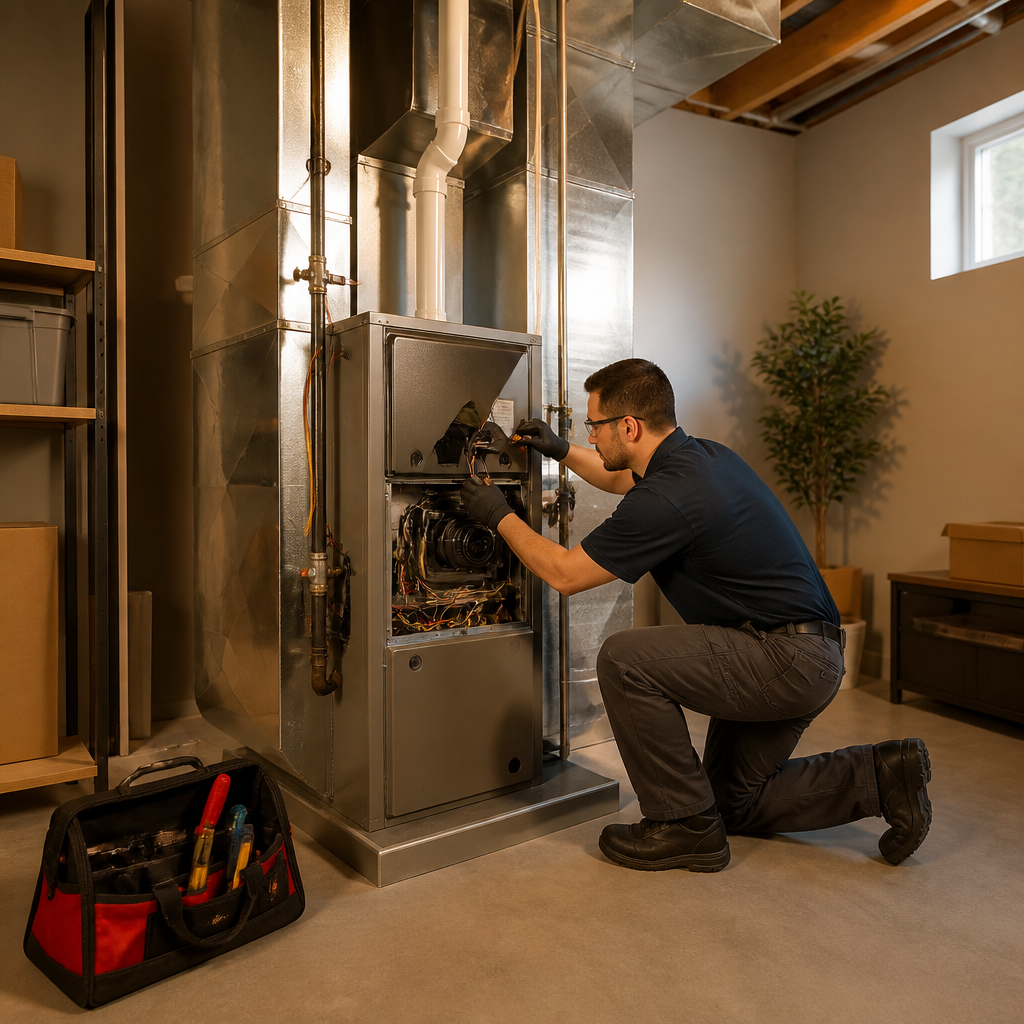
A natural gas furnace burns fuel directly in your home and converts most of it to heat. Modern high-efficiency gas furnaces carry AFUE ratings of 96 to 98 percent, meaning nearly all of the gas burned becomes usable heat. Older 80 percent AFUE units, which are still common across Phoenix-area homes built in the 1990s and early 2000s, waste 20 cents of every dollar spent on gas before the heat reaches your living room.
Gas furnace installation in Arizona runs roughly $4,000 to $9,500 depending on unit size, AFUE rating, and installation complexity. For a 2,000 square foot home in Chandler or Mesa, a 60,000 BTU unit at 96 percent AFUE is a common fit, installed in the $5,500 to $7,000 range. That cost is higher than an electric furnace of comparable capacity, but the lower per-therm fuel cost tends to offset the price difference over the system's lifespan in most Phoenix homes.
For homes currently on Southwest Gas, the math favors gas heat on a pure operating cost basis. A typical Phoenix-area home running a gas furnace for a four-month heating season will see monthly winter bills in that $70 range that Southwest Gas describes. That is a manageable number, and with rates currently trending lower, gas looks solid for the next several winters barring major commodity shifts.
Pro tip: If your gas furnace is more than 15 years old and rated at 80 percent AFUE, replacing it before next season with a 96 percent or higher unit will cut your heating bill noticeably, often by 15 to 20 percent, without changing fuel sources or touching your ductwork. Brewer's Air Conditioning and Heating carries Trane and Lennox gas furnaces, both of which offer strong high-AFUE options well-suited to Arizona's climate.
Electric Heating Options and What They Cost
Not all electric heating is the same, and treating it as one category is one of the most common mistakes homeowners make when comparing heating costs. There are two fundamentally different ways to heat a home with electricity, and they have completely different economics.
Electric Resistance Furnaces and Heat Strips
Electric resistance heat converts electricity directly to heat at 100 percent efficiency at the point of use. Every kilowatt-hour becomes a kilowatt-hour of warmth, no waste. That sounds ideal, but electricity costs more per BTU than natural gas in Arizona, so 100 percent efficiency does not translate to the lowest bill. An electric resistance furnace or heat strip system running on APS power at 16.45 cents per kWh will produce a noticeably higher heating cost Arizona winter than a comparable gas furnace in most scenarios.
Electric furnace installation in Arizona runs from roughly $3,500 to $8,000, making upfront costs lower than gas. Homes without an existing gas line find this option attractive because there is no cost to run a gas service. But over a 10 to 15 year system life, the higher operating cost can erode that upfront savings, especially for APS customers.
Heat Pump Systems
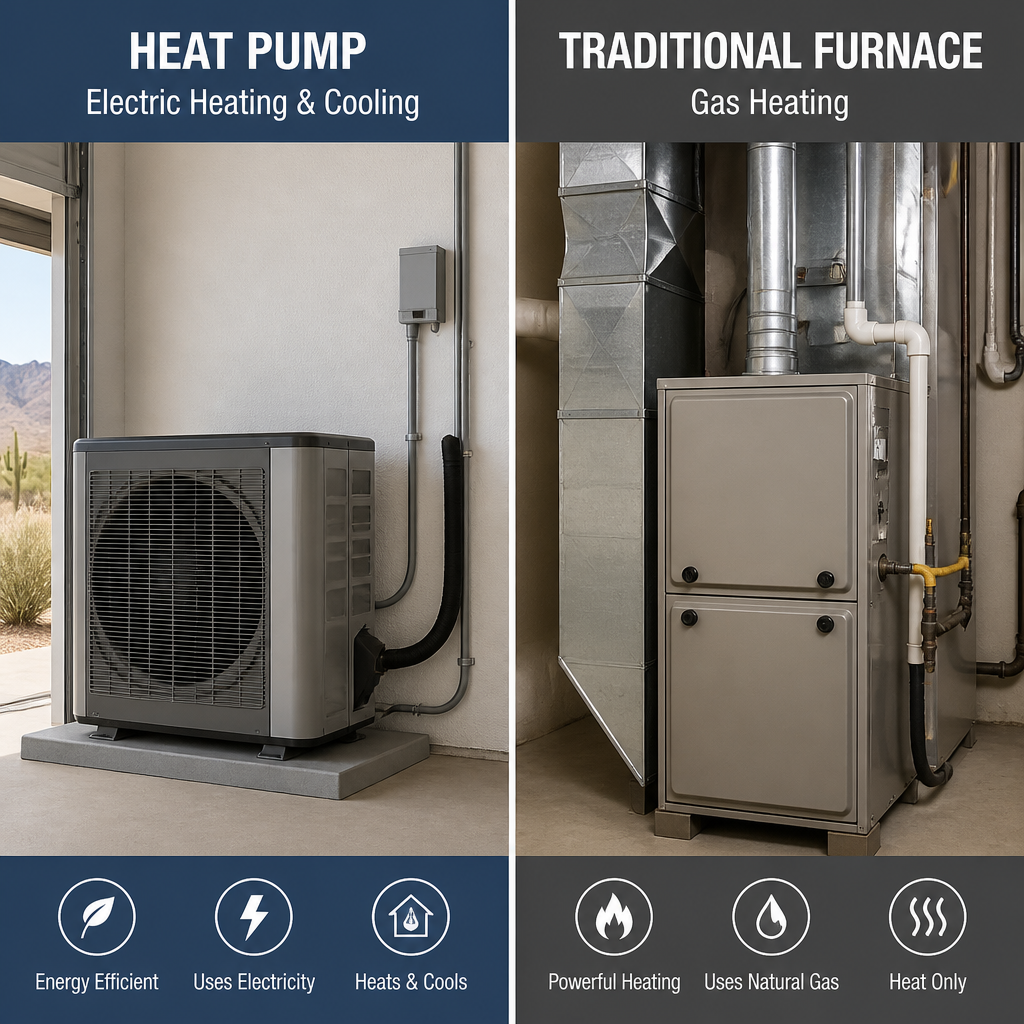
A heat pump does not generate heat by burning fuel or resistively converting electricity. It moves heat from the outdoor air into your home using a refrigerant cycle, the same physics your air conditioner uses in reverse. Because it moves heat rather than generates it, a modern inverter heat pump delivers 2.5 to 4 units of heat energy for each unit of electrical energy consumed. This is where the electric heating equation changes completely.
In Phoenix's mild winter temperatures, heat pumps operate at peak efficiency. They only struggle in sustained sub-freezing conditions, which the Phoenix metro almost never sees. For east Valley homeowners on SRP, where electricity rates are closer to 13.46 cents per kWh, a high-efficiency heat pump can produce heating costs competitive with or even lower than a gas furnace on a monthly basis.
Gas vs. Electric: Side-by-Side Comparison
The table below compares the three main heating system types available to Phoenix-area homeowners. Costs reflect current Arizona utility rates and 2026 installation data for a typical 2,000 square foot home. All figures assume a standard four-month heating season in the Valley.
| Heating System | Estimated Installation Cost (AZ, 2026) | Estimated Monthly Winter Heating Cost |
|---|---|---|
| Gas Furnace (80% AFUE), Southwest Gas | $4,000 to $6,000 | Roughly $50 to $80 per month for heating load only |
| Gas Furnace (96% AFUE), Southwest Gas | $5,500 to $9,500 | Roughly $40 to $70 per month for heating load only |
| Electric Resistance Furnace (APS territory) | $3,500 to $7,500 | Roughly $80 to $140 per month for heating load only |
| Electric Resistance Furnace (SRP territory) | $3,500 to $7,500 | Roughly $60 to $110 per month for heating load only |
| Heat Pump, high-efficiency inverter (SRP or APS) | $6,300 to $13,000 | Roughly $30 to $65 per month for heating load only |
These monthly estimates cover the heating portion of your utility bill only. In practice, your bill also includes water heating, appliances, lighting, and other loads. The key takeaway is that an electric resistance furnace on APS is clearly the most expensive option to operate, while a high-efficiency heat pump on either utility and a modern gas furnace are the two most cost-effective choices for central Arizona homes.
What About a Heat Pump?
For many Phoenix-area homeowners, the real question in 2026 is not gas versus electric resistance. It is gas furnace versus heat pump. And in central Arizona's climate, this is a genuinely close call that deserves honest analysis.
Heat pump installation in Arizona runs from roughly $6,300 for a standard-efficiency system to $13,000 or more for a high-efficiency inverter unit. That is more than a gas furnace alone, but a heat pump also replaces your air conditioner. If your AC is aging and needs replacement anyway, the combined replacement cost math often favors a heat pump strongly, since you are buying one system instead of two.
The federal Inflation Reduction Act heat pump tax credit of up to $2,000 remains available for qualifying installations, which reduces the effective upfront cost. SRP also offers equipment rebates of $75 to $225 per ton on qualifying heat pumps through April 2027 under its Cool Cash program. APS discontinued residential equipment rebates as of January 1, 2026, so APS customers should focus on the federal credit rather than utility rebates.
A dual-fuel system, which pairs a heat pump with a gas backup furnace, suits larger east Valley homes well. The heat pump handles the bulk of winter heating at high efficiency, then the gas furnace kicks in only when overnight temperatures drop to the point where gas becomes more economical. For Gilbert and Chandler homes that do occasionally see cold snaps into the mid-30s, a dual-fuel setup captures efficiency benefits most of the season without sacrificing comfort on the coldest nights.
Pro tip: If your home has an existing gas furnace that still has several good years left, you do not need to rip it out to benefit from a heat pump. A properly sized heat pump installed alongside an existing furnace creates a dual-fuel hybrid system. Brewer's technicians can evaluate your existing equipment and run the actual cost math for your home's size and utility territory before you spend a dollar on new equipment.
Which System Makes Sense for Your Home?
Here is a direct answer by situation, because "it depends" without follow-up is not useful guidance.
If your home already has a natural gas line and a functioning gas furnace: Stay with gas for heating. Upgrade to a high-AFUE unit if yours is older than 15 years. The Southwest Gas rates currently in place make gas the lower-cost fuel per BTU, and your existing infrastructure means no added installation expense to switch fuels.
If your home is all-electric, meaning no gas line to the property, an electric resistance furnace is the easiest path but not the cheapest to run. A heat pump is the right system for an all-electric Phoenix home. The higher upfront cost compared to resistance heating is justified by the operating savings, especially over a 12 to 15 year system life. On SRP rates, the payback period is shorter than on APS given SRP's lower per-kWh cost.
If you are replacing both your AC and your heater in the same project, a high-efficiency inverter heat pump should be your default choice unless your home has an unusually high heating load (think large, poorly insulated, older construction). For most post-2000 construction in Tempe, Ahwatukee, Mesa, Chandler, and Gilbert, a heat pump handles Phoenix winters without breaking a sweat and slashes cooling costs in summer.
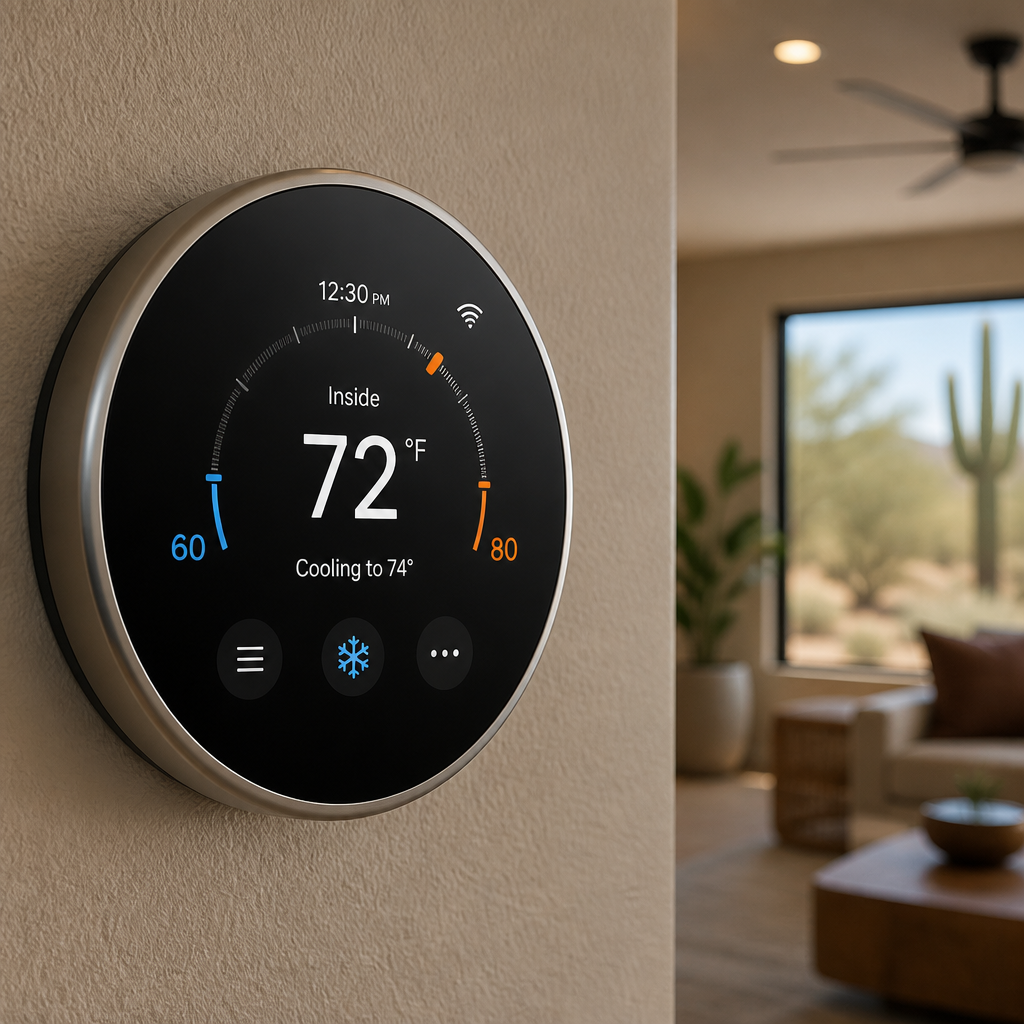
If you are keeping your existing system another five years and just want to cut this winter's heating bill, focus on your thermostat behavior, duct sealing, and filter maintenance. Setting the thermostat to 68 or 69 degrees instead of 72 makes a meaningful difference in a Phoenix winter, where mild outdoor temps mean every extra degree of setpoint heat has a tangible cost.
Frequently Asked Questions
Is gas or electric heating cheaper to run in Phoenix this winter?
For most Phoenix-area homes, natural gas from Southwest Gas remains the cheaper fuel per BTU at current rates, making a gas furnace less expensive to operate month-to-month than electric resistance heat. However, a high-efficiency heat pump running on SRP electricity can match or beat gas furnace costs because of how efficiently it moves heat. The answer depends on which electric utility serves your address and what type of electric heating system you have.
What does a typical winter gas heating bill look like in Phoenix?
Southwest Gas reports that the average residential customer pays around $70.50 per month on winter bills, which covers space heating for a typical Valley home. That figure can be lower for smaller homes or homes with newer high-efficiency furnaces, and higher for older, less efficient systems or larger properties in the east Valley.
How do APS and SRP rates affect my electric heating bill?
APS customers in Phoenix pay roughly 16.45 cents per kWh on average, while SRP customers in Mesa, Tempe, Chandler, and Gilbert pay around 13.46 cents per kWh. That difference of about three cents per kilowatt-hour adds up significantly over a heating season. An SRP customer running the same electric system as an APS customer will pay meaningfully less, which is why you need to know which utility serves your address before comparing heating costs.
Do heat pumps work well in Arizona winters?
Yes, and Phoenix is actually one of the best climates in the country for heat pump performance. Heat pumps lose efficiency as outdoor temperatures drop below about 35 to 40 degrees Fahrenheit. The Phoenix metro rarely sees sustained temperatures in that range, meaning a heat pump here operates at peak efficiency through most of the heating season. Inverter-driven variable-speed heat pumps handle the occasional cold snap better than older single-stage models and are the recommended choice for central Arizona homes.
Should I replace my gas furnace with a heat pump if my AC also needs replacing?
If both systems need replacement at the same time, a heat pump is worth serious consideration. You replace two aging systems with one, you qualify for up to $2,000 in federal tax credits, and SRP offers additional rebates through April 2027. Run the numbers with your HVAC contractor using your actual utility rate and home size. For most east Valley homes with post-2000 construction, the 20-year cost of a high-efficiency heat pump compares favorably to separate AC and gas furnace replacements.
What is the most expensive way to heat a home in Phoenix?
An electric resistance furnace or heat strip system on APS power is the most expensive heating option for central Arizona homes. Electric resistance heat converts electricity to heat at 100 percent efficiency, but electricity costs more per BTU than natural gas. Combined with APS's higher per-kWh rate compared to SRP, this combination produces the highest monthly heating bills of any common system type in the Valley. If you are currently in this situation, a heat pump upgrade is the single most impactful change you can make to reduce your heating cost Arizona winter bill.
Have you noticed a significant difference in your APS or SRP heating bills since switching systems or adjusting your thermostat habits this winter? Share your experience in the comments below.
References
- Arizona Corporation Commission announcement on Southwest Gas rate reduction for 2026
- Arizona APS and SRP electricity rate comparison and residential pricing details
- Arizona electricity rates by city: Phoenix, Tempe, Mesa, Chandler, and Gilbert
- Gas and electric furnace installation cost guide for Arizona homes, 2026
- APS vs SRP electric rates in Arizona: how each utility structures its pricing
About the Author
Mark Ybarra
Mark Ybarra is the owner and leader of Brewer's Air Conditioning & Heating, a trusted HVAC company serving Tempe, Phoenix, Scottsdale, Mesa, and surrounding Arizona communities since 1982. After working in multiple roles within the company, Mark officially took ownership in 2018 and continues to uphold Brewer's long-standing commitment to integrity, exceptional service, and customer satisfaction.
Need HVAC Help?
Serving Phoenix, Tempe, Scottsdale, Mesa & surrounding areas since 1982.