At 11 PM in Phoenix when it is 108 degrees outside and your air conditioner stops working, you are not dealing with a minor inconvenience. You are dealing with a genuine health emergency. Heat-related illness can set in within hours in an unventilated Arizona home, and the elderly, young children, and pets are at serious risk. Knowing exactly what to do before you call for emergency AC repair Phoenix homeowners need can save you time, money, and a very dangerous night. This guide walks you through every step, from the moment your unit goes silent to what to expect from a qualified 24/7 technician.
Quick Takeaways
| Key Insight | Explanation |
|---|---|
| Reset the breaker first | A tripped circuit breaker is behind a significant number of nighttime AC failures and takes under two minutes to check before calling anyone. |
| A dirty filter can shut down your system | A clogged filter causes the evaporator coil to freeze, cutting airflow and triggering a system shutdown. Inspect yours before assuming the worst. |
| Phoenix indoor temps can hit dangerous levels fast | During a summer night in Phoenix, an un-air-conditioned home can exceed 90 degrees Fahrenheit indoors within two to three hours. |
| Flat-rate pricing protects you after hours | Companies like Brewer's AC use flat-rate pricing so you are not hit with unpredictable surge charges simply because it is 2 AM. |
| Capacitor failure is the number-one summer culprit | In Arizona heat, run capacitors fail at a much higher rate than in moderate climates. This is a fast and affordable repair when caught quickly. |
| Know your system's age before you call | If your unit is over 15 years old, your technician may present repair-versus-replace options on-site. Being informed speeds up the decision. |
| Not all 24/7 services are equal | Some companies use a phone answering service at night and dispatch the next morning. Ask explicitly whether a technician will arrive tonight. |
Why Nighttime AC Failures Are Different in Phoenix
Most of the country gets a break at night. Temperatures drop, windows open, and a failed AC is annoying but survivable. Phoenix does not work that way. During June, July, and August, overnight lows in the Phoenix metro regularly stay above 90 degrees Fahrenheit. The Arizona Department of Health Services reports that heat-related deaths in Maricopa County have increased sharply over the past decade, with nighttime heat being a primary contributing factor for indoor fatalities.
This is not a scare tactic. It is the reality that makes 24/7 AC repair Phoenix services an actual necessity rather than a convenience. A homeowner in Cleveland can crack a window and wait until morning. A homeowner in Tempe or Ahwatukee cannot make that same calculation safely.
The other factor that makes nighttime failures more costly is the domino effect on your equipment. When an AC unit stops mid-cycle and the underlying problem goes unaddressed, secondary damage can develop by morning. A refrigerant leak left running can burn out a compressor. A frozen coil left melting unattended can flood a drain pan and damage ceilings. Acting fast is not just about comfort. It is about limiting the repair bill.
Immediate Steps When Your AC Stops at Night
Before you pick up the phone, spend five minutes running through this checklist. In practice, these steps resolve the problem without a service call in roughly 10 to 15 percent of cases, and they give the technician useful diagnostic information when they do not.
Check the Thermostat
This sounds obvious, but thermostat errors cause a surprising number of after-hours calls. Confirm the thermostat is set to COOL, not FAN ONLY. Make sure the set temperature is below the current indoor temperature. If your thermostat runs on batteries, replace them. Dead thermostat batteries will cut power to the entire call-for-cool signal.
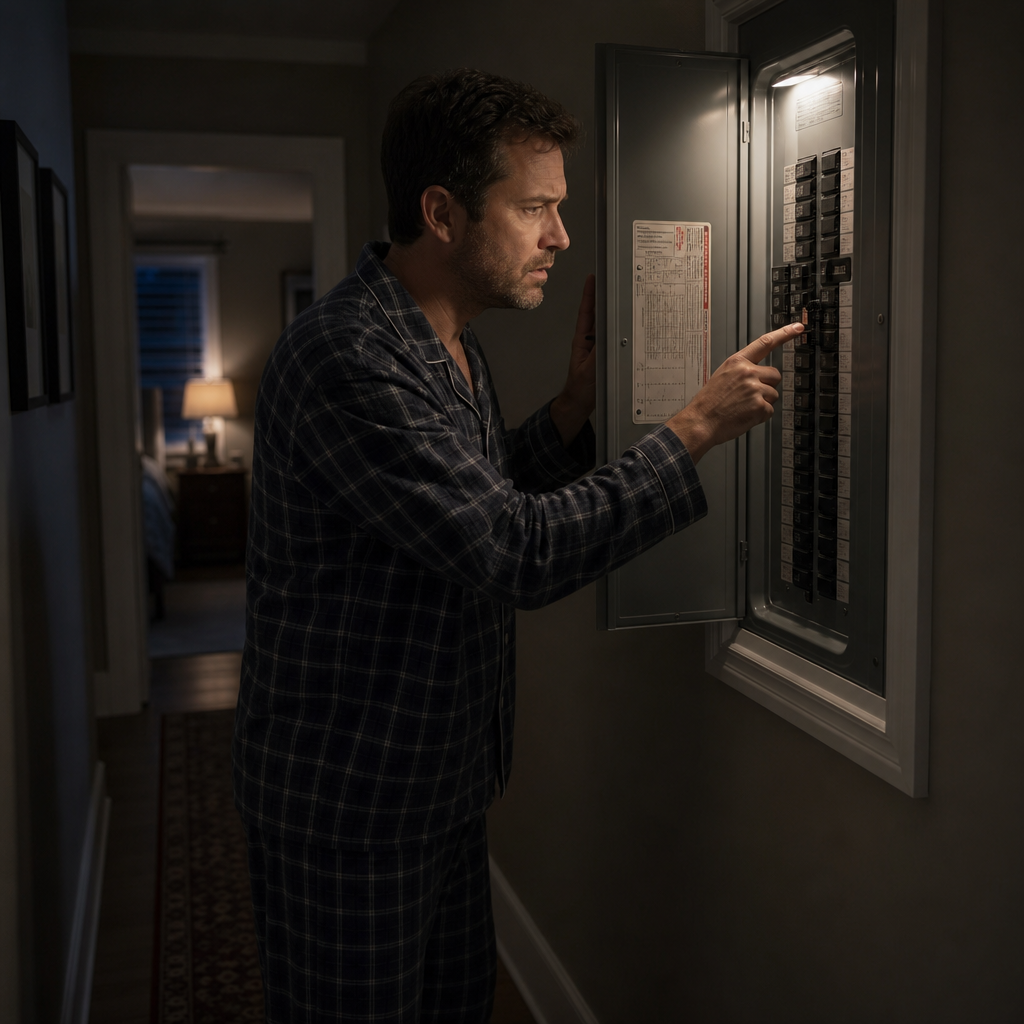
Check the Circuit Breaker
Go to your electrical panel and look for a breaker labeled AC, HVAC, or AIR HANDLER. If it has tripped to the middle position, switch it completely off and then back on. A tripped breaker often indicates a brief power surge, especially common during Arizona monsoon storms. If it trips again immediately after resetting, stop and call a technician. That pattern signals a wiring or motor issue that requires professional hands.
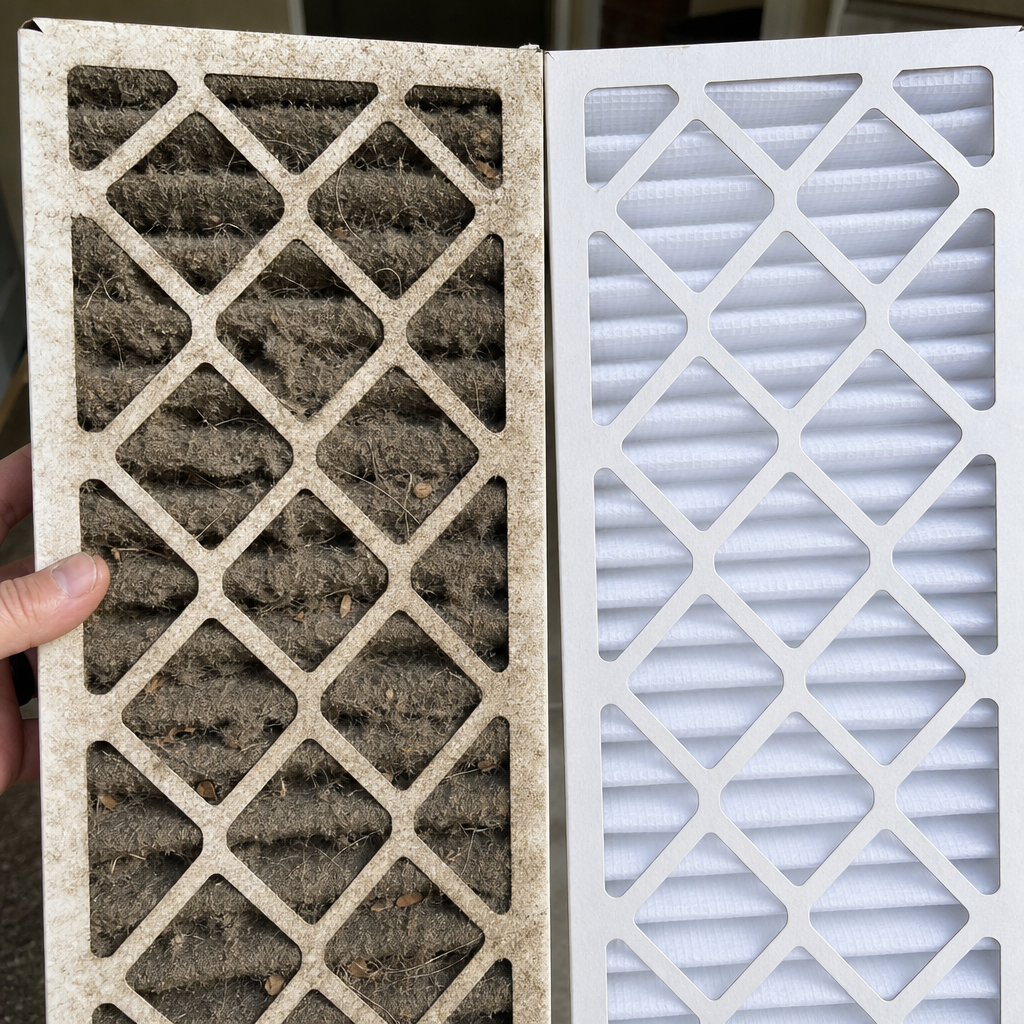
Inspect the Air Filter
A clogged filter is one of the most common causes of an AC stopped working at night Arizona call that Brewer's technicians respond to. Pull the filter out and hold it up to a light. If you cannot see light through it, replace it before restarting the system. A frozen evaporator coil from restricted airflow needs about 30 minutes to thaw before the system will run properly again.
Check the Condensate Drain Pan
Many modern AC systems have a float switch in the drain pan that automatically shuts the unit down if the pan fills with water. This prevents ceiling damage from overflow. Look at the pan beneath your air handler. If it is full of standing water, the drain line is clogged. You can attempt to clear it with a wet-dry vacuum on the exterior drain port, but if you are not comfortable with that, it is a fast fix for any qualified technician.
If none of these steps restore cooling, the issue is mechanical or electrical and requires a licensed technician. Do not attempt to open the outdoor unit or disconnect refrigerant lines yourself. Arizona law requires EPA Section 608 certification to handle refrigerants, and improper handling is dangerous.
Pro tip: Before calling for emergency AC repair in Phoenix, take a photo of your thermostat screen, your air filter, and your breaker panel. Texting these to your HVAC company can help the dispatcher send the right technician with the right parts on the first trip.
Common Causes of Sudden AC Failure at Night
Understanding why units fail at night, specifically, helps you have a more productive conversation with your technician and sets realistic expectations about repair time and cost.
Failed Run Capacitor
The run capacitor is a cylindrical component inside the outdoor condenser unit that provides the starting boost for the compressor and fan motors. In Arizona's extreme heat, capacitors degrade faster than manufacturer ratings predict. The unit runs all day in 115-degree ambient heat, and by evening the capacitor simply gives out. You will often hear a clicking or humming sound with no airflow, or the outdoor fan may spin sluggishly. Capacitor replacement is typically a 30-to-45-minute repair and one of the more affordable emergency calls.
Refrigerant Leak
Low refrigerant from a slow leak causes the evaporator coil to freeze over, which then blocks airflow entirely. The unit may run for hours before the coil is fully iced, which is why the failure often appears sudden in the evening after running all day. A technician needs to locate the leak, repair it, and recharge the system to the correct pressure. This is not a one-hour fix, but it can often be completed the same night for straightforward leaks.
Compressor Failure
This is the most expensive outcome and the one homeowners fear most. Compressors can fail from prolonged operation in extreme heat, from running with low refrigerant, or from simple end-of-life wear. If your technician diagnoses compressor failure on a unit that is 12 or more years old, you will likely be presented with a replace-the-unit option rather than a repair. On Trane and Lennox units, compressor warranties can offset some of this cost if the unit is still under coverage.
Electrical Control Board Failure
Control boards regulate the communication between the thermostat and the various components of the system. A failed board can cause the system to stop responding entirely while appearing to have power. This is a diagnosis that requires a technician with diagnostic equipment and is not something a homeowner can troubleshoot.
Comparing Your Options for After-Hours Repair
When your AC fails at midnight in Chandler or Mesa, you essentially have three choices. Each comes with different tradeoffs in cost, speed, and quality of outcome.
| Option | Typical Response Time | Cost Consideration |
|---|---|---|
| Local established HVAC company with 24/7 dispatch (e.g., Brewer's AC) | 1 to 3 hours depending on technician availability and your location in the Phoenix metro | Flat-rate pricing means no surprise after-hours surcharge. Parts and labor quoted before work begins. |
| Large national or franchise HVAC brand | Varies widely. Some dispatch quickly, others use call centers that route to the next available contractor | Pricing can include after-hours fees layered on top of standard rates. Always ask for a written quote before authorizing work. |
| Wait until morning and call during business hours | Next-day availability, though summer demand in Phoenix means same-day slots fill fast | Lowest cost option, but carries real health risk during Phoenix summer nights and potential additional equipment damage |
The data consistently shows that homeowners who call an established local company rather than a national franchise report higher satisfaction with transparency around pricing and repair quality. In a market like Phoenix where summer HVAC demand is extreme, companies that have operated locally for decades have stronger incentive to protect their reputation than transient contractors dispatched by a call center.
Brewer's Air Conditioning has served central Arizona since 1982. That track record across more than 40 years in the same market reflects a level of accountability that newer entrants simply cannot match.

What to Expect from a 24/7 AC Technician
Knowing what a professional after-hours visit looks like removes the anxiety of the unknown and helps you spot a technician who is not performing a thorough diagnosis.
Arrival and Initial Assessment
A qualified technician will ask you what you observed before the unit stopped, including sounds, smells, or any error codes on the thermostat. They will check both the air handler inside and the condenser unit outside. In practice, a technician who only checks one component without examining the other is cutting corners. Both units work as a system and both need to be evaluated.
Diagnostic Testing
Expect the technician to use a multimeter to test capacitor readings, a manifold gauge set to check refrigerant pressure, and a clamp meter to verify amperage draws on motors. These are not optional extras. They are the baseline tools for any honest diagnosis. If a technician names a repair without using diagnostic equipment, ask them to show you the readings that support their diagnosis.
Flat-Rate Quote Before Work Begins
A reputable company will give you the repair price before they start the work. Brewer's AC uses upfront flat-rate pricing specifically to eliminate the scenario where a homeowner is presented with a bill that is far higher than expected at midnight with no alternatives available. If a technician refuses to give you a price before starting, that is a serious warning sign.
Pro tip: Ask the technician specifically whether the quoted price includes all labor and parts, or whether additional charges can appear after the repair is complete. A trustworthy company will confirm the quote is all-in, no exceptions.
How to Choose the Right Emergency HVAC Company
Not every company advertising emergency AC repair Phoenix services actually provides true around-the-clock technician dispatch. Some run a live phone line at night but schedule the actual technician for first thing in the morning. Others outsource after-hours calls to a third-party answering service with no guarantee of rapid response. Here is how to tell the difference before you need them at midnight.
Ask the Right Questions When You Call
Call the company's after-hours number right now, outside of a crisis, and ask: Is a licensed technician on call tonight who can come to my home in Phoenix or Mesa if I have an emergency? What is your typical response time after 10 PM? Do you charge a separate after-hours dispatch fee on top of the repair cost? The answers will tell you immediately whether this is a company with genuine 24/7 capability or one that uses the label for marketing purposes only.
Verify Licensing and Insurance
In Arizona, HVAC contractors must be licensed by the Arizona Registrar of Contractors. You can verify any company's license status at the Registrar's website using their license number. An unlicensed contractor performing refrigerant work or electrical repairs on your home creates liability that your homeowner's insurance may not cover.
Check for Local Reviews Specifically About After-Hours Service
Filter Google and Yelp reviews for the words "night", "midnight", "after hours", and "emergency". Real reviews from homeowners who experienced a summer midnight failure and got a technician to their door within a reasonable time are the most reliable signal of actual 24/7 capability. Reviews about regular daytime tune-ups tell you nothing about emergency performance.
"Heat exhaustion can develop in adults in just one to two hours of exposure to high temperatures, especially when combined with high humidity. Indoor environments that retain daytime heat without air conditioning create the same dangerous conditions as direct outdoor sun exposure." - National Institutes of Health, National Library of Medicine
Preventing the Next Midnight Breakdown
Emergency repairs are expensive and stressful. The straightforward reality is that most summer breakdowns in Phoenix are predictable and preventable with consistent maintenance. Units that receive professional maintenance before the summer season statistically experience far fewer emergency failures during peak heat months.
The two best things a Phoenix homeowner can do are schedule a spring tune-up before June, which is when Arizona demand spikes and technician schedules fill quickly, and change the air filter every 30 to 60 days during heavy summer operation. A two-inch pleated filter in a Phoenix home running AC around the clock will clog far faster than the same filter in a moderate climate running six hours a day.
Brewer's AC offers maintenance plans specifically designed for Arizona's year-round HVAC demands. A maintenance visit includes capacitor testing, refrigerant pressure checks, electrical connection tightening, coil cleaning, and drain line clearing. Every one of those items corresponds directly to a failure mode that sends Phoenix homeowners searching for after-hours repair in July. Catching a weak capacitor during a spring tune-up costs a fraction of what a midnight emergency call costs after the same capacitor fails on the hottest night of the year.
For homeowners in Gilbert, Chandler, and Ahwatukee, the Brewer's service area covers the entire east valley. Scheduling maintenance before you are in crisis is the single most effective action you can take to avoid ever needing these emergency steps in the first place.
Frequently Asked Questions
How quickly can I get emergency AC repair in Phoenix at night?
Response times vary by company and demand. Brewer's Air Conditioning typically dispatches technicians to the greater Phoenix metro within one to three hours for after-hours calls. During peak monsoon periods in July and August, every qualified HVAC company in the valley sees elevated demand. Calling immediately when the unit fails, rather than waiting to see if it comes back on, gives you the best chance of getting a technician to your home the same night.
Is emergency AC repair at night more expensive than a daytime call?
It depends entirely on the company's pricing model. Some companies charge a separate after-hours dispatch fee that can range from $50 to $200 on top of the repair cost. Brewer's AC uses flat-rate pricing, which means the price you are quoted reflects the actual repair without a separate after-hours layer. Always ask about the pricing structure before you authorize any work.
My AC is blowing warm air but running. Is that an emergency?
In Phoenix during summer, yes, treat it as urgent. A unit blowing warm air is typically experiencing low refrigerant, a failed compressor, or a dirty condenser coil so clogged with debris that it cannot release heat. These problems will worsen as the unit continues to run, potentially causing additional component damage. Turn the system to fan-only mode to circulate air without straining the compressor, and call for service the same evening.
What should I do to stay safe while waiting for the technician?
Open windows if the outdoor temperature has dropped below the indoor temperature, which can happen after midnight even in a Phoenix summer. Use battery-powered fans to create airflow. Move to the lowest floor of your home since heat rises. Apply cool, wet cloths to pulse points on the neck, wrists, and ankles. Keep children, elderly residents, and pets in the coolest room available. If anyone shows signs of heat exhaustion, such as rapid heartbeat, confusion, or cessation of sweating, call 911 immediately rather than waiting for the HVAC technician.
Can I reset my outdoor AC unit myself to try to get it running?
Many outdoor condenser units have a reset button, usually a small red button near the refrigerant lines on the side of the unit. You can press this once and wait five minutes to see if the unit restarts. However, if the unit shuts down again after restarting, do not keep resetting it. Repeated resets without resolving the underlying problem can damage the compressor. One reset attempt is reasonable. Multiple resets are not.
How do I know if my AC needs repair or full replacement during an emergency call?
A technician will assess the age of your unit, the cost of the required repair, and the efficiency of your current system relative to modern equipment. A common industry guideline is the 5,000 rule: if the unit's age multiplied by the repair cost exceeds $5,000, replacement is worth serious consideration. For example, a 12-year-old unit facing a $500 repair gives you a number of 6,000, which puts replacement in a reasonable range for discussion. Brewer's technicians present both options with transparent pricing so you can make an informed decision on-site.
About the Author
Mark Ybarra
Mark Ybarra is the owner and leader of Brewer's Air Conditioning & Heating, a trusted HVAC company serving Tempe, Phoenix, Scottsdale, Mesa, and surrounding Arizona communities since 1982. After working in multiple roles within the company, Mark officially took ownership in 2018 and continues to uphold Brewer's long-standing commitment to integrity, exceptional service, and customer satisfaction.
Need HVAC Help?
Serving Phoenix, Tempe, Scottsdale, Mesa & surrounding areas since 1982.