If your energy bills spike every June and your AC never quite keeps up with the Phoenix heat, your ductwork is probably the culprit. Duct leaks Phoenix homeowners deal with are not a minor nuisance. They are a hidden tax you pay every single month. The U.S. Department of Energy estimates that the typical home loses 20 to 30 percent of conditioned air through leaky ductwork. In a place where outdoor temperatures routinely hit 115°F, that loss translates directly into dollars. This article breaks down exactly how much leaky ductwork is costing you, how to identify the problem, and what a proper fix actually looks like.
Quick Takeaways
| Key Insight | Explanation |
|---|---|
| 20-30% conditioned air lost on average | Duct leaks force your AC to work harder and longer to hit the thermostat target, directly inflating your electric bill. |
| Phoenix attic temperatures exceed 150°F in summer | Leaky ducts in a 150°F attic pull superheated air into your supply lines, undermining your cooling system at the worst possible moment. |
| Duct tape is not a real fix | Standard duct tape fails within months in Arizona heat. Mastic sealant or Aeroseal are the only durable options. |
| Duct sealing pays back in 2-4 years | Homeowners who seal leaky ductwork typically recover the cost through energy savings within two to four cooling seasons. |
| Uneven room temperatures are a direct symptom | If one bedroom is always 5°F warmer than another, a duct leak or disconnected section is almost certainly the reason. |
| Indoor air quality degrades with duct leaks | Return-side leaks pull attic dust, insulation particles, and outdoor pollutants directly into your living spaces. |
| Older homes in Mesa, Tempe, and Chandler are high risk | Homes built before 2000 often have flex duct that has cracked, kinked, or separated at joints over decades of thermal stress. |
How Much Duct Leaks Are Actually Costing Phoenix Homeowners
Let's put real numbers to this. The average Arizona homeowner pays roughly $200 to $350 per month in electricity costs during peak summer months, with air conditioning accounting for roughly 50 to 60 percent of that total. If your duct system is leaking 25 percent of conditioned air into your attic, you are essentially cooling your attic for free while paying full price for the privilege.
On a $280 summer electric bill, that is $42 per month in pure waste from duct losses alone. Over a five-month Phoenix cooling season, that is $210 per year at minimum. Stretch that across five years without addressing the problem and you have spent over $1,000 in entirely avoidable costs from one issue. Homes with severely deteriorated ductwork, which is common in Phoenix properties built in the 1980s and 1990s, can see losses far exceeding that estimate.
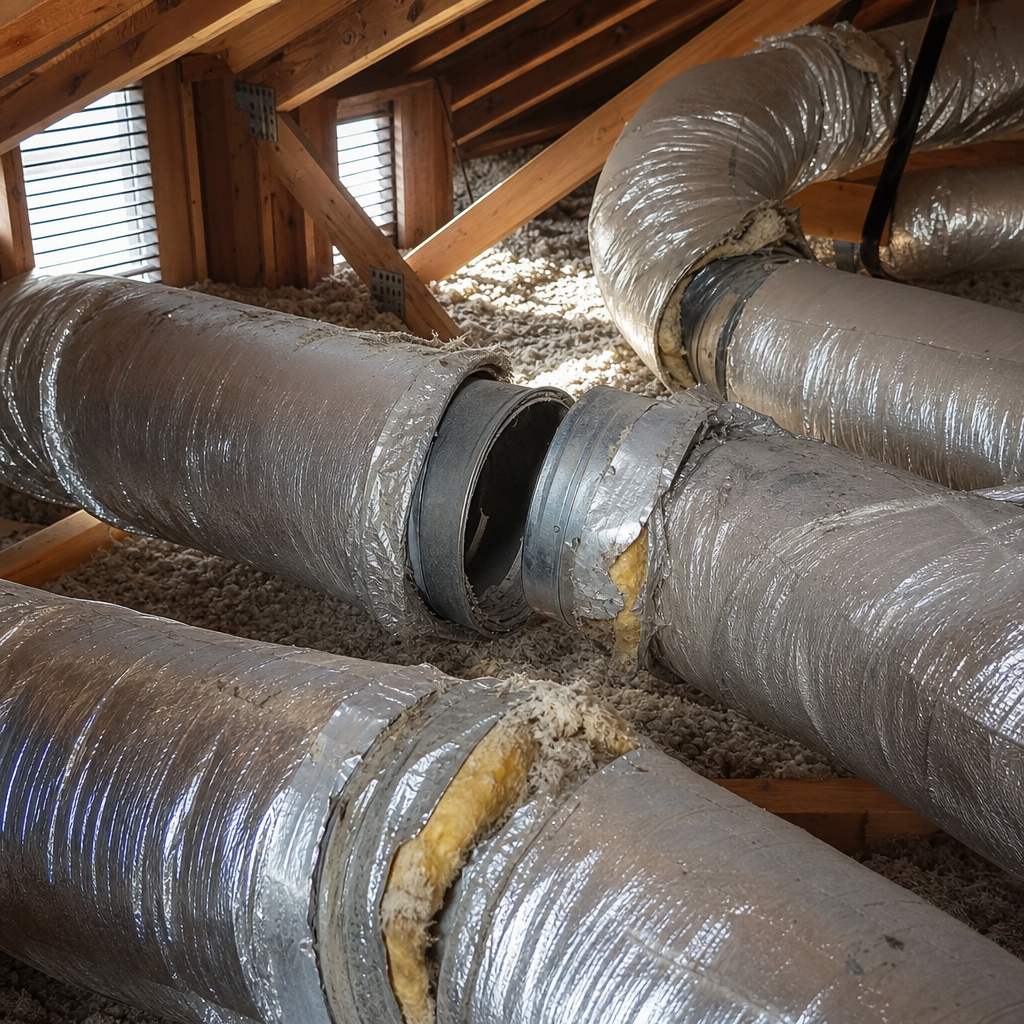
The financial hit does not stop at your electric bill. Leaky ductwork forces your compressor and blower to run longer cycles, accumulating wear faster than designed. That shortened equipment lifespan means earlier replacement costs. A Trane or Lennox system that should last 15 to 18 years in a properly sealed home may need replacement in 10 to 12 years if it spends every summer fighting against its own duct system.

Why Phoenix Conditions Make Duct Leaks Far More Destructive
Duct leaks are a nationwide problem, but they hit Arizona homeowners harder than almost anywhere else in the country. The reason comes down to physics and geography.
Attic Temperatures That Defy Belief
In Phoenix, Mesa, and Tempe, residential attic temperatures routinely reach 150 to 160°F on a July afternoon. Most homes in the region run their ductwork through these attics. When your supply ducts have gaps, holes, or separated joints, they are not just losing conditioned air into a warm space. They are losing it into what amounts to an industrial oven.
Even a small gap on the supply side means 75°F air your system just worked hard to cool is leaking into a 155°F attic space before it reaches a single vent. The temperature differential is extreme, and the energy loss per cubic foot of escaped air is far higher than what homeowners in moderate climates experience.
Return-Side Leaks Pull Superheated Air Back In
Return-side duct leaks in an Arizona attic are particularly brutal. Instead of just losing conditioned air, your system is actively sucking 150°F attic air back through gaps in the return duct and forcing your air handler to cool that superheated air before it can do any useful work. This is the single most expensive duct defect a Phoenix homeowner can have, and it is also among the most common in homes built before 2000.
The data consistently shows that return-side attic leaks can increase effective cooling load by 30 to 40 percent, which means your system runs nearly continuously during peak afternoon hours even when it should be cycling normally.
"Duct leakage in hot climates represents one of the most cost-effective energy efficiency opportunities available to homeowners. The combination of extreme outdoor temperatures and long cooling seasons amplifies every percentage point of air loss far beyond what the same leak would cost in a temperate climate." - Lawrence Berkeley National Laboratory, Building Technology and Urban Systems Division
Signs of Leaky Ductwork Arizona Homeowners Should Not Ignore
You do not need a diagnostic tool to notice the early signs of leaky ductwork Arizona homeowners deal with every summer. Some of the most reliable indicators are things you experience every day without connecting them to your ducts.
Rooms That Refuse to Cool
If you have a bedroom that hits 80°F while the rest of the house is at 74°F and your thermostat is set to 72°F, the most common cause is a disconnected or heavily leaking duct serving that room. This is not a thermostat issue. It is not an undersized system issue in most cases. It is a delivery problem.
In practice, when Brewer's technicians go into these homes, they frequently find flex duct that has separated at a boot connection or a main trunk line with gaps at the joints that were never properly sealed during original installation.
Electric Bills That Spike Without Explanation
A consistent year-over-year increase in your summer utility bills, beyond normal rate increases from APS or SRP, almost always points to one of three things: a failing compressor, a refrigerant leak, or ductwork deterioration. Of those three, ductwork is the most overlooked and the most gradual, which makes it easy to miss until the losses become severe.
Visible Dust Around Vents and on Surfaces
Excessive dust accumulation in a home with a relatively new or recently cleaned filter is a strong sign that return-side leaks are pulling attic insulation and unconditioned air into the system. If your ceiling around supply vents shows a ring of discoloration, that is particulate matter being deposited with every air cycle.
Pro tip: Hold a lit incense stick near accessible duct joints in your attic access point or in any crawl space. If the smoke pulls toward the duct instead of drifting upward, you have a return-side leak at that junction. This simple test costs nothing and can identify obvious problem spots before a professional inspection.
Duct Sealing HVAC Options: What Works and What Doesn't
The market for duct sealing HVAC Phoenix AZ services has grown significantly as homeowners become aware of how much they are losing. But not all duct sealing methods are created equal, and some common DIY attempts make the problem worse or simply fail within one season.
Mastic Sealant: The Durable Professional Standard
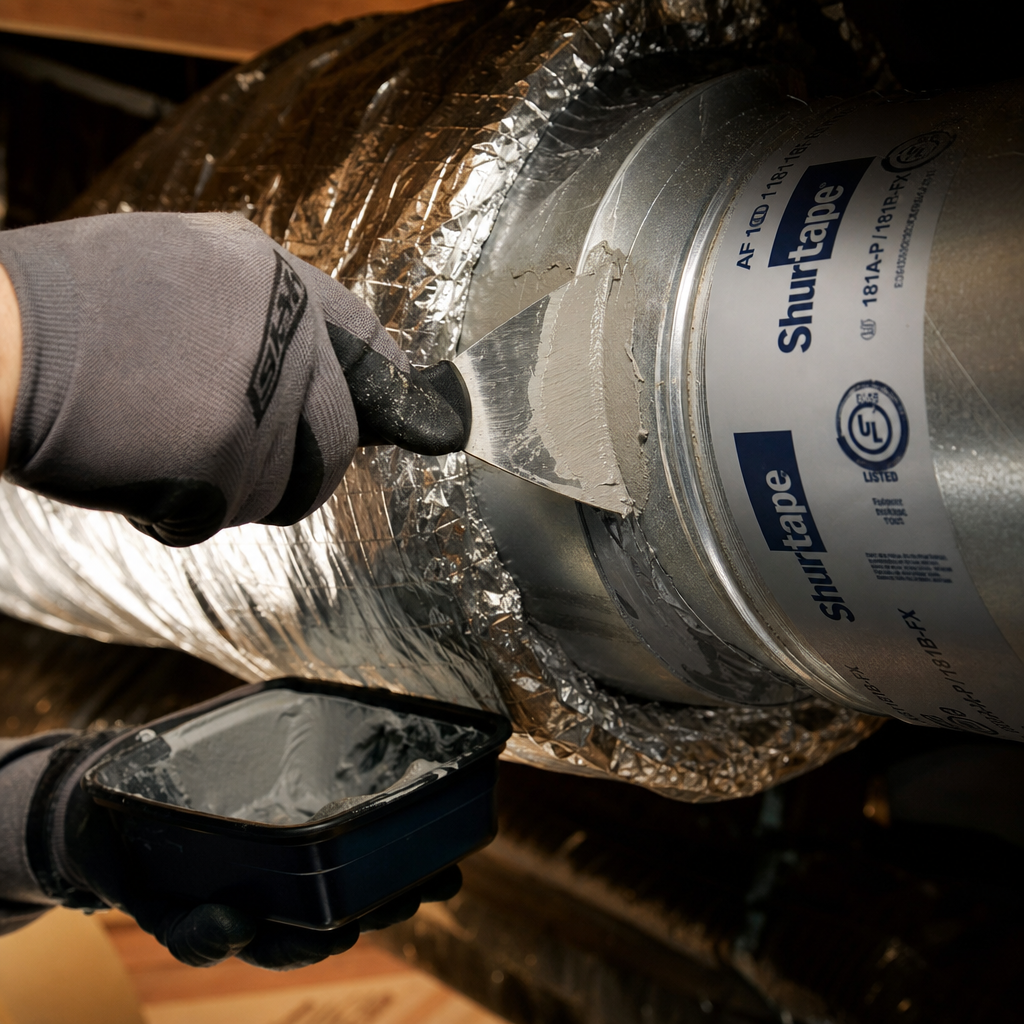
Mastic is a thick, water-based adhesive compound that contractors apply to duct joints, seams, and gaps by hand or with a brush. It cures to a flexible, long-lasting seal that handles the thermal expansion and contraction that Arizona ductwork goes through every day. Unlike tape, it does not dehydrate and peel away in high-heat attic environments.
A common mistake is thinking that foil tape is a professional-grade alternative to mastic. Foil tape is better than standard duct tape, but in a Phoenix attic that hits 155°F for months at a time, even quality foil tape will eventually fail at the adhesive layer. Mastic does not have that vulnerability.
Aeroseal: The Pressurized Interior Sealing System
Aeroseal is a technology originally developed with support from the Department of Energy that seals ductwork from the inside. A technician pressurizes your duct system and introduces a polymer-based sealant in aerosol form. The sealant particles travel through the air inside the ducts and adhere specifically to leak points, where they accumulate and seal gaps up to 5/8 of an inch in diameter.
Aeroseal is particularly valuable in homes where the ductwork is largely inaccessible, such as those with ducts buried under blown-in attic insulation or routed through finished walls. The process generates a before-and-after report that quantifies exactly how much leakage existed and how much was sealed, giving homeowners a documented record of improvement.
Standard Duct Tape: Do Not Use It
This point deserves direct emphasis. Duct tape, despite its name, is not rated for use on ductwork and is not approved by building codes for that purpose. Studies from Lawrence Berkeley National Laboratory found that standard duct tape failed in virtually all test conditions within months. In an Arizona summer attic, that timeline is compressed even further. If a contractor proposes standard duct tape as their sealing solution, find a different contractor.
Pro tip: When getting quotes for duct sealing, ask each company whether they will provide a post-sealing duct blaster test to verify the results. Any contractor confident in their work will welcome the verification. Those who refuse or cannot perform it are usually relying on methods that do not hold up to measurement.
Duct Repair Method Comparison
| Method | Best For | Expected Lifespan in Arizona Heat |
|---|---|---|
| Mastic Sealant | Accessible joints, seams, and boot connections in attics and crawl spaces | 15 to 20 years with proper application |
| Aeroseal Interior Pressurization | Inaccessible ductwork, whole-system leakage, homes with buried or concealed ducts | 10 to 15 years; backed by third-party testing data |
| Standard Duct Tape or Foil Tape | Temporary patch only, never a permanent solution in high-heat climates | 3 to 18 months before adhesive failure in Arizona attic conditions |
What to Expect From a Professional Duct Sealing Service
Homeowners in Tempe, Ahwatukee, Chandler, Mesa, Gilbert, and Phoenix who schedule a professional duct assessment should understand what a thorough job actually looks like, so they can tell the difference between a real service and a cursory visit that misses most of the problem.
The Diagnostic Phase Comes First
A proper duct assessment starts with a duct blaster or blower door test. This involves pressurizing the duct system and measuring how fast it loses pressure, which directly quantifies the total leakage in cubic feet per minute. This number gives the technician and the homeowner a clear starting point and is the only objective way to know how bad the problem is before any work begins.
Visual inspection alone is not sufficient for a complete diagnosis. Technicians need to access the attic and physically inspect flex duct runs, main trunk lines, boot connections at ceiling and floor registers, and the air handler cabinet itself, which is a frequent source of cabinet leakage that homeowners and even some contractors overlook.
What a Quality Repair Includes
For most Phoenix-area homes, a full duct sealing job addresses every accessible joint with mastic, replaces any flex duct sections that are kinked, torn, or have separated inner liners, and verifies that all register boots are properly connected and sealed to the duct collar. The job is not complete until a post-repair duct blaster test confirms that leakage has been reduced to an acceptable level, typically below 10 percent of system airflow.
Brewer's Air Conditioning and Heating technicians have been doing this work across central Arizona since 1982, which means they have seen the full range of duct problems specific to this region, from the original builder-grade flex duct installations of the 1980s Mesa subdivisions to the more recent production homes in Gilbert and Chandler where duct connections were rushed during construction booms.
Flat-Rate Pricing Eliminates Surprises
One thing homeowners consistently cite as a frustration when dealing with HVAC contractors is pricing uncertainty. Getting a quote that doubles once the technician is inside the attic is a real problem in this industry. Brewer's uses upfront flat-rate pricing, which means the price you are quoted before the work starts is the price you pay when it finishes, regardless of how long the job takes. This matters particularly for duct work, where attic access can be more involved than expected.
Frequently Asked Questions
How do I know if my duct leaks are severe enough to need immediate repair?
The clearest indicators are rooms that consistently run 5°F or more above your thermostat setting, electric bills that have increased year over year without any change in usage habits, and visible dust rings around supply registers. If you are experiencing two or more of these symptoms, your duct losses are almost certainly severe enough that professional testing and repair will pay for itself within one to two cooling seasons.
Can I seal my own ducts as a DIY project?
You can seal accessible joints using mastic sealant purchased at a home improvement store, and this is a legitimate cost-saving option for straightforward repairs. The problem is that most of the worst leaks in Arizona homes are in hard-to-reach attic locations or at the air handler cabinet where DIY access is difficult and dangerous in summer attic temperatures. A partial DIY fix is better than nothing, but a full professional assessment will find problems you will miss on your own.
How long does professional duct sealing take for a typical Phoenix home?
For a standard 1,500 to 2,500 square foot single-story home, a thorough mastic-based duct sealing job typically takes four to eight hours. Homes with more complex duct systems, two stories, or severely deteriorated flex duct that needs partial replacement can take longer. Aeroseal pressurization jobs are usually completed in three to four hours but require the home to be unoccupied during the process.
Does duct sealing affect my indoor air quality?
Yes, and the effect is positive. Sealing return-side leaks stops your system from pulling attic dust, insulation fibers, and outdoor particulates into your living spaces. Many homeowners report a noticeable reduction in dust accumulation on surfaces within weeks of having their ductwork properly sealed. For households with allergy or asthma concerns, this improvement can be significant.
Will duct sealing reduce my APS or SRP bill enough to notice?
In most cases, yes. Homes with significant duct leakage, defined as leakage exceeding 15 percent of total airflow, typically see summer electric bill reductions of $50 to $150 per month after sealing. The exact savings depend on your current leakage rate, your utility rate, and your home's square footage. A pre and post duct blaster test will show you exactly how much leakage was eliminated, and you can calculate the expected savings directly from those numbers.
How often should Phoenix homeowners have their ductwork inspected?
Every five to seven years is a reasonable baseline for most homes. However, homes built before 1995, homes that have had significant renovation work, and homes where occupants have noticed any of the symptoms described above should be inspected sooner. Arizona's thermal stress on ductwork is severe enough that flex duct systems older than 15 years almost always show meaningful deterioration regardless of how carefully they were installed originally.
Have you noticed your electric bills climbing every summer without a clear explanation? Share what you have found in your own home or what your HVAC technician discovered when they looked at your ductwork.
References
- U.S. Department of Energy: information on duct leakage, home energy efficiency, and residential HVAC performance standards
- ENERGY STAR: guidance on duct sealing, home energy audits, and certified HVAC equipment efficiency ratings
- American Council for an Energy-Efficient Economy: research on residential energy losses and the cost-effectiveness of duct sealing in hot climates
- Lawrence Berkeley National Laboratory: peer-reviewed studies on duct leakage testing methods, sealant performance, and building energy systems
- ASHRAE: technical standards for residential duct design, leakage testing procedures, and acceptable leakage thresholds in HVAC systems
About the Author
Mark Ybarra
Mark Ybarra is the owner and leader of Brewer's Air Conditioning & Heating, a trusted HVAC company serving Tempe, Phoenix, Scottsdale, Mesa, and surrounding Arizona communities since 1982. After working in multiple roles within the company, Mark officially took ownership in 2018 and continues to uphold Brewer's long-standing commitment to integrity, exceptional service, and customer satisfaction.
Need HVAC Help?
Serving Phoenix, Tempe, Scottsdale, Mesa & surrounding areas since 1982.