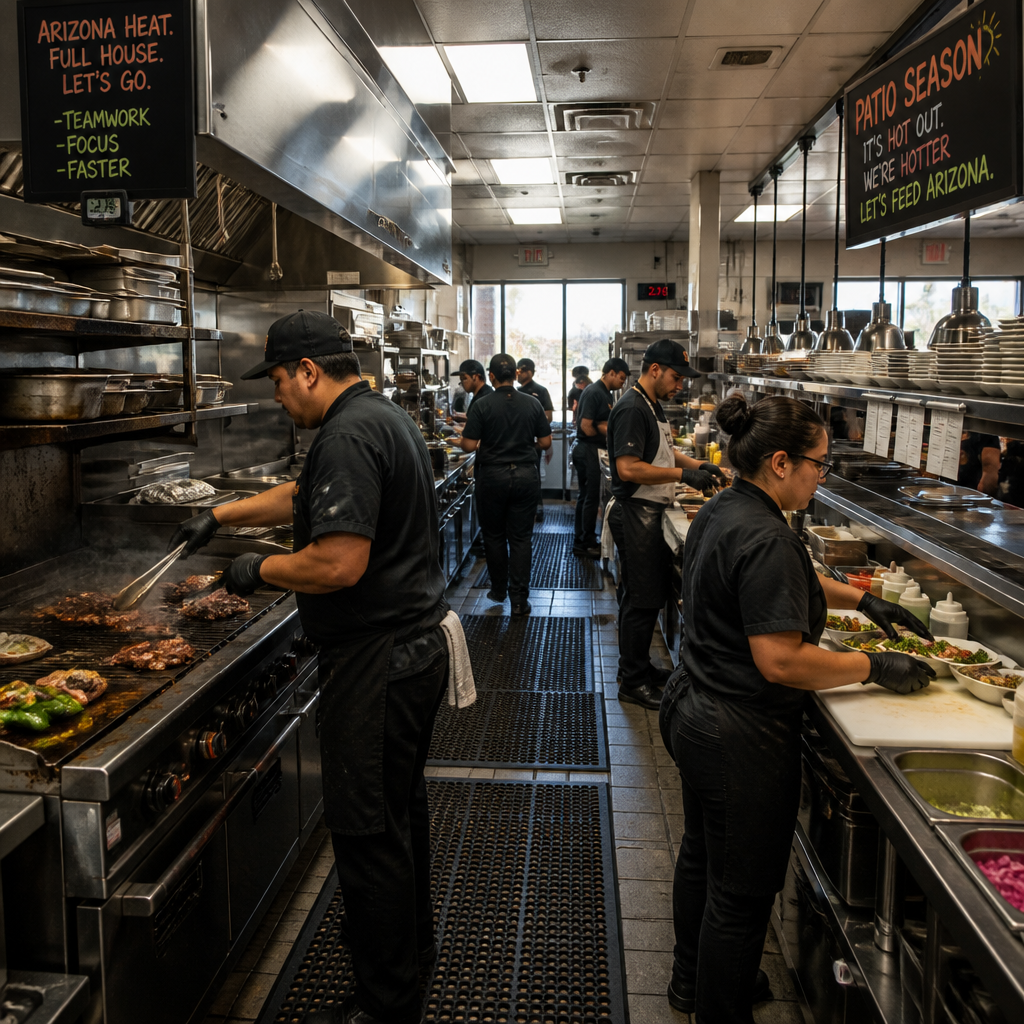
A Phoenix restaurant loses roughly $4,000 per hour when the AC fails during a July lunch rush. A Scottsdale medical office risks regulatory violations when server room temperatures climb past 85°F. These are not edge-case scenarios. They happen every summer across the Valley, and the businesses that recover fastest are the ones that already have a commercial HVAC repair Phoenix provider locked in before the breakdown occurs. Response time is not a customer service metric. It is a direct revenue protection variable.
Quick Takeaways
| Key Insight | Explanation |
|---|---|
| Every hour of downtime has a dollar value | Phoenix businesses in retail, food service, and healthcare lose measurable revenue for every hour the HVAC system is offline during summer months, not just comfort. |
| 2-hour response windows separate good from great providers | Commercial HVAC emergencies in Arizona require on-site technician arrival within 2 hours. Providers offering 24-48 hour windows are not equipped for commercial work. |
| Compressor failures spike in June and July | Arizona's extreme heat accelerates compressor wear. Systems that passed spring inspections can still fail when outdoor temperatures exceed 115°F consistently. |
| Flat-rate pricing prevents billing disputes during emergencies | When a breakdown happens mid-service, businesses need cost certainty. Providers without flat-rate pricing can exploit emergency situations with inflated hourly charges. |
| Rooftop units in Phoenix require specialized access and parts inventory | Most commercial Phoenix buildings use rooftop package units. Technicians need specific training and the right parts on the truck to avoid multi-day delays for ordered components. |
| Service agreements reduce emergency call frequency by up to 40% | According to ASHRAE maintenance data, regularly maintained commercial systems fail significantly less often, directly reducing the probability of a peak-summer breakdown. |
| Indoor air quality failures create liability exposure | HVAC failures that affect air filtration or humidity control can trigger OSHA workplace standards concerns, adding regulatory risk on top of lost revenue. |
The Real Cost of HVAC Downtime for Phoenix Businesses
Most facility managers think about HVAC downtime as a comfort problem. The data consistently shows it is a financial exposure problem. According to the U.S. Department of Energy, commercial buildings spend approximately $400 billion annually on energy costs, and unplanned equipment failures represent a significant share of unbudgeted operational expenses. In Phoenix specifically, the cost multiplier is extreme because the summer cooling season runs for five to six months without interruption.
A retail storefront in Mesa that closes for three hours during a 110°F afternoon loses foot traffic it cannot recover. A Chandler call center sending employees home early due to unsafe temperatures loses productivity and may face labor compliance questions. A Gilbert medical clinic that cannot maintain proper temperature control for medication storage faces regulatory consequences that extend far beyond the repair bill.
The financial exposure breaks down into three categories. First, direct revenue loss from closed or reduced-capacity operations. Second, indirect costs from spoiled inventory, damaged equipment, and emergency temporary cooling rentals. Third, reputational damage when customers or patients experience a failed environment. Businesses that have pre-established relationships with a commercial AC service Arizona provider cut through all three of these categories faster than those calling around on the day of the failure.
What Fast Response Actually Means in Commercial HVAC
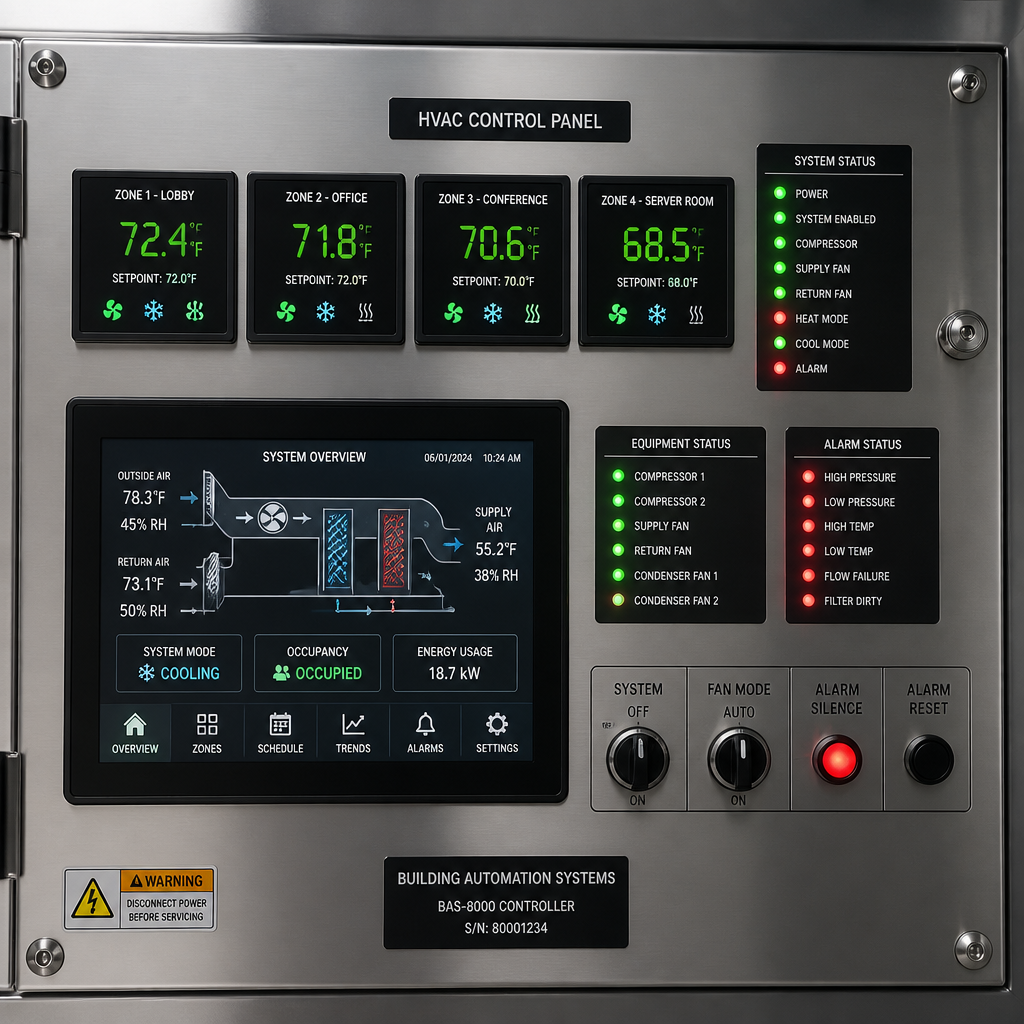
The phrase "fast response" is used loosely by every HVAC company in Arizona. In practice, there is a meaningful operational difference between a company that answers the phone at 2 AM and one that also has a trained commercial technician, with the right parts on the truck, arriving at your building within two hours. Both companies may advertise 24/7 availability. Only one is actually useful during an emergency.
The Difference Between Answering the Phone and Dispatching a Technician
A number of HVAC providers in the Phoenix market use answering services or call centers to handle after-hours calls. The call gets logged, a message gets sent, and a technician calls back the next morning. For residential customers, this might be acceptable. For a commercial client running a 24-hour operation, a 12-hour response window is equivalent to no response at all.
Genuine 24/7 commercial HVAC Tempe Chandler service means a dispatcher reaches a certified commercial technician who is on call, not on call for residential jobs. Commercial rooftop units, chillers, and multi-zone systems require different diagnostic approaches than residential split systems. A technician primarily trained on home AC units working on a commercial packaged unit is a liability, not a solution.
Parts Availability Is as Important as Arrival Time
A technician arriving in 90 minutes but needing to order a compressor from a distributor three days out has not solved your problem. Providers who specialize in commercial HVAC across Phoenix, Tempe, Mesa, and Scottsdale maintain parts inventory for the brands and unit types common in the market. Trane and Lennox commercial equipment dominates a large portion of the Valley's commercial building stock. A company that stocks parts for these brands and arrives with a stocked service vehicle is genuinely equipped to complete repairs in a single visit rather than scheduling a return trip.
Pro tip: When vetting any commercial HVAC provider in Phoenix, ask specifically what percentage of their commercial service calls are completed in a single visit. A reputable provider with proper parts inventory should be completing first-visit repairs on standard equipment failures more than 70% of the time.
Most Common Commercial HVAC Failures in Arizona Heat
Arizona's climate does not just stress HVAC systems harder than other markets. It creates failure modes that are statistically more common here than in most of the country. Understanding which failures are most likely helps facility managers prioritize both maintenance spending and emergency response planning.
Compressor Failures During Peak Heat
The compressor is the most expensive single component in a commercial AC system, and it is the one most stressed by Arizona heat. When outdoor ambient temperatures exceed 110°F, the compressor must work significantly harder to achieve the same heat rejection as it would at 95°F. Systems that were inspected and cleared in March can develop compressor overheating issues in late June when temperatures climb above what the original load calculations assumed.
In practice, a compressor that is operating at the edge of its efficiency range when outdoor temps hit 108°F may not throw a fault code until 113°F becomes the daily high for a week straight. By then, the overheating damage has already occurred internally. Predictive maintenance that includes compressor amperage trending and suction line temperature monitoring catches this before it becomes a full failure.
Clogged Condenser Coils
Phoenix's desert environment fills condenser coils with dust, pollen, and debris faster than most climates. A condenser coil operating at 20% reduced airflow forces the entire refrigeration circuit to work harder, raising head pressure and shortening compressor life. This is the most preventable failure category, yet it remains one of the most common causes of emergency commercial HVAC calls during summer months in the Valley.
Refrigerant Leaks and Low Charge
Commercial systems with low refrigerant charge deliver reduced cooling capacity first, not complete failure. A facility manager may notice that the building never quite reaches the set temperature on hot afternoons before the system eventually gives up entirely. Refrigerant leaks in commercial systems are often slow and go undetected without routine pressure testing during scheduled maintenance visits.
Response Time Comparison: Service Approaches That Actually Work
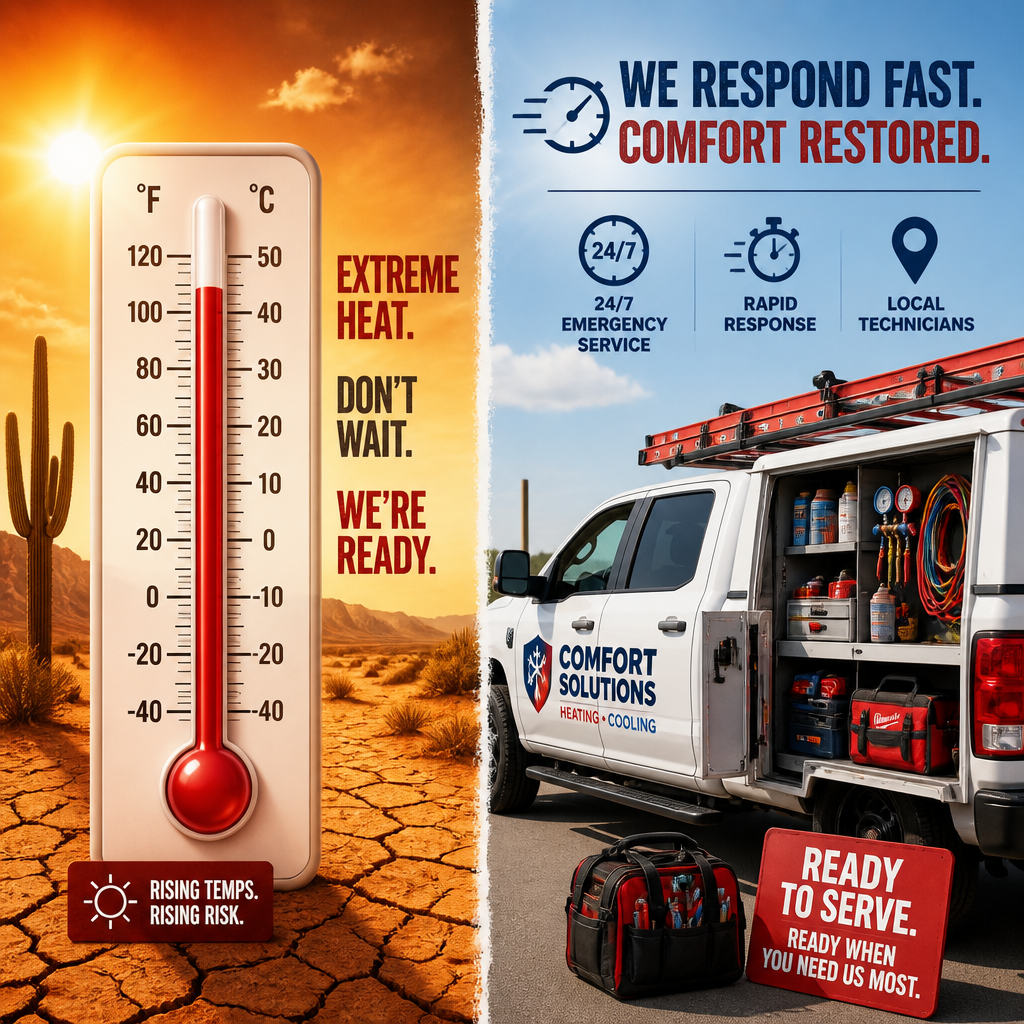
Not every commercial HVAC service arrangement is equal in how it protects your business during a breakdown. The structure of your service relationship determines how fast you actually get help, not just how fast the company claims to respond.
| Service Approach | Typical Response Time During Summer Emergency | Best Fit For |
|---|---|---|
| Reactive one-time call (no prior relationship) | 4 to 24 hours or more during peak summer demand | Low-stakes facilities where prolonged downtime is tolerable |
| Preferred customer status with a scheduled maintenance agreement | 1 to 3 hours, priority dispatch over non-contract customers | Retail, offices, and light commercial with moderate revenue risk per hour |
| Dedicated commercial service contract with 24/7 emergency dispatch | Under 2 hours guaranteed, stocked service vehicle for common failures | Healthcare, hospitality, data centers, food service with high revenue or compliance risk |
The reactive approach is the most expensive over a three-year window. Emergency call rates, priority dispatch fees, and extended downtime costs consistently outweigh the upfront investment in a service agreement. Facilities that call companies like Brewer's Air Conditioning and Heating before a breakdown, establish a service relationship, and get on a maintenance schedule are the ones that never need to worry about being deprioritized during the July rush when every HVAC company in Phoenix has a full dispatch board.
Pro tip: If your current commercial HVAC provider cannot give you a written guaranteed response time for emergencies, treat that as a disqualifying factor. A verbal assurance of "we'll get there as fast as we can" is not a service commitment. It is a hedge.
The Facility Manager Checklist for HVAC Emergency Readiness
Emergency readiness for HVAC failures is not complicated, but most facility managers across Phoenix and the East Valley do not complete even the basic steps until after the first major breakdown. A common mistake is assuming that having the HVAC company's phone number is sufficient preparation. It is not, particularly in summer when call queues fill up within hours of a widespread temperature spike.
Before Summer Arrives
Schedule a full commercial system inspection no later than March. This is not optional in Arizona. A system that failed or struggled in the previous August needs diagnosis and repair before the next heat cycle begins. Confirm that your HVAC provider has your building's equipment make, model, and serial numbers on file, along with your priority status as a contract customer. Verify that the provider maintains parts inventory for your specific equipment.
During the Season
Assign one staff member the responsibility of logging any unusual system behavior, including rooms that are taking longer to cool, unusual sounds from rooftop units, or thermostat readings that do not match actual conditions. These are early warning signs that, if reported promptly to your HVAC service team, can prevent a breakdown rather than just respond to one.
Know your building's backup protocols. If the primary system fails on a 112°F afternoon, does your team know where the portable cooling units are stored, which areas need to be evacuated first, and who has authority to approve emergency repair expenditures without waiting for a manager to return from travel?
Documentation That Speeds Up Emergency Response
Keep a one-page equipment summary at the facility and shared with your HVAC provider. It should include unit locations, model numbers, last service dates, known recurring issues, and access instructions for rooftop equipment. A technician arriving at an unfamiliar commercial property with this document can begin diagnosis five to ten minutes faster than one who is trying to locate the equipment and identify the units on arrival.
Preventive Maintenance ROI: The Numbers Phoenix Facility Managers Ignore
The ASHRAE (American Society of Heating, Refrigerating and Air-Conditioning Engineers) guidelines for commercial HVAC maintenance are clear: properly maintained systems last 15 to 20 years, while neglected systems degrade to failure in 8 to 12 years. In Phoenix's climate, the degradation curve for neglected equipment is steeper than the national average because of the continuous demand placed on systems from May through October.
"Preventive maintenance is the single most cost-effective strategy for extending equipment life and avoiding unplanned downtime in commercial HVAC systems. The cost of a maintenance visit is typically 10 to 15 times less than the cost of the emergency repair it prevents." - ASHRAE Commercial Building Operations Guidance
A two-visit annual maintenance agreement for a typical Phoenix commercial property covering rooftop units, filter replacement, coil cleaning, refrigerant charge verification, and electrical connection inspection runs significantly less than a single emergency compressor replacement. The math is not complicated, but the psychology of capital expenditures versus operational expenditures often causes facility managers to defer maintenance spending until a failure forces the issue.
For HVAC facility management in Phoenix, the ROI calculation needs to include not just avoided repair costs but avoided downtime costs. A restaurant with three hours of lost lunch service during peak summer revenue season may absorb a loss that exceeds its entire annual HVAC maintenance budget in a single incident. Framed that way, maintenance is not a cost. It is revenue insurance.
Choosing a Commercial HVAC Partner in the Phoenix Metro Area
The Phoenix HVAC market is crowded, and several large companies spend heavily on advertising. Name recognition and marketing budget are not the same as technical capability or response reliability. When evaluating providers for commercial HVAC repair in Phoenix, the questions that actually differentiate good from adequate are operational and specific.
Questions That Reveal Real Commercial Capability
Ask the provider what percentage of their service volume is commercial versus residential. A company that is 90% residential and 10% commercial will always deprioritize commercial calls when their dispatch board fills up during a heat wave. Their technicians are also primarily trained on residential equipment, which is a different skill set than commercial packaged rooftop units or multi-zone commercial systems.
Ask about their parts inventory for Trane and Lennox commercial equipment specifically. These brands dominate the Arizona commercial market. A provider without shelf stock for common failure parts on these systems is going to have multi-day repair timelines during peak season when distributor delivery windows stretch out.
The Flat-Rate Pricing Requirement
Emergency repair situations create information asymmetry. The technician knows what the repair costs. The facility manager does not. Companies that do not offer flat-rate pricing for standard repairs can and sometimes do charge premium rates for emergency situations. Brewer's Air Conditioning and Heating operates on upfront flat-rate pricing specifically to eliminate this problem. When you are managing a building emergency, the last thing you need is an open-ended billing conversation after the repair is complete.
A provider's pricing model is a signal about their overall approach to the customer relationship. Transparent, flat-rate pricing correlates with a service operation that is confident in its work and not reliant on billing ambiguity to improve margins.
Local History and Tenure Matter
Brewer's Air Conditioning and Heating has served central Arizona since 1982. That is over four decades of institutional knowledge about the specific failure patterns, seasonal demand cycles, and commercial building stock across Phoenix, Tempe, Scottsdale, Mesa, and the East Valley. A company that opened in 2019 and has grown through aggressive marketing has not yet built the operational infrastructure, parts relationships, or trained technician depth to handle a July heat emergency across multiple commercial clients simultaneously. Tenure is not everything, but it is a meaningful indicator of sustained operational reliability.
Frequently Asked Questions
How quickly should a commercial HVAC repair technician arrive in Phoenix during a summer emergency?
For a genuine commercial emergency during Phoenix's summer peak, arrival within two hours should be the standard expectation from any provider with real commercial capacity. If a provider cannot commit to a specific response window in writing or gives a range of four to six hours during daytime business hours, they are not appropriately resourced for commercial emergency work. Businesses with service agreements that include priority dispatch typically receive faster response than those calling in without a prior relationship.
What are the most likely causes of commercial AC failure during Arizona summers?
The three most common causes of commercial HVAC failure during Arizona summers are compressor failures caused by sustained extreme heat and elevated head pressure, clogged condenser coils restricting airflow and forcing the system to work beyond its designed capacity, and low refrigerant charge from slow leaks that went undetected without routine pressure testing. All three are preventable or detectable during properly executed spring maintenance visits.
Is a commercial HVAC service agreement worth the cost for small businesses in Phoenix?
Yes, consistently. The calculation is straightforward. A small restaurant or retail business in Tempe or Chandler that loses a summer Saturday to an HVAC failure absorbs a revenue loss that typically exceeds the annual cost of a commercial maintenance agreement in a single day. Service agreements also provide priority dispatch status during peak demand periods when uncontracted customers may wait 12 to 24 hours for service. For any Phoenix business that depends on temperature control to serve customers or protect inventory, a service agreement is not optional spending.
Can a residential HVAC technician service commercial equipment?
In most cases, no. Commercial HVAC systems, particularly rooftop packaged units and multi-zone commercial systems common in Phoenix office buildings and retail spaces, require different diagnostic skills, different refrigerant handling certifications for commercial charge volumes, and familiarity with commercial control systems that residential technicians rarely work on. Sending a primarily residential technician to a commercial rooftop unit often results in either a misdiagnosis or an incomplete repair, both of which extend downtime rather than resolve it.
What should facility managers in Phoenix do to prepare for summer HVAC emergencies before they happen?
Schedule a complete commercial inspection by March, establish a service agreement with a provider that stocks parts for your equipment brand, document your equipment inventory with model numbers and last service dates, and assign one staff member to monitor and report unusual system behavior during the season. Additionally, confirm in writing the emergency response time your provider will guarantee under your agreement. These steps reduce both the probability of a failure and the recovery time if one occurs.
How does indoor air quality relate to commercial HVAC breakdowns in Arizona?
When commercial HVAC systems fail or operate below capacity, air filtration and humidity control also degrade. In Phoenix's desert environment, a struggling system pulls in more dust and particulate through inadequate filter function. In commercial settings including medical offices, this can create compliance concerns under OSHA indoor air quality standards. Beyond regulatory risk, employees in degraded air quality environments report measurably higher rates of illness and reduced productivity, adding a human capital cost on top of the direct revenue impact of the equipment failure.
Have you experienced a commercial HVAC breakdown during an Arizona summer? Share what response time you received and how it impacted your operations, so other facility managers in the Valley can benchmark their own service relationships.
References
- ASHRAE official site covering commercial HVAC maintenance standards and equipment life expectancy guidelines
- U.S. Department of Energy resource on commercial building energy use and HVAC system efficiency data
- OSHA official site with workplace indoor air quality standards relevant to commercial facilities
- Statista data resource for commercial HVAC industry size, market trends, and equipment failure statistics
- Forbes business coverage of operational risk management and the financial impact of facility downtime on commercial businesses
About the Author
Mark Ybarra
Mark Ybarra is the owner and leader of Brewer's Air Conditioning & Heating, a trusted HVAC company serving Tempe, Phoenix, Scottsdale, Mesa, and surrounding Arizona communities since 1982. After working in multiple roles within the company, Mark officially took ownership in 2018 and continues to uphold Brewer's long-standing commitment to integrity, exceptional service, and customer satisfaction.
Need HVAC Help?
Serving Phoenix, Tempe, Scottsdale, Mesa & surrounding areas since 1982.