Most Phoenix homeowners assume a BBB accreditation badge on an HVAC website is just a logo, roughly equivalent to a certificate of participation. That assumption costs people money. When your air conditioner fails at 112 degrees in August and you are calling contractors fast, the difference between a BBB accredited HVAC Phoenix company and one that simply displays the BBB logo without verification can mean the difference between a fair repair job and a billing dispute you cannot win. This article breaks down exactly what BBB accreditation checks, what it does not check, and how to use it as one of several filters when choosing an HVAC contractor in Arizona.
Quick Takeaways
| Key Insight | Explanation |
|---|---|
| BBB accreditation is earned, not automatic | Companies apply and pay annual fees. The BBB reviews complaint history, licensing, and business practices before approving accreditation. Displaying the logo without current accreditation is a violation. |
| An A+ rating alone is not proof of quality work | The BBB rating reflects complaint handling speed and transparency, not the quality of the HVAC installation or repair itself. A company can earn an A+ with mediocre technical work if it resolves complaints quickly. |
| Arizona requires HVAC contractors to hold a ROC license | The Arizona Registrar of Contractors (ROC) license is a legal requirement that BBB accreditation does not replace. Always verify ROC licensure separately at roc.az.gov before hiring any HVAC company in Phoenix. |
| Complaint volume matters more than complaint existence | A company doing thousands of jobs per year may have 10 complaints. A smaller outfit with 3 complaints and 100 jobs has a worse ratio. Read the actual complaint text, not just the count. |
| Flat-rate pricing reduces post-job disputes | Most BBB complaints against HVAC companies involve surprise charges. Contractors offering upfront flat-rate pricing before work begins generate significantly fewer billing disputes that escalate to BBB filings. |
| Years in business correlates strongly with accreditation stability | Companies operating since before 2000 have a public track record that can be cross-referenced against BBB files, Google reviews, and ROC complaint records over multiple decades. |
| Use BBB as a filter, not a final verdict | Accreditation is one data point. Combine it with ROC license check, manufacturer certifications, and actual customer review patterns before making a hiring decision for AC repair or installation in Phoenix. |
What BBB Accreditation Actually Checks
The Better Business Bureau is a private nonprofit, not a government agency. That distinction matters because the BBB cannot pull licenses, conduct inspections, or impose legal penalties. What it does do is apply a structured set of eight standards to businesses that apply for accreditation, and those standards have real teeth in certain areas.
The eight BBB standards cover building trust, advertising honestly, telling the truth, being transparent, honoring promises, being responsive to customers, safeguarding privacy, and embodying integrity. For a trusted AC company in Phoenix, the most relevant standards are responsiveness and honoring promises, because those two directly affect what happens when a repair goes wrong or a warranty claim gets disputed.
How the BBB Rating System Works
The BBB assigns letter grades from A+ to F using a weighted scoring system. Points are added or subtracted based on complaint volume relative to business size, how quickly the company responded to complaints, whether complaints were resolved, and whether the business has been transparent about its ownership and contact information.
A company loses points for failing to respond to a complaint within a reasonable timeframe, for government actions against it, and for advertising violations. It gains points for being in business longer and for having a clean complaint resolution history. The BBB does not send inspectors to evaluate HVAC work quality, so a technically excellent or technically poor contractor can both earn an A+ if their administrative behavior is clean.
Pro tip: When you look up an HVAC company on BBB.org, scroll past the letter grade and read the full complaint details. The nature of complaints tells you far more than the grade. Billing disputes are different from workmanship disputes, which are different from no-show complaints.

What Accreditation Fees Actually Fund
BBB accreditation requires an annual membership fee that scales with company size. For a mid-sized Phoenix HVAC company, that fee typically ranges from several hundred to several thousand dollars per year. Those fees fund the BBB's dispute resolution services, including the mediation process that becomes available to consumers when a complaint escalates.
This is worth knowing because it means accredited companies have a financial incentive to resolve complaints rather than ignore them. Non-accredited companies have no such incentive within the BBB system, which is why complaint response rates differ significantly between accredited and non-accredited businesses on the BBB platform.
What BBB Accreditation Does Not Tell You
The BBB does not verify technical competency. It does not confirm that a Phoenix HVAC technician is NATE-certified, EPA 608-certified, or trained specifically on Trane or Lennox equipment. It does not check whether the company carries adequate liability insurance or workers' compensation coverage for the work done inside your home.
The BBB also does not evaluate pricing fairness. A contractor charging twice the market rate for a capacitor replacement can maintain a perfect A+ rating as long as customers pay without filing complaints. This is why the BBB badge, while useful, should never be the only thing you check when choosing a contractor for how to choose HVAC contractor Arizona decisions.
The Gap Between Online Reviews and BBB Records
In practice, most dissatisfied customers never file a BBB complaint. They leave a one-star Google review and move on. According to research cited by the Federal Trade Commission, formal complaint channels like the BBB capture only a small fraction of actual consumer grievances. The BBB record of a company that has 200 angry Google reviews but zero BBB complaints is technically clean.
This means you should cross-reference BBB records with Google, Yelp, and Nextdoor reviews specifically. Look for patterns, not individual outliers. A single bad review is noise. Fifteen reviews mentioning the same technician behavior or billing surprise is signal.
"A business's BBB file is most useful when complaints have been filed, not when it's clean. A clean file just means customers either had no problems or took their grievances elsewhere." - BBB Serving Central, Northern, and Western Arizona, consumer guidance documentation
How to Verify Accreditation Yourself
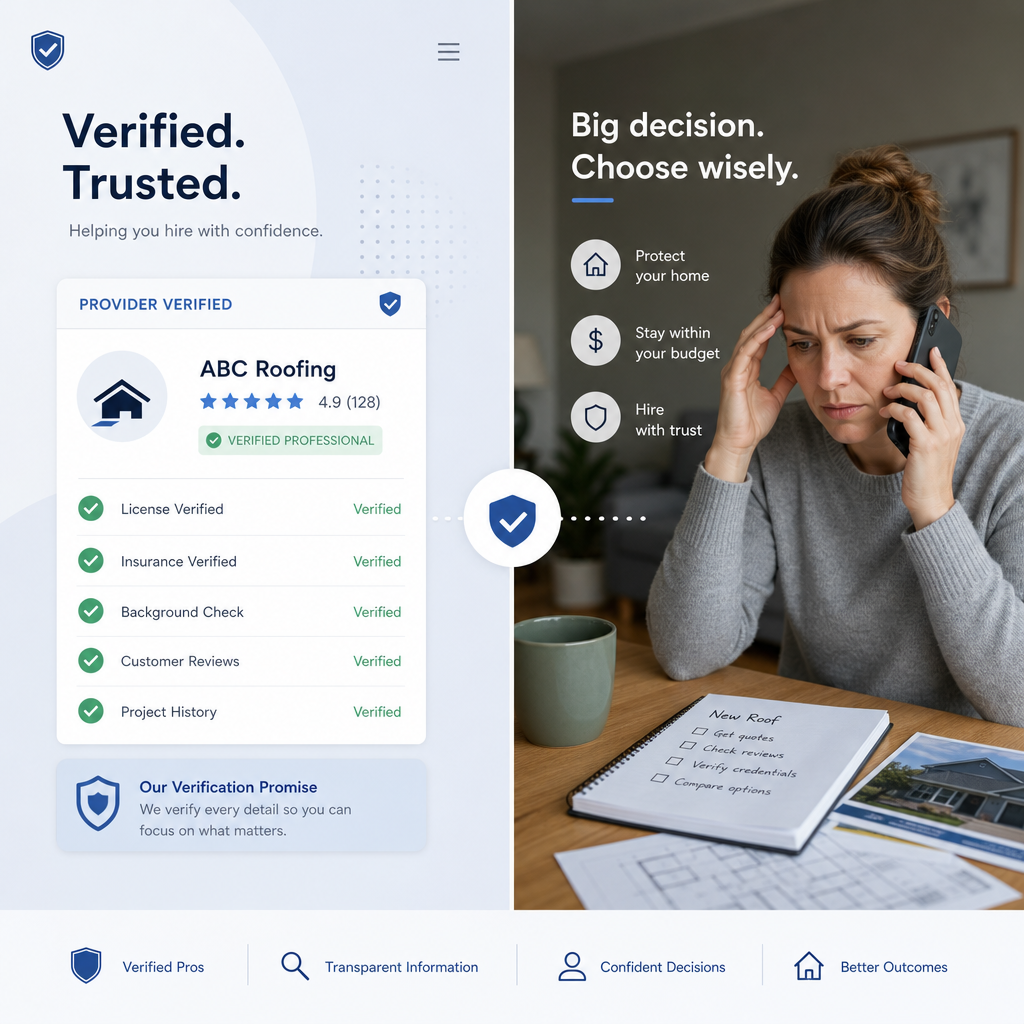
Displaying the BBB seal without active accreditation is a practice the BBB actively monitors, but it does happen. Do not assume a logo on a website is current. The verification takes about 90 seconds and protects you from contractors using expired or fabricated credentials.
Go to BBB.org and search the company by name and the Phoenix metro area. The company profile will show whether accreditation is current, when it was first accredited, and the full complaint history. If the company does not appear as accredited on BBB.org, their displayed seal is misleading regardless of what their website claims.
Cross-Checking with Arizona ROC
The Arizona Registrar of Contractors database at roc.az.gov is the single most important check for any HVAC company operating in Phoenix, Tempe, Scottsdale, Mesa, Gilbert, or Chandler. A valid ROC license confirms the company is legally permitted to perform HVAC work in Arizona and has met the state's bonding and insurance requirements.
The ROC database also shows complaint history filed directly with the state, which is separate from and often more consequential than BBB complaints. State ROC complaints involve allegations of defective workmanship and can result in license suspension or revocation. If a company has ROC complaints alongside BBB complaints, that pattern is a serious warning sign.
Pro tip: Ask any HVAC company for their ROC license number before scheduling service. A legitimate Phoenix HVAC contractor will provide it without hesitation. Reluctance or vague answers about licensing is itself a red flag.
Comparing Trust Signals for Phoenix HVAC Contractors
No single credential tells the whole story. The most reliable approach is evaluating several trust signals together and looking for consistency across all of them. The table below shows how the major verification tools compare when you are deciding which Phoenix HVAC company to call.
| Trust Signal | What It Actually Verifies | Limitations |
|---|---|---|
| BBB Accreditation and Rating | Complaint history, response behavior, advertising honesty, and transparency about business operations. Covers roughly four decades of consumer feedback for established companies. | Does not verify technical skill, pricing fairness, or insurance coverage. Rating can be maintained by companies with poor workmanship who resolve complaints quickly. |
| Arizona ROC License | Legal authorization to perform HVAC work in Arizona, bonding requirements, and state-level complaint history including workmanship allegations. | License being active does not mean no complaints exist. Requires manual lookup at roc.az.gov. Some companies operate with expired licenses in Arizona. |
| NATE Certification (technician-level) | Confirmed technical competency of individual HVAC technicians, tested and verified by the North American Technician Excellence nonprofit organization. | Company-level claim does not mean every technician is certified. Ask specifically which technician will service your unit and whether that individual holds NATE certification. |
The data consistently shows that companies with clean records across all three categories, BBB accreditation, active ROC licensure, and NATE-certified technicians, produce the lowest rates of post-service disputes in the Phoenix market. No single signal is sufficient on its own.
Red Flags That Override Any Rating
A common mistake homeowners make is stopping their research once they confirm a contractor has an A+ BBB rating. There are specific behaviors that should cause you to walk away regardless of what any rating system shows.
Pressure to make a same-day decision on a major HVAC installation is a serious warning sign. Legitimate contractors, particularly those that have served the Phoenix market for decades, will give you written quotes and allow you time to compare. High-pressure same-day tactics are disproportionately common among contractors that generate high complaint volumes the moment homeowners feel the heat, literally and figuratively, of Arizona summer.
Vague or Verbal-Only Pricing Before Work Begins
The majority of BBB complaints filed against HVAC companies in Arizona involve billing disagreements. The root cause in most of those cases is that pricing was communicated verbally or described in vague ranges rather than written flat-rate quotes before work began. A contractor who cannot or will not give you a specific written price before touching your system is operating in a way that creates disputes almost by design.
Brewer's Air Conditioning and Heating has operated on upfront flat-rate pricing since its founding, which is not a marketing phrase but a structural decision that eliminates the most common driver of HVAC contractor complaints. When the price is agreed upon in writing before the work starts, there is no mechanism for a surprise invoice.
No Local Physical Address or Phantom Licensing
Phoenix sees a consistent influx of unlicensed contractors during peak summer demand. These operators often create temporary websites, buy Google Ads, and generate a handful of positive reviews before disappearing. A legitimate HVAC company serving Phoenix, Tempe, Chandler, Mesa, or Gilbert should have a verifiable physical business address, not just a P.O. box, and should appear in the ROC database with an active license issued to that address.
How Brewer's Stacks Up Against Common Alternatives
When Phoenix homeowners search for a trusted AC company, they typically encounter a handful of heavily advertised names alongside regional contractors like Brewer's. Understanding how those companies differ on the trust signal criteria above is useful context for making an informed choice.
Brewer's Air Conditioning and Heating has operated continuously since 1982, giving it over 40 years of verifiable history in the Phoenix metro area. That length of operating history is directly reflected in its BBB file, where decades of complaint handling can be reviewed rather than relying on a company that has rebranded or changed ownership recently. Larger advertised competitors often carry more total complaints simply because of volume, but the ratio of complaints to jobs completed and the nature of those complaints matters far more than the raw number.
The specific advantages that distinguish Brewer's from heavily marketed national-style competitors in Arizona come down to three factors. First, upfront flat-rate pricing removes the primary driver of billing disputes. Second, expertise with specific brands like Trane and Lennox means technicians are trained on the equipment most commonly installed in Phoenix homes rather than cycling through a generic knowledge base. Third, a single-market focus on the Phoenix east valley means the company's reputation is tied to a specific geography where word of mouth travels quickly, creating a stronger accountability structure than companies that can absorb complaints across a wide multi-state footprint.
Frequently Asked Questions
Does BBB accreditation mean the HVAC company is licensed in Arizona?
No. BBB accreditation and Arizona ROC licensure are completely separate. The BBB does not verify state licensing as part of its accreditation process. You must check ROC licensure independently at roc.az.gov for any HVAC contractor working in Phoenix or the surrounding area.
Can an HVAC company lose its BBB accreditation?
Yes. The BBB can revoke accreditation if a company fails to respond to complaints, is found to have violated advertising standards, faces government action, or does not meet renewal requirements. Revocation is not common, but it does happen, and the status change is reflected on the company's BBB profile.
Is a higher BBB letter grade always better when choosing a Phoenix HVAC contractor?
Not necessarily. The grade reflects complaint handling behavior, not technical quality. An A+ contractor may still perform below-average HVAC work. Use the grade as a baseline filter, then read actual complaint descriptions and cross-reference Google reviews to evaluate workmanship-specific feedback.
How long does it typically take to resolve a BBB complaint against an HVAC company?
The BBB typically allows 14 days for an accredited business to respond to a complaint and aims to close cases within 30 days. Cases involving billing disputes or requests for refunds can take longer if mediation is required. Non-accredited businesses have no obligation to respond within any timeframe.
What should I ask an HVAC company before hiring them in Phoenix?
Ask for their Arizona ROC license number, confirm it is active on roc.az.gov, request a written flat-rate quote before any work begins, ask which specific technician will perform the work and what certifications that technician holds, and ask how long the company has been operating under its current name and ownership at its current address.
Does the BBB cover complaints about HVAC pricing in Arizona?
Yes. Billing and collection issues are among the most frequently filed complaint categories against HVAC companies in the BBB system. If you believe you were charged more than the agreed-upon price or were not given a proper quote before work began, you can file a complaint directly through BBB.org and the BBB will contact the contractor on your behalf.
If you have had a specific experience with a Phoenix HVAC company, good or bad, around the BBB accreditation or licensing verification process, share it in the comments below so others in the east valley can benefit from what you found.
References
- Better Business Bureau official accreditation standards and company lookup tool
- Arizona Registrar of Contractors license verification and complaint history database
- Federal Trade Commission consumer guidance on verifying contractor credentials and avoiding home service scams
- Forbes coverage of how to evaluate home service contractor credentials and trust signals
- Statista data on consumer complaint behavior and contractor dispute resolution rates in the home services industry
About the Author
Mark Ybarra
Mark Ybarra is the owner and leader of Brewer's Air Conditioning & Heating, a trusted HVAC company serving Tempe, Phoenix, Scottsdale, Mesa, and surrounding Arizona communities since 1982. After working in multiple roles within the company, Mark officially took ownership in 2018 and continues to uphold Brewer's long-standing commitment to integrity, exceptional service, and customer satisfaction.
Need HVAC Help?
Serving Phoenix, Tempe, Scottsdale, Mesa & surrounding areas since 1982.