Phoenix homeowners pay some of the highest cooling bills in the country. The U.S. Department of Energy estimates that air conditioning accounts for up to 70 percent of summer electricity costs in hot desert climates. When your system runs without a proper AC tune-up Phoenix summer checkup, you are not just risking a breakdown at 115 degrees. You are handing your utility company extra money every single month. A single professional maintenance visit from a trusted local company like Brewer's Air Conditioning and Heating typically costs $80 to $150 and routinely prevents repair bills that run $400 to $1,200 or more.
Quick Takeaways
| Key Insight | Explanation |
|---|---|
| Dirty coils cost you money daily | A condenser coil with 10 percent fouling forces your system to work up to 30 percent harder, driving up electricity costs every hour it runs. |
| Low refrigerant is a hidden budget drain | Even a slight refrigerant undercharge makes your compressor run longer cycles, inflating your bill before you ever notice the house feels warm. |
| Tune-ups extend equipment life by years | Properly maintained Trane and Lennox systems in Arizona regularly reach 15 to 18 years. Neglected units often fail by year 10 or 11. |
| Spring scheduling beats summer pricing | Booking before June keeps costs lower and guarantees appointment availability before Phoenix demand peaks in July and August. |
| Capacitor failure is the number-one summer repair | A $15 to $30 capacitor check during a tune-up prevents the most common Phoenix emergency call, which costs $150 to $400 at peak demand. |
| Clogged drain lines cause water damage | Arizona monsoon season combined with heavy AC use clogs condensate lines quickly. A flush during maintenance prevents ceiling and drywall damage costing thousands. |
| Flat-rate pricing removes the guessing game | Brewer's upfront flat-rate pricing means you know exactly what the tune-up costs before a technician touches your equipment, unlike companies that bill by the hour. |
What an AC Tune-Up Actually Includes
A lot of homeowners assume an AC tune-up is just a filter swap and a quick look around the unit. That is not what a real preventive maintenance visit covers, and the difference between a thorough checkup and a cursory inspection is measured directly in dollars.
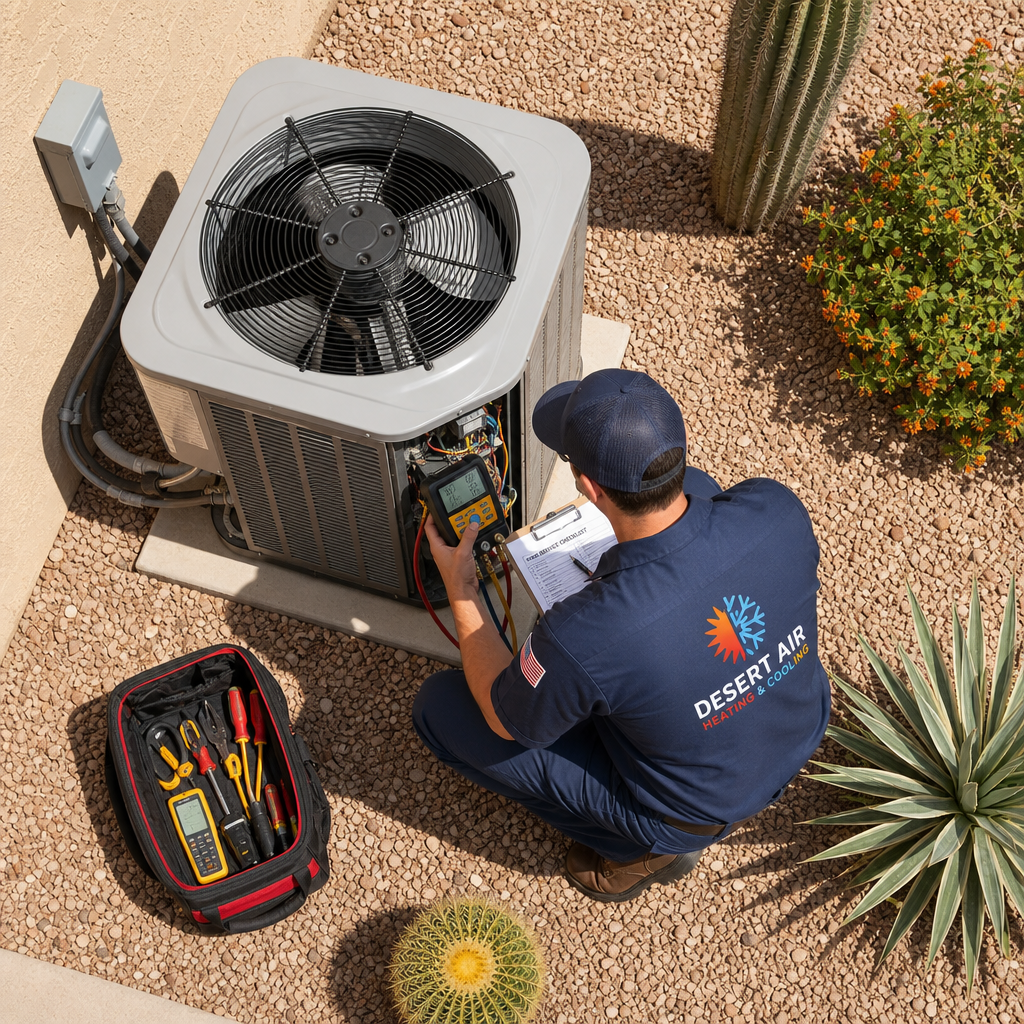
At Brewer's Air Conditioning and Heating, a summer tune-up covers the full system, not just the visible parts. A qualified technician inspects and tests the compressor, checks refrigerant levels against manufacturer specifications, cleans condenser and evaporator coils, tests electrical connections and voltage draws, inspects capacitors and contactors, clears the condensate drain line, lubricates moving parts, and verifies thermostat calibration.
Why Every Item on That List Matters Financially
Each of those checklist items ties directly to either your monthly utility bill or a potential repair cost. Loose electrical connections cause arcing, which can destroy a control board worth $300 to $700. A dirty evaporator coil forces the blower motor to work harder, shortening its life and pulling more amps. Thermostat calibration errors cause the system to short-cycle or run too long, both of which show up on your electric bill.
In practice, technicians who have serviced systems across Phoenix, Tempe, Scottsdale, and Mesa see the same preventable failures year after year. The homeowners who skipped maintenance are always the ones calling for emergency service in July.
Pro tip: Ask your technician to record the actual refrigerant pressure readings and amperage draws on a service ticket. These baseline numbers let you track system performance year over year and catch problems before they become failures.
How Preventive Maintenance Cuts Your Utility Bill
The data consistently shows that a poorly maintained air conditioner uses significantly more electricity than a clean, properly charged system running the same number of hours. The U.S. Department of Energy has published figures showing that keeping coils clean and refrigerant correctly charged can reduce energy consumption by 5 to 15 percent per cooling season.
In Phoenix, where a household might run their AC for 2,500 hours or more between May and October, that efficiency gap is enormous. If your monthly summer electric bill averages $250 and your system is running at 85 percent efficiency due to a dirty coil and low refrigerant, you are spending roughly $37 extra per month, or about $185 over a five-month season, just because you skipped a $100 tune-up.
The Compounding Effect of Desert Dust on System Efficiency
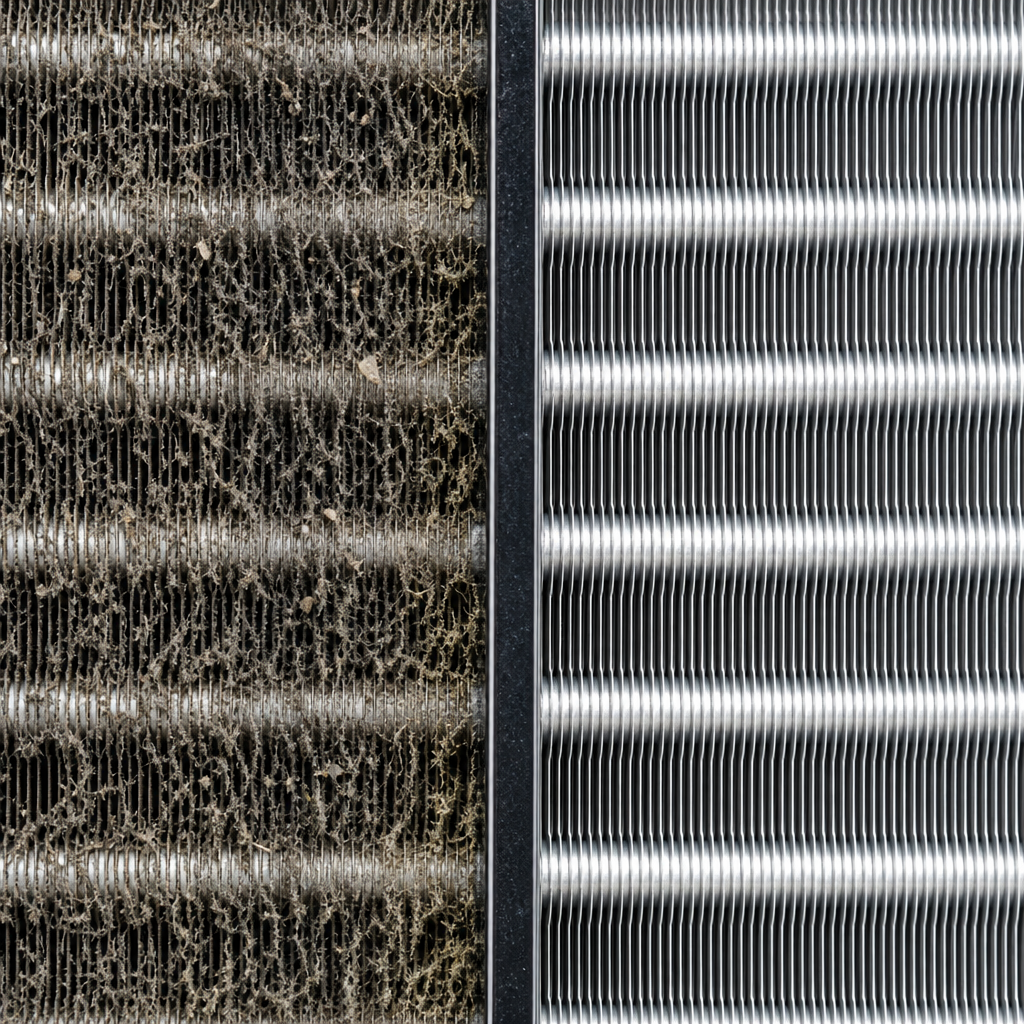
Phoenix and the east valley, including Ahwatukee, Chandler, Gilbert, and Mesa, deal with a level of airborne dust that most of the country does not experience. Haboob events push fine particulate matter into outdoor condenser units. That debris coats coil fins and restricts airflow in ways that a homeowner hosing down the unit cannot fully address.
A technician with the right coil cleaner and access to compressed air removes buildup that has been compacting for months. The efficiency improvement after a proper coil cleaning on a moderately dirty Arizona unit is often immediate and measurable. Homeowners who track their utility bills frequently report a $20 to $40 drop in the first full billing cycle after a summer tune-up.
"Heating and cooling account for almost half the energy use in a typical U.S. home, making it the largest energy expense for most households." - U.S. Department of Energy, Energy Saver program
The Real Repair Costs a Tune-Up Prevents
Preventive HVAC maintenance in Arizona is not about theoretical future savings. It is about avoiding specific, predictable failures that happen at specific, expensive times. Phoenix HVAC companies see the same cascade of breakdowns every summer, and most of them trace back to components that were showing warning signs months earlier.
Capacitors and Contactors: The $15 Part That Becomes a $400 Emergency
Run capacitors are arguably the most failure-prone component in Arizona AC systems. The extreme heat accelerates capacitor degradation faster than manufacturers rated them for in milder climates. A capacitor that tests at 80 percent capacity in April is likely to fail completely in July or August when ambient temperatures hit 110 degrees and the unit is running nearly continuously.
During a tune-up, a technician tests capacitor microfarad ratings against specifications. If a capacitor is weak, replacing it during a scheduled maintenance visit costs $30 to $80 in parts and a few minutes of labor. The same job as an emergency call on a 115-degree Saturday costs $150 to $400, and that assumes the capacitor failure did not also burn out the compressor contactor or cause the motor to overheat.
Refrigerant Leaks Found Early vs. Found Late
A small refrigerant leak discovered during a spring tune-up might require $150 worth of leak detection and repair. The same leak left unaddressed causes the compressor to run hot and starved, and compressor replacement in Phoenix ranges from $1,200 to $2,800 depending on the system size. That math makes the case for preventive AC maintenance Phoenix homeowners cannot ignore.
Condensate Drain Clogs and Water Damage
This one surprises a lot of homeowners. Arizona is a desert, so water damage feels like someone else's problem. But a central air handler pulls significant moisture out of the air, especially during monsoon season when humidity spikes. When the condensate drain clogs, that water backs up into the drain pan and eventually overflows into the ceiling or attic. Drywall repair and mold remediation from a single condensate overflow can cost $500 to $3,000. Flushing the drain line takes a technician about five minutes.
Pro tip: If your air handler is located in the attic, which is common in Phoenix-area homes, install a secondary condensate overflow shutoff switch if one is not already present. A technician can check for this during your tune-up visit and install one inexpensively if needed.
Why Phoenix Heat Accelerates Wear Faster Than Most Cities
HVAC equipment is rated and tested under standard conditions that do not reflect what a system endures in central Arizona. A unit installed in Chicago might run 800 to 1,000 hours per year for cooling. That same unit in Phoenix runs 2,500 hours or more. That means an Arizona system accumulates the equivalent of three years of wear for every one calendar year of operation compared to a moderate climate.
Outdoor condenser units sit in direct sun where ambient temperatures regularly exceed 110 degrees Fahrenheit. The air temperature at the condenser coil face can reach 130 to 140 degrees during peak afternoon hours. Compressors, capacitors, and contactors degrade faster at those temperatures. This is not opinion. It is basic thermodynamics, and it is why HVAC maintenance savings Arizona homeowners realize are larger per dollar spent on maintenance than homeowners in most other states.
Brand-Specific Considerations for Trane and Lennox Systems
Brewer's Air Conditioning and Heating works extensively with Trane and Lennox equipment, both of which are well-suited to Arizona conditions when properly maintained. Trane's Comfort-R technology and Lennox's variable-speed compressors perform best when refrigerant charge is precisely dialed in and coils are clean. These are not plug-and-forget systems. Their efficiency ratings, which drove the purchase decision, only hold up with annual service.
A common mistake is assuming that a premium system requires less maintenance. The opposite is often true. High-efficiency variable-speed equipment has more sophisticated controls and sensors that benefit from annual calibration checks to maintain the efficiency levels the homeowner paid for.
Comparing Your Maintenance Options in Arizona
Phoenix homeowners have several approaches available when it comes to keeping their AC system maintained. Understanding what each one actually delivers is the only way to make a sound financial decision.
| Maintenance Approach | What You Actually Get | Real-World Cost Impact |
|---|---|---|
| Annual Professional Tune-Up (Brewer's flat-rate service) | Full 20-plus point inspection, coil cleaning, refrigerant check, electrical testing, drain flush, written service record | $80 to $150 upfront. Prevents $400 to $2,800 in repairs. Utility bill drops 5 to 15 percent. System life extended by 3 to 7 years. |
| DIY Filter Changes Only | Cleaner airflow, but no coil cleaning, no refrigerant check, no electrical inspection, no capacitor testing | Near-zero upfront cost, but coil fouling and electrical wear continue unchecked. Higher risk of mid-summer emergency repair at peak pricing. |
| Waiting for Breakdown (Reactive Service) | Emergency repair after failure, often under extreme heat conditions, with limited technician availability and premium pricing | Average emergency AC repair in Phoenix runs $300 to $1,500. Compressor failure costs $1,200 to $2,800. System replacement triggered early costs $5,000 to $12,000. |
The choice between these approaches is not a close call for most east valley homeowners. A $100 tune-up that prevents a $600 repair and saves $150 in summer electricity over five months returns four to seven times its cost in the same season it is purchased. Parker and Sons, Goettl, and Penguin Air all offer maintenance plans in the Phoenix market, but Brewer's flat-rate pricing model means you know the exact cost before the appointment, with no hourly billing surprises after the technician is inside your system.
When to Schedule Your Summer Tune-Up in the Phoenix Area
The best time to schedule an AC tune-up in Phoenix is March through May. That gives technicians time to identify any refrigerant leaks, order parts if needed, and complete repairs before the first 100-degree days arrive in late May or early June.
By late June, HVAC companies across the Phoenix metro area are deep into emergency call season. Appointment windows get tighter, lead times stretch, and the ability to schedule a convenient daytime appointment shrinks. Homeowners in Tempe, Chandler, Gilbert, and Mesa who wait until June or July to call about maintenance often find themselves competing for appointment slots with neighbors who are already dealing with no-cool situations.
What If You Already Missed the Spring Window
If summer has already started and your system has not been serviced, schedule the tune-up immediately rather than waiting for next spring. The efficiency losses and component risks accumulate every week. A June or July tune-up is less ideal than an April one, but it still delivers measurable savings for the remainder of the season and significantly reduces emergency breakdown risk through the peak of Arizona summer.
Brewer's Air Conditioning and Heating has served central Arizona since 1982, and the team understands the real-world scheduling pressures Phoenix homeowners face. Calling early in the day increases your odds of same-day or next-day service even during the peak season.
The Indoor Air Quality Bonus Most Homeowners Overlook
A summer AC tune-up does more than protect your wallet. It directly improves the air circulating through your home. In Phoenix, homes are sealed tightly against the heat for months at a time. The air handler, ductwork, and coil surfaces become the primary filters and circulators for everything your family breathes.
A dirty evaporator coil is a surface that accumulates mold spores, bacteria, and dust in the presence of condensation moisture. A technician who cleans that coil during a maintenance visit removes the growth substrate that degrades indoor air quality. For households with allergy sufferers or asthma, this is not a secondary benefit. It is a primary reason to maintain the system on schedule.
Brewer's also offers indoor air quality solutions as a standalone service, including whole-home air purifiers and UV light systems that can be evaluated and discussed during a routine tune-up visit. Homeowners in Ahwatukee and the east valley who deal with heavy seasonal dust often find these additions deliver measurable relief.
Frequently Asked Questions
How much does an AC tune-up cost in Phoenix?
A professional AC tune-up in Phoenix typically costs between $80 and $150 for a standard residential system. Brewer's Air Conditioning and Heating uses flat-rate pricing, so you know the exact cost before the appointment. Companies that charge by the hour can produce bills that vary significantly depending on how long the technician takes, which makes budgeting harder.
How often should I get an AC tune-up in Arizona?
Once per year is the minimum for Arizona. Given that Phoenix-area systems run two to three times the annual hours of systems in moderate climates, many HVAC professionals recommend a spring tune-up before summer and a fall checkup before heating season. At minimum, do not skip the spring visit. That is the one that prevents summer breakdowns.
Does a tune-up actually lower my electric bill?
Yes, measurably. Cleaning condenser and evaporator coils, correcting refrigerant charge, and ensuring proper airflow can reduce energy consumption by 5 to 15 percent according to U.S. Department of Energy data. On a Phoenix summer electric bill averaging $200 to $300 per month, that represents $10 to $45 in monthly savings, which adds up to $50 to $225 over a cooling season.
What is the most common AC repair in Phoenix that a tune-up prevents?
Capacitor failure is by far the most common emergency AC repair in the Phoenix area. The extreme heat accelerates capacitor degradation faster than the component is rated for. A technician tests capacitor health during a tune-up and replaces weak ones before they fail completely. A capacitor replacement during a scheduled visit costs a fraction of what it costs as an emergency call on a 115-degree day.
Is it worth getting a tune-up on an older AC system in Phoenix?
If the system is 10 to 14 years old, a tune-up is still worth it. It gives a technician the opportunity to assess overall system condition and let you plan ahead for replacement rather than reacting to an emergency failure. If the system is 15 years or older and requires major repairs, a technician can give you an honest comparison between repair cost and replacement value. Brewer's has been doing exactly that kind of honest assessment for Phoenix homeowners since 1982.
How do I know if my AC system needs more than just a tune-up?
Warning signs include the system running continuously without reaching the set temperature, unusual noises like grinding or clicking, ice forming on the refrigerant lines, or a sudden spike in your electric bill without a change in usage habits. Any of these during or before a scheduled tune-up should be flagged immediately. A good technician will document what they find and give you a clear explanation of repair options with upfront pricing before any work is done.
About the Author
Mark Ybarra
Mark Ybarra is the owner and leader of Brewer's Air Conditioning & Heating, a trusted HVAC company serving Tempe, Phoenix, Scottsdale, Mesa, and surrounding Arizona communities since 1982. After working in multiple roles within the company, Mark officially took ownership in 2018 and continues to uphold Brewer's long-standing commitment to integrity, exceptional service, and customer satisfaction.
Need HVAC Help?
Serving Phoenix, Tempe, Scottsdale, Mesa & surrounding areas since 1982.