Phoenix summers are not forgiving. When your AC dies in July with temperatures above 110°F, the cost of replacement feels both urgent and overwhelming. Most central Arizona homeowners want one honest answer before anything else: what is the AC replacement cost in Phoenix, and what drives that number up or down? The real range for a professionally installed system runs from roughly $6,500 on the low end to $18,000 or more for premium equipment in a larger home. What you actually pay depends on system size, efficiency tier, ductwork condition, and a few Phoenix-specific factors that you will not encounter in cooler markets.
Table of Contents
- What Does AC Replacement Cost in Phoenix Right Now?
- Factors That Drive Your Final Price
- SEER2 Efficiency Ratings and Phoenix ROI
- Repair vs. Replace: The Honest Math
- Rebates, Tax Credits, and Financing Options
- Comparing AC System Tiers for Phoenix Homes
- What a Legitimate Quote Should Include
- Frequently Asked Questions
- References
Quick Takeaways
| Key Insight | Explanation |
|---|---|
| Phoenix AC replacement typically costs $6,500 to $18,000+ | Most Tempe, Mesa, and Chandler homeowners land between $9,000 and $12,500 for a properly sized central system. |
| Arizona's minimum SEER2 is 14.3 | Any new system installed in Arizona must meet at least 14.3 SEER2 under 2023 DOE standards. Systems below this rating are non-compliant. |
| Tonnage is the biggest single cost lever | A 2-ton system and a 5-ton system can differ by thousands of dollars. Oversizing is a common contractor mistake that hurts efficiency and comfort. |
| Phoenix systems run far more hours than the national average | Phoenix systems can run 3,000+ hours annually versus a national average closer to 750 hours, which makes higher SEER2 efficiency pay back much faster here. |
| R-22 systems almost always warrant replacement, not repair | R-22 refrigerant has been phased out, making it increasingly expensive. A leaking R-22 system over 10 years old is nearly always a replacement decision. |
| APS and SRP offer meaningful rebates for higher-efficiency equipment | Qualifying 16+ SEER2 systems may earn $200 to $800 in utility rebates. Stacking these with manufacturer rebates can meaningfully reduce out-of-pocket cost. |
| Flat-rate, all-inclusive quotes protect you from surprise add-ons | Some quotes exclude permits, electrical upgrades, and refrigerant. Always confirm what is and is not included before signing. |
What Does AC Replacement Cost in Phoenix Right Now?
The honest answer is that the AC replacement cost in Phoenix spans a wider range than most people expect. For most residential properties in the Phoenix metro, including Tempe, Ahwatukee, Chandler, Mesa, and Gilbert, a complete professionally installed central air system costs somewhere between $6,500 and $18,000. The most common scenario, a properly sized mid-efficiency system in a single-story home, tends to land between $9,000 and $12,500.
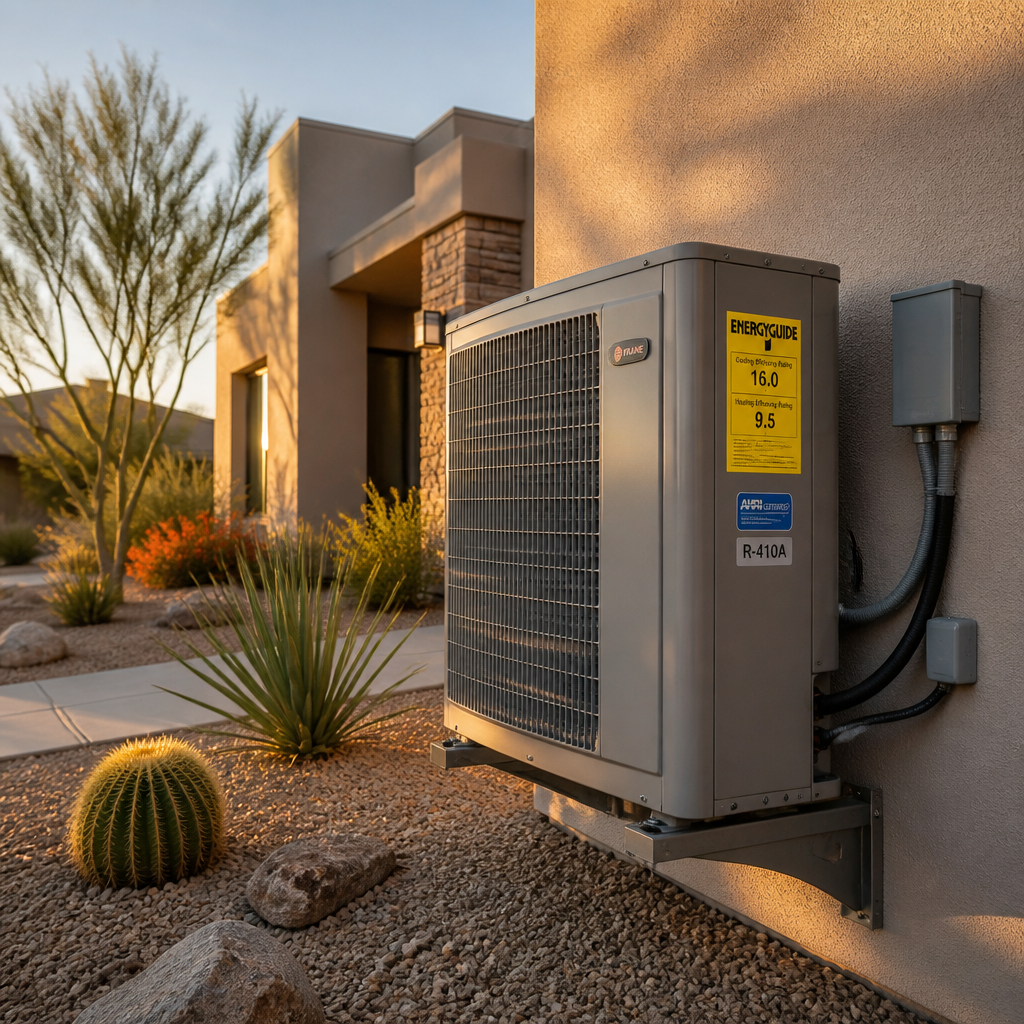
The HVAC installation cost in Arizona runs higher than much of the country for a specific reason: the extreme heat demands larger, more durable systems that run almost continuously from April through October. That operating load accelerates wear and pushes both equipment and labor costs upward compared to mild-climate markets.
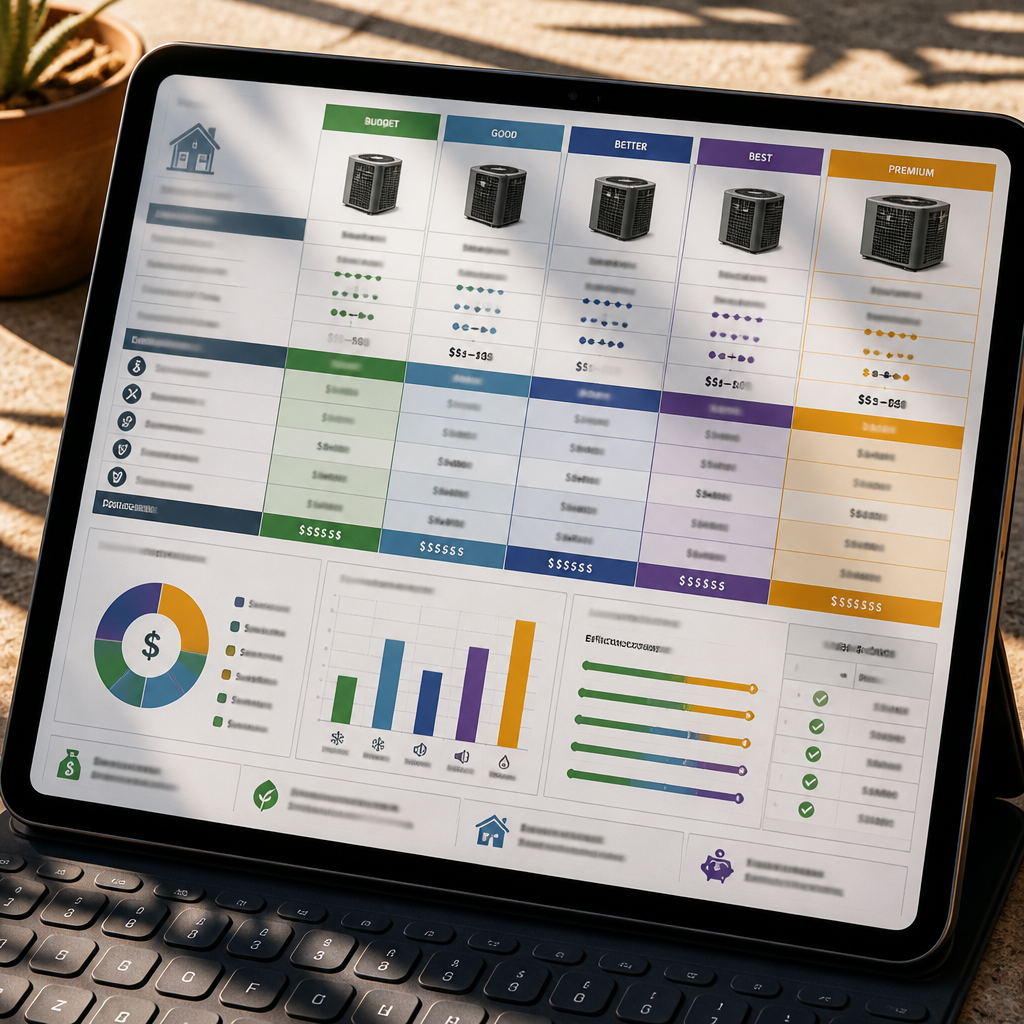
Here is a practical breakdown by system tier based on current Phoenix market pricing:
- Basic single-stage systems (14.3 SEER2): Roughly $6,500 to $11,500 installed. These meet Arizona's minimum efficiency standard but are not the best long-term choice given how hard Phoenix systems work.
- Mid-range two-stage systems (15 to 16 SEER2): Generally $10,000 to $13,000 installed. Better humidity control and more consistent temperatures compared to single-stage.
- Premium variable-speed inverter systems (17+ SEER2): These run from $13,000 to $17,000 or more. Maximum comfort, lowest operating costs, and the fastest energy payback in Phoenix's long cooling season.
New air conditioner prices in Phoenix also reflect local labor rates, permit costs, and access challenges. Homes with attic-mounted air handlers are common across the east valley, and attic temperatures in summer routinely exceed 150°F, which makes installation both physically demanding and time-consuming. Rooftop package units, common in older Tempe and central Phoenix properties, can add to labor costs due to access requirements.
Pro tip: Do not anchor your expectations to the lowest quote you see online. Budget for the middle of the range until you have a load calculation done on your specific home. An undersized system in Chandler will fail prematurely, and the savings evaporate within two summers.
Factors That Drive Your Final Price
Understanding what moves the number up or down gives you real negotiating power and helps you spot quotes that are either suspiciously low or unnecessarily inflated. There is no single dominant cost driver. Several factors combine, and changing any one of them shifts the total meaningfully.
System Size (Tonnage)
Tonnage refers to the cooling capacity of your system, not its physical weight. A 2-ton system serves a smaller home, while a 4 or 5-ton system is needed for larger properties. Larger systems cost more, and the price difference between a 2-ton and a 5-ton installation can be several thousand dollars. The key mistake to avoid is oversizing: a system that is too large for your home will short-cycle, meaning it cools quickly but shuts off before removing enough humidity, leaving you with a clammy house at a high price. Proper sizing requires a Manual J load calculation, not a rule-of-thumb estimate based on square footage alone.
Ductwork Condition
Many east valley homes have ductwork that is 15 to 25 years old. Leaky or improperly sealed ducts can waste 20 to 30 percent of conditioned air before it reaches living spaces. If your installer identifies duct problems that need sealing or partial replacement, that adds cost, but it is money well spent. Replacing a high-efficiency system while leaving deteriorated ductwork in place undermines the investment entirely.
Electrical and Code Upgrades
Older homes in Mesa, Gilbert, and central Phoenix sometimes require an electrical panel upgrade or new dedicated circuit to support a modern high-efficiency system. Arizona building permits are a real cost line and should be included in your quote. If a contractor is not pulling a permit, that is a red flag, not a bargain.
Equipment Brand and Warranty
Brand matters in Phoenix more than in moderate climates because the operating load is extreme. Trane, known for its Climatuff compressor designed to handle sustained high-temperature operation, and Lennox, which offers some of the highest SEER2 ratings available, are both well-suited to Phoenix conditions. Brewer's Air Conditioning and Heating works specifically with these brands, which means warranty service, parts availability, and technician familiarity are all stronger than with off-brand equipment.
SEER2 Efficiency Ratings and Phoenix ROI
The switch from SEER to SEER2 took effect in January 2023. Arizona requires a minimum of 14.3 SEER2 for new residential installations. SEER2 uses a more rigorous testing protocol than the old SEER standard, so direct numeric comparisons between an old SEER rating and a SEER2 rating on a newer system are not apples-to-apples.
Phoenix is one of the few markets in the country where upgrading from a baseline efficiency system to a high-efficiency one makes strong financial sense at the time of purchase. Here is why: while a national average home might run its AC for around 750 hours per year, a Phoenix home can run its system for more than 3,000 hours annually. That multiplier means every efficiency point translates into much larger savings on your APS or SRP bill than the same upgrade would deliver in a cooler market.
In Phoenix, where cooling systems run 3,000+ hours annually versus a national average of roughly 750 hours, upgrading to SEER2 16 to 18 efficiency typically pays back in three to five years through lower utility bills. That math works nowhere near as well in a mild climate.
Each incremental point increase in SEER2 rating adds roughly $300 to $500 to the system cost. A variable-speed inverter system, typically rated at SEER2 18 to 22+, can cost $2,000 to $4,000 more upfront than a basic single-stage unit, but the long-term energy savings in Phoenix's climate make that gap close faster than homeowners expect.
Pro tip: If you are staying in your Tempe or Ahwatukee home for more than five years, the 17+ SEER2 tier is almost always the right financial decision when you factor in APS or SRP electric bills over a full Phoenix summer. If you are planning to sell within two years, a well-installed mid-range system at 15 to 16 SEER2 is the smarter spend.

Repair vs. Replace: The Honest Math
The decision to repair or replace an AC system is one of the most consequential financial calls a Phoenix homeowner makes. The standard rule-of-thumb used by experienced HVAC contractors is the "5,000 rule": multiply the system's age in years by the repair cost in dollars. If the result exceeds $5,000, replacement is generally the better call. In practice, that threshold arrives quickly with older Phoenix systems.
When Repair Makes Sense
A younger system, under eight years old, with an isolated component failure like a capacitor, contactor, or even a blower motor, is a strong repair candidate. The repair cost is low relative to the remaining equipment life. If the system uses R-410A refrigerant, is otherwise well-maintained, and the failed component is not the compressor, repair is usually the right move.
When Replacement Is the Clear Choice
A system over 10 to 12 years old with a failed compressor is almost always a replacement decision in Phoenix. Compressor replacement on an aging unit is expensive, and the remaining components, including the condenser coil, evaporator coil, and electrical controls, are equally worn. You are essentially paying for a significant repair on a system that will need another significant repair within a few years.
R-22 refrigerant is the other deciding factor. Systems installed before 2010 use R-22, which has been phased out. R-22 can cost more than $100 per pound, making even small refrigerant leaks financially painful to address. A leaking R-22 system over 10 years old with multiple leak locations is a replacement decision, not a repair decision.
Repeat breakdowns within a single cooling season are the clearest signal of a system in terminal decline. If you called for AC repair three times between May and September, the fourth call should be a replacement consultation instead.
Rebates, Tax Credits, and Financing Options
The upfront cost of a new AC in Phoenix is real, but there are several programs that can meaningfully reduce what comes out of your pocket. The key is stacking available incentives rather than relying on any single one.
APS and SRP Utility Rebates
Both Arizona Public Service (APS) and Salt River Project (SRP) offer rebates for qualifying high-efficiency equipment. Rebates for 16+ SEER2 systems generally range from $200 to $800 depending on the equipment and utility program. SRP also offers rebates for qualifying heat pump installations. These programs have specific eligibility requirements and application deadlines, and some require pre-approval before installation. Ask your contractor to confirm current rebate availability before your installation date, not after.
Federal Tax Credits
The Inflation Reduction Act created a federal tax credit of up to $600 for qualifying high-efficiency HVAC equipment. This is a credit, not a deduction, meaning it reduces your tax bill dollar-for-dollar. Eligibility depends on the system meeting current ENERGY STAR efficiency thresholds. A licensed tax professional should confirm applicability for your specific situation.
Manufacturer Rebates
Trane, Lennox, and other manufacturers periodically offer seasonal rebates on select systems, typically ranging from $100 to $500. These are time-limited offers, often available in spring before peak demand arrives. Brewer's Air Conditioning and Heating, as an authorized dealer for these brands, can confirm current manufacturer promotions at the time of your quote.
Financing
Most reputable Phoenix HVAC contractors, including Brewer's, offer financing options that can spread the cost over 12 to 72 months. Zero-percent promotional financing for 12 to 24 months is commonly available through lenders like Synchrony or GreenSky for qualified buyers. Financing makes a higher-efficiency system accessible without requiring full payment upfront.
Comparing AC System Tiers for Phoenix Homes
Choosing between system tiers is not just about upfront cost. For Phoenix homeowners, the total cost of ownership over 10 to 15 years is the right frame. Here is how the three main tiers stack up for a typical east valley home.
| System Tier | Installed Cost Range (Phoenix) | Best Fit |
|---|---|---|
| Basic Single-Stage (14.3 SEER2) | $6,500 to $11,500 | Tight budgets, short-term ownership plans, or rental properties where maximum upfront savings matter more than long-term efficiency |
| Mid-Range Two-Stage (15 to 16 SEER2) | $10,000 to $13,000 | Most Phoenix owner-occupied homes. Better humidity control, quieter operation, and meaningful energy savings over a basic system without the premium price tag |
| Premium Variable-Speed Inverter (17+ SEER2) | $13,000 to $17,000+ | Homeowners staying 5+ years who want maximum comfort, lowest operating costs, and eligibility for the best rebate tiers. Particularly well-suited to larger homes in Mesa, Gilbert, and Chandler where summer bills are significant |
What a Legitimate Quote Should Include
Getting three quotes is standard advice. The more important skill is knowing how to compare them. A quote that looks $1,500 cheaper than the others often becomes the most expensive option once you understand what it excludes. In Phoenix, the following items should be explicitly included in any installation quote you take seriously.
The quote should specify the exact equipment model number, not just a brand name or tier description. It should include the permit cost, because Arizona requires permits for HVAC replacement and any contractor who skips this is creating a liability for you if you ever sell the home. Labor should be a fixed line item, not an estimate. Refrigerant charge and startup commissioning should be included, not billed separately after installation. If ductwork sealing or modification is needed, it should be a line item with a fixed cost, not a "we will assess at time of installation" note.
Brewer's Air Conditioning and Heating operates on upfront flat-rate pricing, meaning you see the full number before any work begins and that number does not change based on what the technician finds once he is at the property. That pricing model eliminates the most common complaint homeowners in Tempe, Ahwatukee, and surrounding areas have about HVAC contractors: the bill that grows after the work starts.
Pro tip: Verify that any contractor you hire holds an active license with the Arizona Registrar of Contractors (ROC). You can check at roc.az.gov. A licensed contractor carries liability insurance and is accountable to the state. An unlicensed installer offering a lower price is a risk, not a deal.
Frequently Asked Questions
How long does an AC system last in Phoenix?
In Phoenix, most central air conditioning systems last between 12 and 15 years. The extreme heat and long cooling seasons mean Phoenix systems accumulate far more operating hours per year than systems in moderate climates. A well-maintained system from a quality brand like Trane or Lennox, serviced annually, can reach 15 years or more. A neglected system running on dirty filters and skipped maintenance often fails at 10 to 12 years.
What size AC system does my Phoenix home need?
Sizing depends on your home's square footage, insulation quality, window exposure, ceiling height, and local climate factors. As a rough starting point, Phoenix homes typically require one ton of cooling capacity per 400 to 600 square feet, but that range is wide enough to be misleading without a proper Manual J load calculation. An oversized system short-cycles and leaves your home humid. An undersized system runs continuously without reaching your target temperature on hot days. Always insist on a proper sizing calculation before accepting an equipment recommendation.
Is it worth replacing just the AC unit without replacing the furnace or air handler?
Replacing only the outdoor condenser while keeping an older air handler or furnace can look cheaper upfront, but mismatched components reduce efficiency and can void the manufacturer warranty on the new equipment. In Arizona, where gas heating needs are limited and most heating comes from heat pump or gas furnace systems, a matched system replacement, indoor and outdoor together, almost always delivers better performance, better warranty coverage, and better long-term reliability than mixing old and new components.
How much do permits cost for AC replacement in Phoenix?
Permit costs vary by municipality but are typically a few hundred dollars and should be included in any legitimate contractor quote. In Phoenix, Tempe, Mesa, Chandler, Scottsdale, and Gilbert, permits are required for HVAC replacement. Any contractor who proposes skipping the permit is putting you at risk for inspection issues when you sell the home and may be operating without proper licensing.
Can I get rebates on a new AC system in Phoenix?
Yes. APS and SRP both offer rebates for qualifying high-efficiency systems, generally in the range of $200 to $800 for 16+ SEER2 equipment. Manufacturer rebates from brands like Trane and Lennox can add another $100 to $500 depending on the time of year and current promotions. Federal tax credits under the Inflation Reduction Act may apply to systems meeting ENERGY STAR high-efficiency thresholds. Ask your contractor to walk through all available incentives at the time of your quote, not after installation.
Why do AC replacement quotes in Phoenix vary so much between contractors?
Price variation between quotes usually comes down to three things: equipment quality and tier, what is included versus excluded in the quoted price, and contractor overhead structure. A quote that includes a top-tier Trane variable-speed system, permit, full ductwork inspection, and startup commissioning will legitimately cost more than a quote for a minimum-efficiency single-stage unit with no permit and no ductwork assessment. Compare line by line, not total to total. A company with upfront flat-rate pricing removes most of the ambiguity because what you see is what you pay.
If you are weighing AC replacement options for your Tempe, Mesa, Chandler, Ahwatukee, or Phoenix home, we would love to hear what questions or surprises came up during your process. Drop your experience in the comments below.
References
- HVAC.com guide to air conditioner costs in Phoenix, including installed system pricing by tonnage
- AZ Home Services Group breakdown of AC replacement costs in Arizona by system tier and SEER2 rating for 2025
- Worlock Air overview of new AC unit costs in Arizona covering system types, sizing, and climate factors
- Angi price guide for HVAC replacement in Phoenix covering efficiency standards and local cost variables
- Discount AC Refrigeration guide to AC installation costs in Phoenix including rebate and financing options
About the Author
Mark Ybarra
Mark Ybarra is the owner and leader of Brewer's Air Conditioning & Heating, a trusted HVAC company serving Tempe, Phoenix, Scottsdale, Mesa, and surrounding Arizona communities since 1982. After working in multiple roles within the company, Mark officially took ownership in 2018 and continues to uphold Brewer's long-standing commitment to integrity, exceptional service, and customer satisfaction.
Need HVAC Help?
Serving Phoenix, Tempe, Scottsdale, Mesa & surrounding areas since 1982.