When your air conditioner quits in Tempe during a July afternoon with temperatures hitting 115°F, every minute without cooling matters. But calling a technician without any preparation is a mistake that costs homeowners time, money, and sometimes a repair they did not need. AC repair in Tempe AZ is not complicated if you understand the basics before the tech arrives. This guide gives Tempe and east valley homeowners the specific knowledge to make smarter decisions, avoid common traps, and get their home cool again without overpaying.
Table of Contents
- Why Tempe AC Systems Fail Faster Than the National Average
- Quick Takeaways
- Signs Your AC Needs Repair, Not Replacement
- What to Check Before Calling a Technician
- How AC Repair Pricing Works in Tempe
- Comparing Repair Options in the East Valley
- HVAC Service Tempe: What Separates Quality Companies from the Rest
- Frequently Asked Questions
Quick Takeaways
| Key Insight | Explanation |
|---|---|
| Check your air filter first | A clogged filter is the single most common cause of AC underperformance in Tempe homes. Swap it before making a call. |
| Tempe's heat accelerates refrigerant loss | Extreme heat cycles stress coil connections, causing slow leaks. Low refrigerant is a repair job, not a homeowner fix. |
| Flat-rate pricing protects you | Hourly billing can balloon during complex repairs. Ask specifically if your quote is flat-rate before authorizing work. |
| Most AC failures happen between May and September | Scheduling a tune-up in March or April puts you ahead of the demand surge and reduces emergency repair risk. |
| Age plus repair cost determines your decision | If the system is over 12 years old and the repair exceeds 50% of replacement cost, replacement is usually smarter. |
| Tempe dust is an indoor air quality issue | Haboobs and construction dust clog systems faster here than in most US cities. Annual coil cleaning is not optional. |
| Not all HVAC brands perform equally in desert heat | Brands like Trane and Lennox are engineered with higher SEER ratings and heat-tolerant components suited for Arizona climates. |
Why Tempe AC Systems Fail Faster Than the National Average
Tempe and the broader east valley sit in one of the most thermally aggressive environments an HVAC system can face. The Arizona Department of Environmental Quality reports that Phoenix metro temperatures exceed 100°F for an average of 110 days per year. Your AC system in Tempe does not get the seasonal rest that systems in most of the country receive.
In practice, this means compressors cycle on and off more frequently, refrigerant lines expand and contract under extreme thermal stress, and capacitors wear out in a fraction of the time they would in a moderate climate. A capacitor that might last 10 years in Ohio often needs replacement in 5 to 7 years in the Phoenix metro area.
Tempe's dense residential areas also mean older housing stock. Many homes in the Tempe, Ahwatukee, and south Scottsdale corridors were built in the 1980s and 1990s with systems that were not designed for today's longer, hotter summers. Air conditioning repair in the east valley almost always involves systems working beyond their original design load.
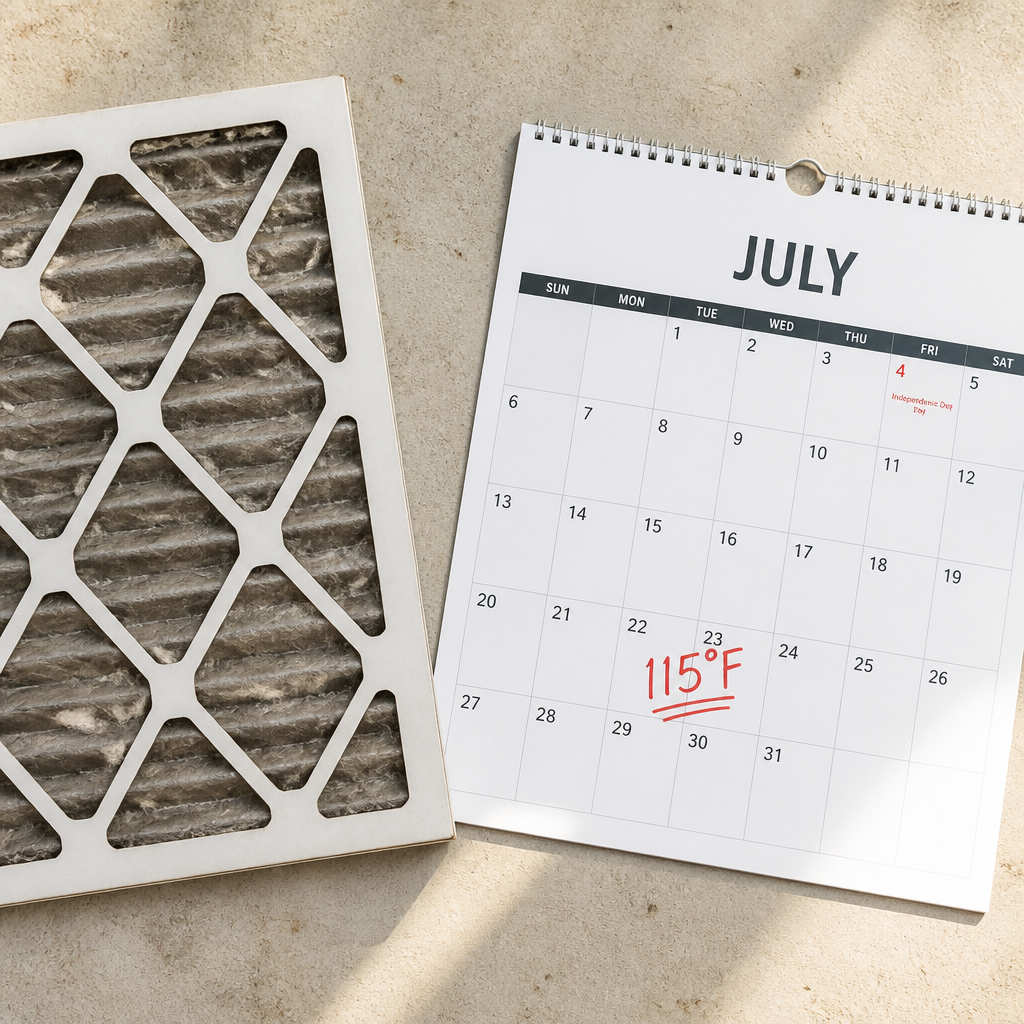

The combination of heat, dust, and system age makes Tempe one of the highest per-capita markets for HVAC service calls in the Southwest. Understanding this context helps you recognize that a failing AC here is not bad luck. It is a predictable outcome of a demanding operating environment.
Signs Your AC Needs Repair, Not Replacement
One of the most common calls Brewer's technicians receive starts with a homeowner convinced they need a full replacement, when the actual problem is a single failed component. Knowing the difference saves thousands of dollars.
Warm Air With Normal Airflow
If your vents are pushing air but it is not cold, the most likely causes are low refrigerant, a failed capacitor, or a dirty condenser coil. These are repair-level problems. A working fan motor with warm output does not mean the entire system is done.
Short Cycling
Short cycling means the system turns on, runs for 2 to 3 minutes, shuts off, and repeats. This is almost always a refrigerant issue, a dirty evaporator coil, or an oversized system. A competent HVAC technician can diagnose this in under 30 minutes. It is a repair, not a system death sentence.
Unusual Sounds From the Air Handler or Condenser
Grinding usually means motor bearings are failing. Banging often points to a loose or broken component inside the compressor. Squealing can be a belt issue on older systems. None of these automatically require full replacement. The key question is always whether the compressor itself is still functional, since compressor replacement on a system over 12 years old is the one scenario where replacement becomes the smarter financial choice.
Ice on the Refrigerant Lines
Seeing ice on the copper lines running to your outdoor unit is a clear sign the system is low on refrigerant or has severely restricted airflow. Shut the system off immediately, switch the thermostat fan to ON to melt the ice, then call for HVAC service in Tempe. Running a frozen system causes compressor damage that turns a simple repair into an expensive one.
Pro tip: Before assuming the worst, check your thermostat settings. A system accidentally set to HEAT instead of COOL, or a fan set to ON instead of AUTO, generates a surprising number of unnecessary service calls every summer in the east valley.
What to Check Before Calling a Technician
A prepared homeowner shortens the diagnostic window, which means a faster repair and sometimes a lower bill. Run through this checklist before you pick up the phone.
Filter Status
Pull your air filter and hold it up to a light source. If you cannot see light through it, replace it. A blocked filter causes the evaporator coil to freeze and the system to underperform or shut down completely. This is a self-fix that costs $10 to $25 and takes five minutes.
Circuit Breaker and Disconnect
Check your electrical panel for a tripped breaker on the AC circuit. Also check the outdoor disconnect box near your condenser unit. A tripped disconnect is a common result of a power surge or a brief overload. Reset it once. If it trips again immediately, stop. That signals an underlying electrical or compressor problem that requires a licensed technician.
Thermostat Batteries and Settings
Dead thermostat batteries are a real-world cause of no-cool calls. Replace them if the display is dim or blank. Verify the system is set to COOL, that the set temperature is at least 5 degrees below the current indoor temperature, and that the fan is on AUTO.
Outdoor Condenser Clearance
Walk outside and look at your condenser unit. In Tempe, debris from desert landscaping, cottonwood seeds in spring, and dust accumulation frequently block condenser coil airflow. Do not spray water directly into the unit while power is on, but do clear any leaves, grass clippings, or debris from around the base and sides. Restricted airflow causes high-pressure lockouts.
Pro tip: Write down the make, model, and serial number of both your indoor air handler and outdoor condenser before you call for service. This allows your HVAC technician to look up parts availability and arrive with higher confidence they have the right components, which reduces the chance of a second trip charge.
How AC Repair Pricing Works in Tempe
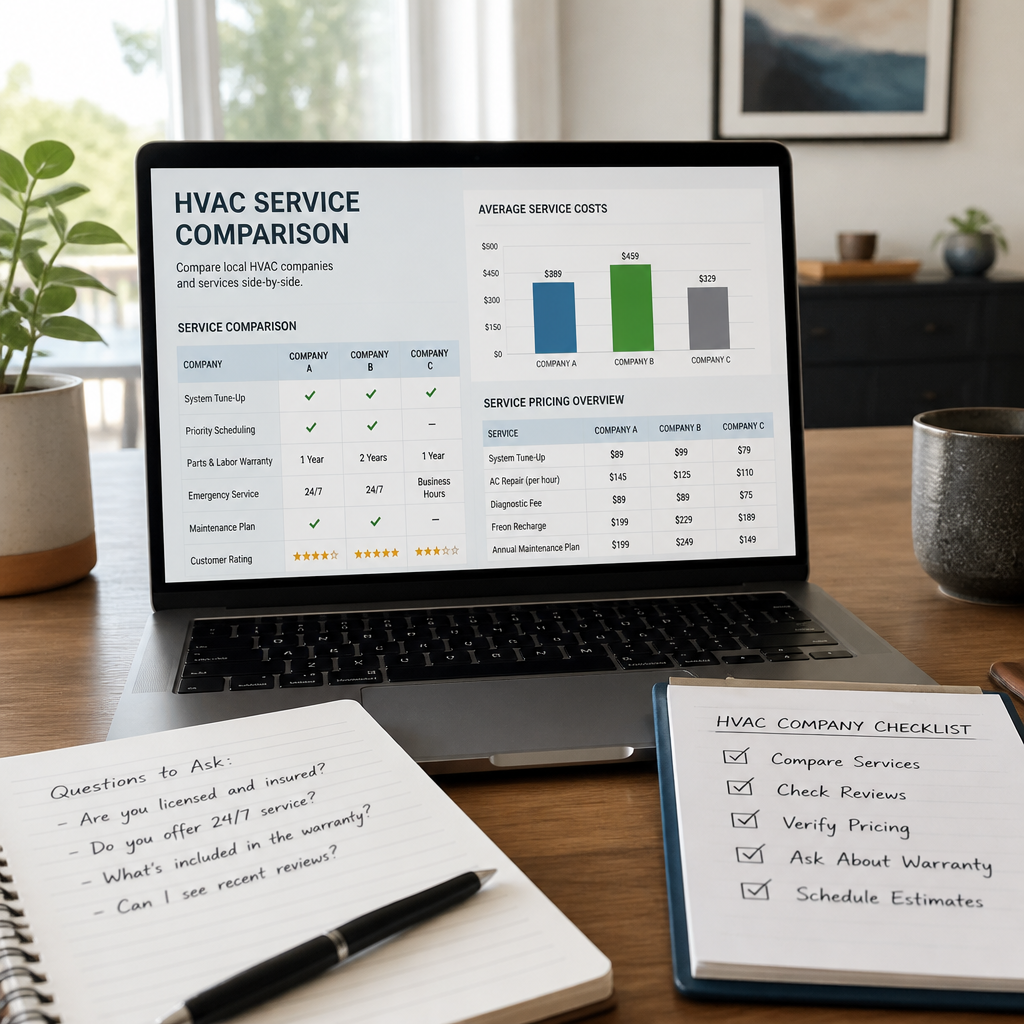
Pricing transparency is where many homeowners get burned in the Phoenix metro market. Understanding the fee structures used by HVAC companies in Tempe gives you the ability to compare quotes honestly and avoid inflated repair bills.
Diagnostic Fee vs. Service Call Fee
Most reputable HVAC companies charge a diagnostic or service call fee, typically ranging from $75 to $150 in the Tempe area, to send a technician to your home and identify the problem. This fee should be disclosed upfront. A common red flag is a company that advertises a free service call but then charges inflated parts prices to compensate. The data consistently shows that transparent diagnostic fees correlate with more honest overall pricing.
Flat-Rate vs. Time and Materials Billing
Flat-rate pricing means the repair cost is fixed once the problem is diagnosed, regardless of how long the tech spends on the job. Time and materials billing charges you by the hour plus parts. In a complex repair, time and materials billing can easily run 40 to 60 percent higher than a flat-rate quote for the same work. Brewer's Air Conditioning operates on upfront flat-rate pricing, which eliminates the uncertainty that hourly billing creates.
Common Repair Cost Ranges in Tempe
Capacitor replacement typically runs $150 to $300 in this market. Refrigerant recharge for a standard residential system is commonly $200 to $500 depending on the refrigerant type and amount needed. Contactor replacement is usually $150 to $250. Blower motor replacement falls in the $400 to $700 range. Compressor replacement, if it makes financial sense at all, runs $1,200 to $2,500 depending on system size.
"Consumers who get at least three quotes for major home repairs save an average of 20 percent compared to those who accept the first offer," according to data compiled by the Consumer Federation of America on home services spending patterns.
For emergency after-hours calls during a Tempe heat wave, expect a premium of $50 to $150 above standard rates. That premium is reasonable and legitimate. What is not reasonable is a company that refuses to provide any written estimate before starting work.
Comparing Repair Options in the East Valley
Not every HVAC company serving Tempe and the east valley operates the same way. Below is a comparison of the three primary service models you will encounter when searching for AC repair in Tempe.
| Service Model | How It Works | Best For |
|---|---|---|
| Local independent HVAC company (example: Brewer's AC) | Serves a defined geographic area, employs its own certified technicians, uses flat-rate pricing, maintains long-term customer relationships since 1982 in central Arizona | Homeowners who want consistent technician quality, upfront pricing, and a company with deep knowledge of east valley housing stock and climate |
| Large regional franchise (example: Parker and Sons, Goettl) | High advertising volume, large dispatch network, multiple upsell tiers, variable technician quality depending on franchise location and turnover | Homeowners who prioritize fast dispatch above all else and are less concerned with pricing consistency or upsell pressure |
| National home warranty HVAC dispatch | Homeowner pays a claim fee, warranty company dispatches a contracted technician, coverage is determined by warranty terms not repair complexity | Minor repairs on newer systems where warranty terms are favorable; often problematic for major component failures due to coverage exclusions |
In practice, local independent companies with established histories in the Phoenix metro area tend to provide better diagnostic accuracy on older systems because their technicians have seen the same housing vintage repeatedly. A technician who has serviced homes in Tempe, Mesa, and Ahwatukee for years knows the failure patterns of 1990s-era Carrier and Trane systems in ways that a high-turnover national franchise technician may not.
HVAC Service Tempe: What Separates Quality Companies from the Rest
When you are selecting an HVAC service provider in Tempe, the criteria that matter most are licensing, transparency, and brand expertise. Here is how to vet a company before you let anyone touch your system.
Arizona ROC License Verification
All HVAC contractors operating in Arizona must hold a valid license from the Arizona Registrar of Contractors (ROC). You can verify any company's license status at the ROC website. Never hire an unlicensed HVAC contractor regardless of how low the quote is. An unlicensed repair that causes further system damage voids your equipment warranty and leaves you with zero legal recourse.
Brand Certification and Parts Access
A company that is factory-authorized for Trane or Lennox has access to genuine OEM parts and carries liability coverage specific to those brands. Aftermarket parts are not inherently bad, but they are a cost-cutting measure that varies significantly in quality. Ask your technician directly whether the parts being installed are OEM or aftermarket. You have every right to that answer before authorizing the repair.
Written Estimates Before Work Begins
Any reputable HVAC company will provide a written repair estimate before starting work. If a technician is reluctant to put the diagnosis and price in writing, treat that as a hard stop. In the Phoenix metro area, the Better Business Bureau regularly receives complaints about HVAC companies that quoted verbally, completed work, and then presented bills significantly higher than the verbal estimate.
Brewer's Air Conditioning has been serving central Arizona since 1982, which means their technicians have HVAC service experience in Tempe across multiple decades of housing stock, equipment generations, and climate shifts. That institutional knowledge is not something a newer franchise operation can replicate quickly.
Maintenance Agreements and Preventive Service
A quality HVAC company will offer a maintenance agreement that includes at least one annual tune-up, priority scheduling during peak season, and a discount on repair parts and labor. For Tempe homeowners, a maintenance agreement is not a luxury. The Arizona summer creates conditions where a minor issue missed in April becomes a full system failure in July. The cost of an annual maintenance visit is a fraction of the emergency repair bill it prevents.
Frequently Asked Questions
How long does an AC repair take in Tempe?
Most standard AC repairs in Tempe take between one and three hours once the technician is on site. Capacitor and contactor replacements are typically under an hour. Refrigerant recharges take one to two hours depending on how thoroughly the leak is addressed. Blower motor or evaporator coil replacements may require three to five hours or a follow-up visit if parts need to be ordered for less common system configurations.
Is it worth repairing an AC unit that is more than 10 years old?
It depends on the repair cost relative to replacement cost, but a clear decision rule helps. If the AC is 10 to 15 years old and the repair cost is under 30 percent of a replacement quote, repair it. If the system is over 15 years old or the repair exceeds 50 percent of replacement cost, replacement delivers better long-term value, especially given newer SEER ratings that cut energy costs significantly in Arizona's extended cooling season.
What refrigerant does my Tempe AC system use, and does it matter?
It matters significantly right now. Systems manufactured before 2010 almost certainly use R-22 (Freon), which was phased out in the US in 2020. R-22 is extremely expensive when available, often $100 to $150 per pound, because supply is limited to recovered and recycled stock. If your system uses R-22 and needs a recharge, that cost calculation almost always points toward replacement with a modern R-410A or R-32 system.
Why does my AC keep tripping the breaker in the summer?
In Tempe's heat, a breaker trip on the AC circuit is most often caused by a failing compressor drawing excessive amperage, a dirty condenser coil causing high-pressure overload, or a short in the electrical components. Reset the breaker once and observe. If it trips again immediately or within a few minutes of operation, shut the system off and call for HVAC service in Tempe. Repeatedly resetting a tripping breaker without diagnosis risks a compressor burnout, which is the most expensive single failure point in any residential AC system.
How do I know if my AC repair company is charging me a fair price?
Get at least two written estimates for any repair over $300. Compare the specific parts being quoted, not just the total price. Verify that diagnostic fees are disclosed upfront. Ask whether pricing is flat-rate or time and materials. Check the company's Arizona ROC license number. A company that resists any of these steps is signaling that their pricing does not hold up to scrutiny. Legitimate HVAC contractors in the Tempe area welcome comparison because they are confident in their value.
Does Brewer's Air Conditioning service my area in the east valley?
Brewer's Air Conditioning serves Tempe, Ahwatukee, Chandler, Mesa, Gilbert, and Phoenix, covering the core of the east valley where the combination of heat, older housing stock, and high system demand is most pronounced. They have been operating in central Arizona since 1982 and carry factory authorization for leading brands including Trane and Lennox.
If you have had an AC repair experience in Tempe or the east valley that surprised you, good or bad, share what happened in the comments so other homeowners in this area know what to watch for.
References
- U.S. Department of Energy: Home cooling systems guidance and energy efficiency standards for residential HVAC
- U.S. Environmental Protection Agency: Regulatory information on refrigerant phase-outs including R-22 and approved alternatives
- Arizona Registrar of Contractors: License verification tool for HVAC and mechanical contractors operating in Arizona
- Statista: HVAC industry market data, service call frequency statistics, and consumer spending trends in home services
- Forbes Home: Consumer guidance on HVAC repair costs, contractor selection, and home maintenance financial planning
About the Author
Mark Ybarra
Mark Ybarra is the owner and leader of Brewer's Air Conditioning & Heating, a trusted HVAC company serving Tempe, Phoenix, Scottsdale, Mesa, and surrounding Arizona communities since 1982. After working in multiple roles within the company, Mark officially took ownership in 2018 and continues to uphold Brewer's long-standing commitment to integrity, exceptional service, and customer satisfaction.
Need HVAC Help?
Serving Phoenix, Tempe, Scottsdale, Mesa & surrounding areas since 1982.