Most homeowners in Phoenix and the east valley are stunned to learn their AC system may have already aged out, even if it still runs. The national average lifespan of a central air conditioner is 15 to 20 years, but in Arizona that number drops considerably. AC lifespan in Arizona is shaped by extreme summer heat, dust, and how consistently the system is maintained. After more than 40 years of servicing HVAC systems across Tempe, Mesa, Scottsdale, and Chandler, the team at Brewer's Air Conditioning and Heating has seen exactly what shortens a system's life and what extends it. This article gives you honest, specific answers.
Quick Takeaways
| Key Insight | Explanation |
|---|---|
| Arizona AC systems typically last 12 to 15 years | Extreme summer heat forces systems to run far longer and harder than in milder climates, accelerating wear on compressors and motors. |
| Annual maintenance adds 3 to 5 years of useful life | Systems that receive consistent tune-ups before summer reach their rated lifespan more reliably than neglected units. |
| Brand selection matters more in AZ than most states | Brands like Trane and Lennox engineer units for high-SEER, high-load conditions that align with Arizona summers. |
| Refrigerant type signals replacement urgency | Systems still running on R-22 refrigerant are past their practical life cycle and face rising repair costs as R-22 is phased out. |
| The 5,000-dollar rule helps decide repair vs. replace | Multiply the system age by the estimated repair cost. If the result exceeds $5,000, replacement usually makes better financial sense. |
| Dirty coils are the leading cause of early failure in AZ | Arizona dust clogs evaporator and condenser coils faster than in other states, forcing compressors to overwork and fail prematurely. |
| Oversized systems die faster than properly sized ones | A unit too large for the home short-cycles, causing excessive wear on the compressor and reducing overall system lifespan. |
Why Arizona Is Hard on AC Systems
Phoenix averages more than 100 days per year above 100 degrees Fahrenheit. During peak summer months, a residential AC system in the east valley runs virtually nonstop for 16 to 18 hours a day. That is not a condition most HVAC equipment is designed to sustain long-term, even systems rated for hot climates.
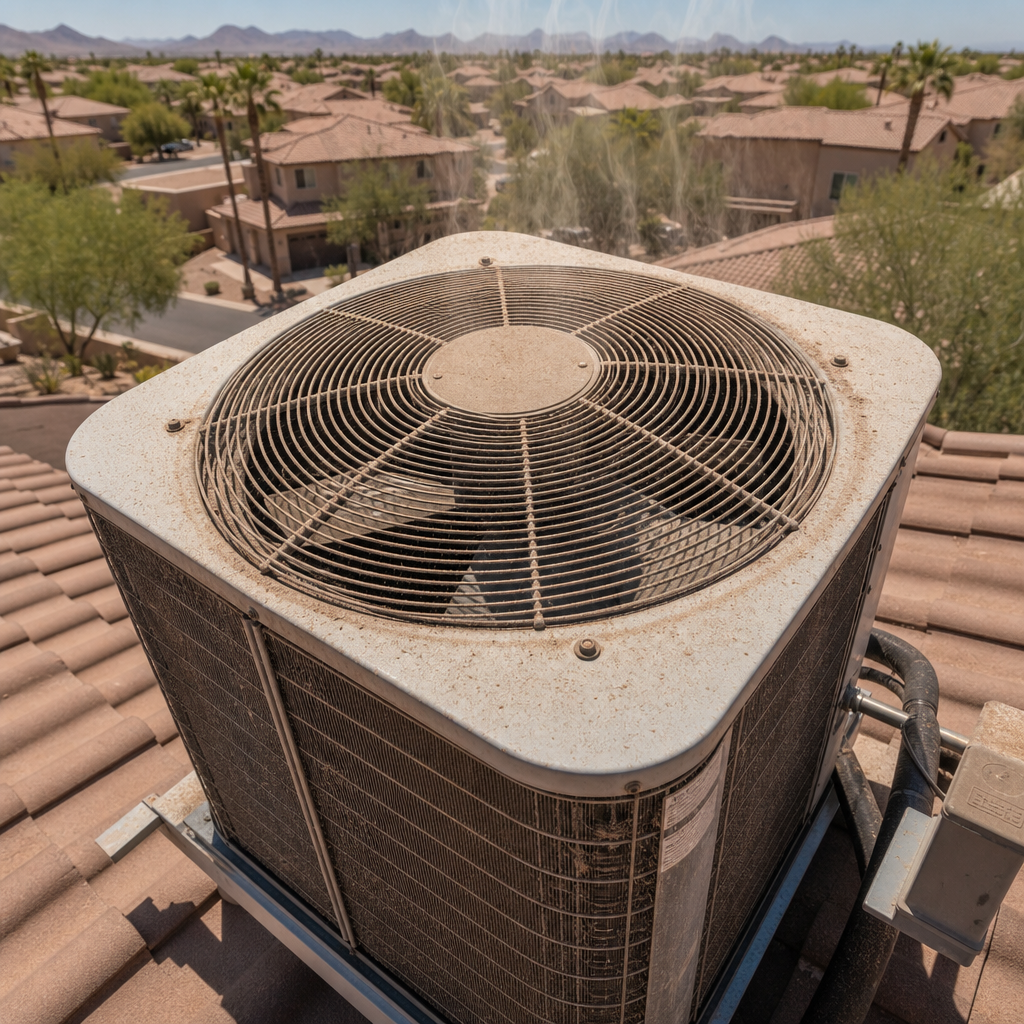
The combination of intense heat and desert dust is particularly punishing. Dust storms, locally called haboobs, push particulate matter directly into outdoor condenser units and through air filters, fouling coils and reducing airflow. Reduced airflow forces the compressor to work harder, and the compressor is the single most expensive component in any AC system.
In practice, a system installed in Tempe or Ahwatukee will experience more operational stress in one Arizona summer than a similar unit in a mild coastal climate experiences in two full years. That is not an exaggeration. It is reflected in the service call patterns we see every spring and summer across the Phoenix metro area.
Realistic AC Lifespan Numbers for Arizona
The U.S. Department of Energy estimates the average central air conditioner lasts 15 to 20 years under normal conditions. Arizona is not normal conditions. The data from our service history consistently shows a realistic lifespan of 12 to 15 years for most residential systems in the Phoenix metro area.
What the Numbers Look Like by System Type
Standard split systems, the most common setup in Arizona homes, average 12 to 15 years when serviced annually. Heat pump systems, which handle both heating and cooling and therefore run even more frequently in shoulder seasons, tend to fall on the lower end of that range. Package units installed on commercial rooftops in Mesa or Chandler can reach 15 years, but only with disciplined maintenance schedules.
High-efficiency Trane and Lennox systems with two-stage compressors and variable-speed air handlers tend to last longer because they run more gently. Instead of blasting at full capacity and shutting off repeatedly, they modulate output. That gentler operation reduces compressor stress significantly.
A common mistake is assuming that because the system still produces cold air, it is still healthy. Compressor degradation often happens gradually. The system cools, but it takes longer, costs more to run, and is operating dangerously close to failure. By the time cooling noticeably drops off, the compressor may already be beyond cost-effective repair.
Pro tip: If your system is 10 years old and you have not had a professional inspection in the last 12 months, schedule one before summer arrives. Catching early compressor wear or refrigerant loss now costs a fraction of what emergency replacement costs in July.
Factors That Cut AC Life Short in AZ
After four decades of servicing systems across the Phoenix east valley, a clear pattern emerges. The same failure points appear repeatedly, and most of them are preventable.
Skipped or Inconsistent Maintenance
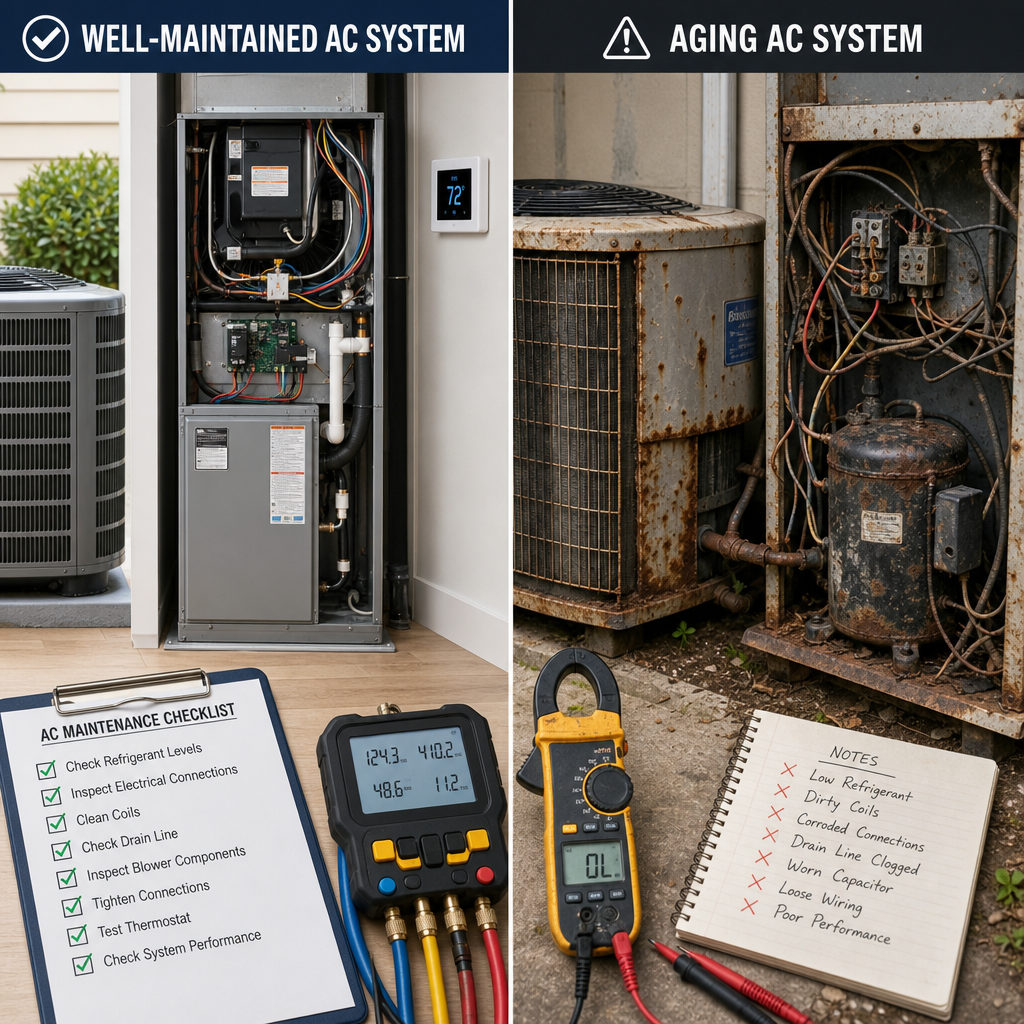
This is the number one factor that separates a 10-year system from a 15-year system. Skipping annual tune-ups allows coils to accumulate dust and debris, refrigerant levels to drift, and electrical connections to corrode. None of these problems announce themselves loudly until they cause a breakdown.
Incorrect System Sizing
An oversized system cools the home quickly but shuts off before it can dehumidify properly. It then restarts almost immediately. This short-cycling pattern hammers the compressor with repeated start-up loads, which is the highest-stress moment in any AC cycle. A system that short-cycles can lose 3 to 5 years of lifespan compared to a properly sized unit.
Cheap Filter Habits
Using no-name thin filters or failing to replace filters monthly during peak season allows dust to bypass the filter and coat the evaporator coil directly. In Arizona, that coil can become heavily restricted in as little as 60 days during dust season. A clogged evaporator coil raises suction pressure, causes the refrigerant to run too cold, and can freeze the coil solid, all of which stress the compressor.
Deferred Repairs
A capacitor that costs $150 to replace is often the early warning sign before a $2,000 compressor failure. The data consistently shows that homeowners who defer small repairs end up replacing systems 2 to 4 years earlier than those who address issues promptly. The repair-versus-replace math changes dramatically when you factor in deferred maintenance costs.

Comparison: Repair vs. Replace vs. Maintain
One of the most common questions we hear from homeowners across Chandler, Gilbert, and Mesa is whether to repair a struggling system, invest in preventive maintenance, or replace it outright. The right answer depends on system age and repair cost, but the framework below cuts through the noise.
| Decision Path | Best For | Typical Cost Range (AZ) |
|---|---|---|
| Repair the existing system | Systems under 10 years old with a single component failure. Use the $5,000 rule: age x repair cost under $5,000 favors repair. | $150 to $1,500 depending on part and labor |
| Preventive maintenance contract | Any system between 5 and 12 years old that is running reliably. This is the highest-ROI option over a 3 to 5 year period. | $150 to $300 per year for annual tune-up plans |
| Full system replacement | Systems over 12 to 15 years old, systems requiring compressor replacement, or units still running R-22 refrigerant. | $5,000 to $12,000+ depending on unit size and efficiency rating |
"The most expensive AC decision a homeowner can make is replacing a system that could have lasted three more years with maintenance, or repairing a system that needed replacement two years ago." - Brewer's Air Conditioning and Heating, drawing on 40+ years of Phoenix-area service experience.
How to Get More Years From Your Current System
Extending AC lifespan in Arizona is not about luck. It is about a handful of specific actions taken consistently. The homeowners we see getting 15 or more years from their systems share common habits.
Change Filters Every 30 Days During Summer
This is not optional in Arizona. Monthly filter changes from May through September protect the evaporator coil from dust accumulation. Use a MERV 8 to MERV 11 filter. Going higher than MERV 11 with a standard residential system restricts airflow too much and creates its own set of problems.
Clear the Outdoor Condenser Unit Regularly
After any dust storm, inspect the outdoor condenser unit and gently rinse the coil fins with a garden hose from the inside out if needed. Do not use a pressure washer. Bent fins restrict airflow and reduce heat rejection, which raises system operating temperatures and shortens compressor life.
Schedule a Pre-Summer Tune-Up Each Year
A professional tune-up in March or April, before Arizona temperatures climb into the 90s, allows a technician to check refrigerant levels, inspect electrical connections, clean coils, and test capacitors. Addressing marginal components before summer saves both money and the misery of a breakdown during a heat wave.
Pro tip: Ask your HVAC technician to check the static pressure in your duct system during your annual tune-up. High static pressure is a silent system killer in Arizona and is often caused by undersized ducts or too many closed vents. Brewer's technicians check this as part of their standard service process.
Do Not Close Vents to Unused Rooms
This is one of the most repeated myths in residential HVAC. Closing vents increases static pressure throughout the duct system, which forces the blower motor to work harder and reduces airflow across the evaporator coil. Keep all vents at least 80 percent open, even in rooms you rarely use.
Signs Your Arizona AC System Is Near End of Life
Knowing when to stop investing in an aging system is as important as knowing how to maintain a healthy one. In Arizona, there are specific warning signals that reliably indicate a system is approaching the end of its useful service life.
Refrigerant Type Is R-22
If your system uses R-22 refrigerant, also known as Freon, it was almost certainly installed before 2010. The EPA phased out R-22 production in 2020, and remaining supplies are increasingly expensive. Recharging an R-22 system can cost $600 to $1,400, which rarely makes economic sense when the system is already past its practical lifespan.
Increasing Frequency of Repairs
One repair per year is acceptable. Two or more repairs in a single summer season on a system over 10 years old is a signal to start budgeting for replacement. Each repair on an aging system carries the risk of uncovering additional failures during the diagnostic process.
Rising Utility Bills Without Explanation
Arizona APS and SRP utility data consistently shows that an aging, inefficient AC system can consume 20 to 30 percent more electricity than a newer high-efficiency unit to achieve the same cooling output. If your electric bills have climbed significantly over two or three summers without a change in usage habits, your system's efficiency has degraded.
The System Is Over 12 Years Old and Needs a Compressor
A compressor replacement on a system older than 12 years is almost never the right call in Arizona. The compressor replacement cost typically runs $1,500 to $2,500, and the remaining components are equally aged. Investing that money toward a new system almost always provides better long-term value.
Pro tip: Before authorizing any repair over $500 on a system older than 10 years, ask your technician for an honest assessment of the system's remaining service life. A reputable HVAC company, like Brewer's, will give you a straight answer rather than push unnecessary repairs.
Frequently Asked Questions
How long does AC last in Phoenix compared to other cities?
In Phoenix, a central AC system realistically lasts 12 to 15 years with annual maintenance. In a milder climate like Seattle or Denver, the same system might reach 18 to 20 years. The difference is driven by the number of hours the system runs each year. A Phoenix system can accumulate the operational equivalent of two to three years of a mild-climate system in a single Arizona summer.
Does the brand of AC unit affect how long it lasts in Arizona?
Yes, brand matters, and in Arizona it matters more than in most places. Trane and Lennox systems are specifically engineered to maintain efficiency and reliability under high ambient temperatures. Budget brands with lower-grade compressors and thinner heat exchanger materials tend to show early compressor fatigue in Arizona heat. Brewer's recommends Trane and Lennox specifically because we have serviced both brands for decades and trust their performance in extreme conditions.
What is the HVAC system life expectancy in AZ for heat pumps?
Heat pumps in Arizona typically last 10 to 14 years. Because heat pumps operate in both heating and cooling modes, they accumulate more annual run hours than a standard air conditioner. The shoulder seasons in Arizona, where temperatures still require climate control even in November and February, add operational hours that standard AC-only systems do not experience.
Is it worth repairing a 12-year-old AC system in Arizona?
The answer depends on the repair cost and the nature of the failure. Use the $5,000 rule: multiply the system age by the repair cost. If a 12-year-old system needs a $500 repair, that calculates to $6,000, which is over the $5,000 threshold and suggests replacement is the smarter financial move. If the repair is $150 for a capacitor, that calculates to $1,800 and repair makes sense. Major component failures like compressors on 12-plus-year systems almost always favor replacement in Arizona.
How can I tell how old my AC system is if I do not know the install date?
Look for the manufacturer's data plate on the outdoor condenser unit. Most brands encode the manufacture date in the serial number. Trane, for example, uses the first number as the year and the second two numbers as the week of manufacture in many serial number formats. If you cannot decode it yourself, a Brewer's technician can identify the manufacture date during any service visit. The manufacture date is usually within one to two years of the installation date.
Does keeping my thermostat at a constant temperature help my system last longer?
Yes, in Arizona specifically this is good advice. Setting your thermostat to a stable temperature, rather than letting the home heat up all day and then aggressively cooling it at night, reduces the extreme-load start cycles that stress compressors most. The Department of Energy recommends setting your thermostat to 78 degrees when home and no higher than 85 degrees when away during summer, rather than turning the system off entirely. Pulling a Phoenix home from 95 degrees back down to 75 degrees puts tremendous compressor strain on the system.
Have you noticed changes in how your AC system performs this summer compared to previous years? Share your experience or questions below, and a Brewer's technician may be able to help you figure out what to do next.
References
- U.S. Department of Energy: official guidance on home cooling efficiency, thermostat settings, and air conditioner maintenance best practices
- U.S. Environmental Protection Agency: information on R-22 refrigerant phase-out regulations and approved refrigerant alternatives for residential HVAC systems
- Forbes Home: consumer guidance on air conditioner lifespan, replacement cost estimates, and repair-versus-replace decision frameworks
- Statista: data on U.S. HVAC industry trends, residential system replacement rates, and energy consumption statistics
- ASHRAE: engineering standards and technical resources for HVAC system design, efficiency ratings, and equipment service life expectations
About the Author
Mark Ybarra
Mark Ybarra is the owner and leader of Brewer's Air Conditioning & Heating, a trusted HVAC company serving Tempe, Phoenix, Scottsdale, Mesa, and surrounding Arizona communities since 1982. After working in multiple roles within the company, Mark officially took ownership in 2018 and continues to uphold Brewer's long-standing commitment to integrity, exceptional service, and customer satisfaction.
Need HVAC Help?
Serving Phoenix, Tempe, Scottsdale, Mesa & surrounding areas since 1982.