Most Phoenix-area homeowners replace their AC air filter every three months because that is what the package says. In Arizona's summer, that schedule will cost you. When your system runs 12 to 16 hours a day through 115-degree heat, a clogged filter is not just an efficiency problem, it is a breakdown waiting to happen. AC air filter replacement in Arizona follows a completely different timeline than what works in Minnesota or Ohio, and ignoring that difference is one of the most common reasons we see systems fail before they should. Here is exactly what the schedule should look like, and why.
Table of Contents
- Why Arizona's Summer Destroys Filters Faster
- Quick Takeaways
- The Actual Replacement Schedule for Arizona Homes
- Filter Types and Which One to Use in AZ Heat
- Comparison of Filter Replacement Approaches
- Warning Signs Your Filter Is Already Overdue
- How Indoor Air Quality Connects to Filter Changes
- Frequently Asked Questions
Quick Takeaways
| Key Insight | Explanation |
|---|---|
| Change filters every 3 to 4 weeks in peak summer | Arizona AC systems run nearly continuously from May through September, loading filters with dust and debris far faster than in mild climates. |
| Haboobs and dust storms accelerate clogging dramatically | A single haboob can push weeks worth of particulate loading through your filter in one event. Check the filter within 24 hours after any major dust storm. |
| MERV 8 to 11 is the practical sweet spot for most AZ homes | Higher MERV ratings trap more particles but restrict airflow. In summer heat, restricted airflow overworks the compressor. MERV 8-11 balances protection with performance. |
| Pets and construction nearby shorten the cycle further | Homes with dogs or cats, or near active construction sites in the East Valley, should check filters every 2 weeks during summer months. |
| A dirty filter can raise energy bills by 5 to 15 percent | According to the U.S. Department of Energy, replacing a clogged filter with a clean one can lower AC energy consumption by 5 to 15 percent. |
| Single-story homes collect more dust than two-story layouts | Single-story homes in Tempe, Ahwatukee, and Chandler sit closer to ground-level dust sources. Their return air pulls in more particulate per cycle. |
| Skipping changes voids some manufacturer warranties | Trane and Lennox systems both specify regular filter maintenance as a condition of warranty coverage. Document your changes with dates. |
Why Arizona's Summer Destroys Filters Faster
Arizona's climate creates a filter-loading environment unlike anywhere else in the country. From late May through early October, residential AC systems in Phoenix, Tempe, and Mesa run almost constantly. A system that cycles 8 hours a day in a temperate climate might run 14 to 16 hours a day here at peak summer. Every operating hour pulls air, and every pulled cubic foot of air carries Arizona's distinctly fine, alkaline desert dust through your filter media.
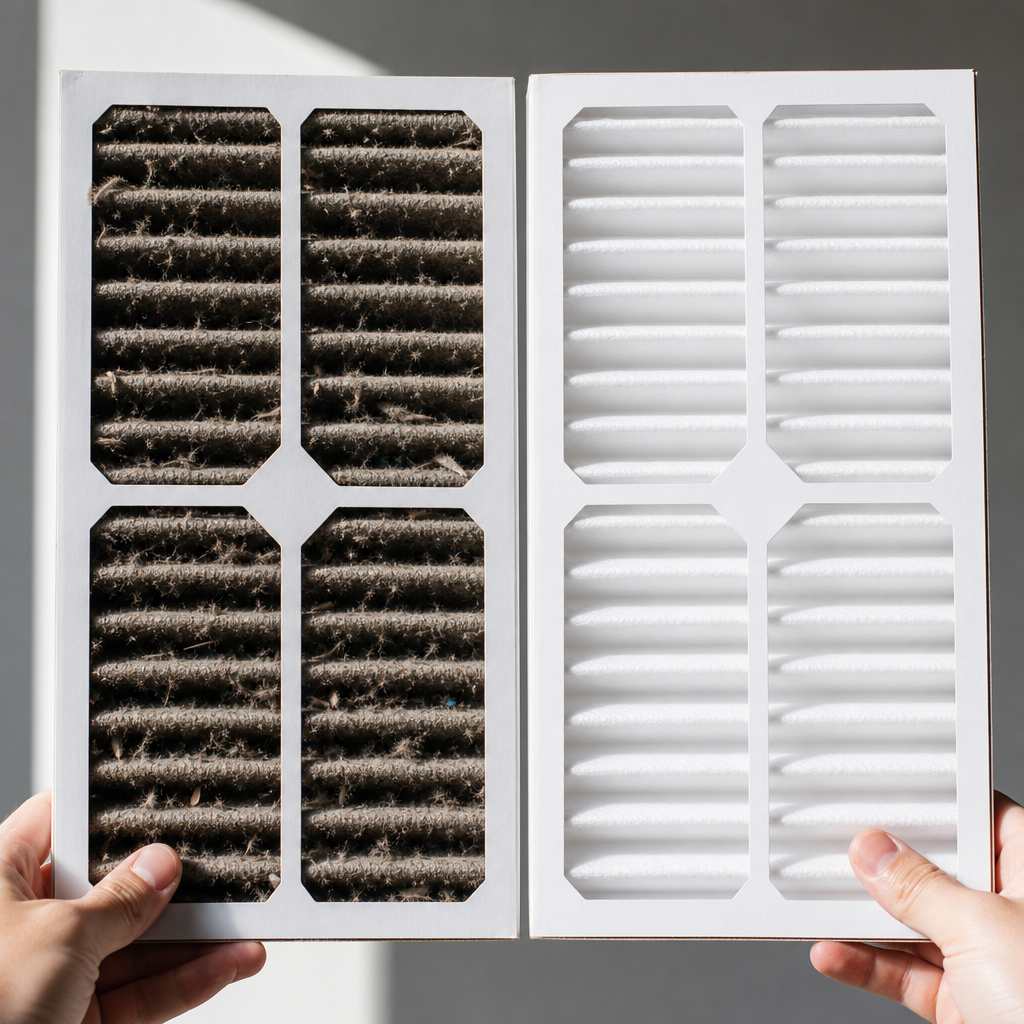
The dust in the Sonoran Desert region is not ordinary household dust. It contains fine silica particles, pollen from native grasses and trees, and during haboob season, an extreme concentration of particulate that can rival an industrial setting. In practice, we see filters in Chandler and Gilbert homes that look like they have been in service for three months when they are only four weeks old. The visual check does not lie.
Pro tip: After any haboob or major dust storm, pull your filter and inspect it before the next day ends. If it looks gray or brown across more than half its surface, replace it immediately, regardless of how recently you last changed it.
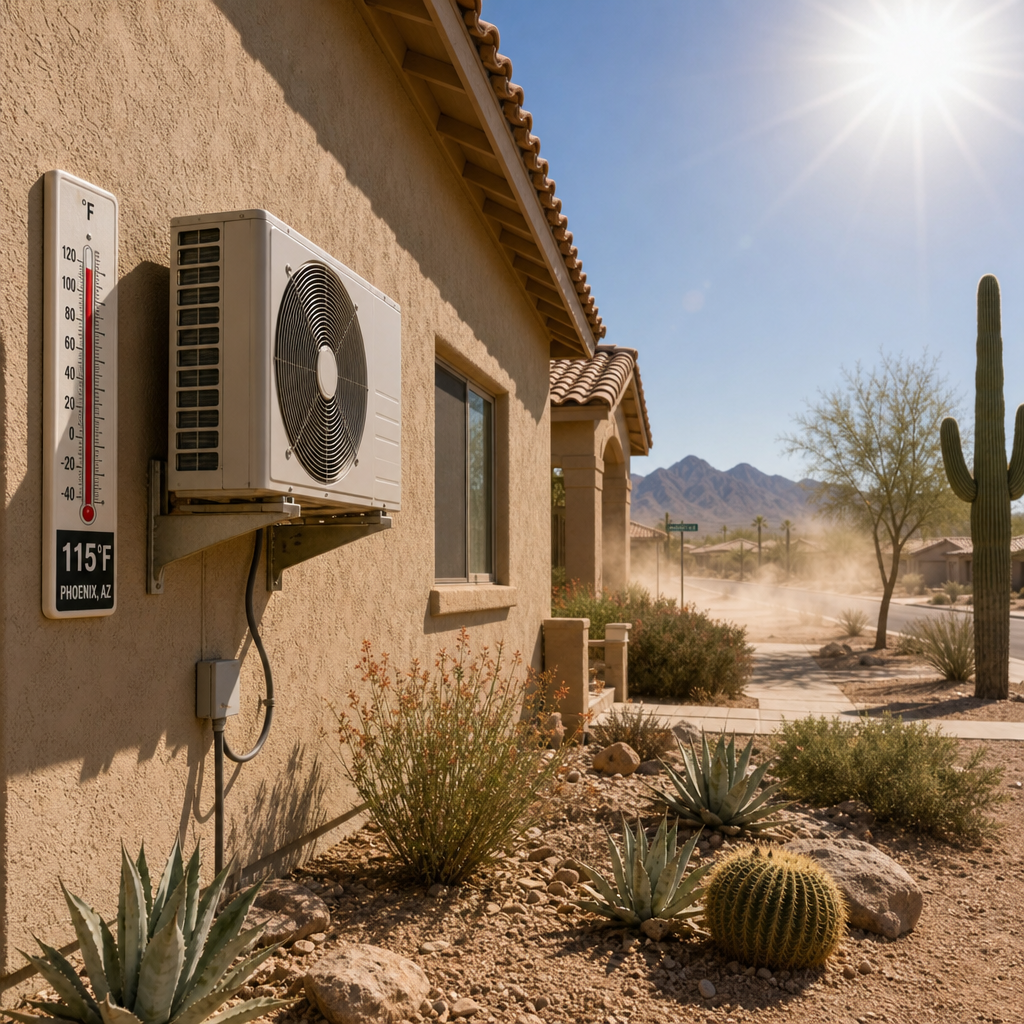
There is also the thermal load factor to consider. When your system works harder to maintain 78 degrees against 113-degree outdoor temperatures, it moves more air volume per hour than it would in a mild climate. More air volume means faster filter saturation. This is not a theory, it is a straightforward mechanical reality that shows up on every service call we run during summer.
The Actual Replacement Schedule for Arizona Homes
The standard advice printed on most filter packaging, replace every 90 days, was written for average climates with average run times. Arizona in July is not an average climate. Here is the schedule that actually works for the East Valley and greater Phoenix area.
Peak Summer: May Through September
During peak cooling months, plan to replace your filter every 3 to 4 weeks. If you have pets, live near construction, or your home is single-story with return air vents close to the floor, move to a 2-week inspection cycle with replacement when needed. A quick visual check costs nothing and takes 30 seconds.
Shoulder Season: October Through April
Once temperatures drop and your system cycles less aggressively, you can stretch to every 6 to 8 weeks. February and March in Phoenix bring high pollen counts from citrus trees and native plants, so do not assume a winter schedule means a relaxed one. Check more often during those months.
Homes with Multiple Occupants or Allergy Sufferers
If anyone in the household has asthma, severe allergies, or compromised respiratory health, apply the 2-week check cycle year-round. The cost of more frequent filter changes is a fraction of the cost of a reactive ER visit or a system repair caused by restricted airflow.
Pro tip: Set a recurring reminder on your phone for the first and third Saturday of each month from May through September. It takes 10 minutes and it will extend the life of your compressor. Brewer's Air Conditioning and Heating includes a filter inspection as part of every maintenance visit, so if you are already on a service plan, your technician will catch any issues on the next scheduled call.
Filter Types and Which One to Use in AZ Heat
Choosing the right filter for Arizona is as important as changing it on schedule. The wrong filter, even changed frequently, can damage your system or fail to protect it properly.
Fiberglass Flat Filters (MERV 1-4)
These are the thin, blue or green mesh filters that cost under two dollars. They protect the blower and coil from large particles, but they do almost nothing for air quality or fine Arizona dust. A common mistake is buying these in bulk because they seem economical. They are not. They allow fine particulate to coat your evaporator coil, which reduces efficiency and eventually requires a professional coil cleaning.
Pleated Filters (MERV 8-11)
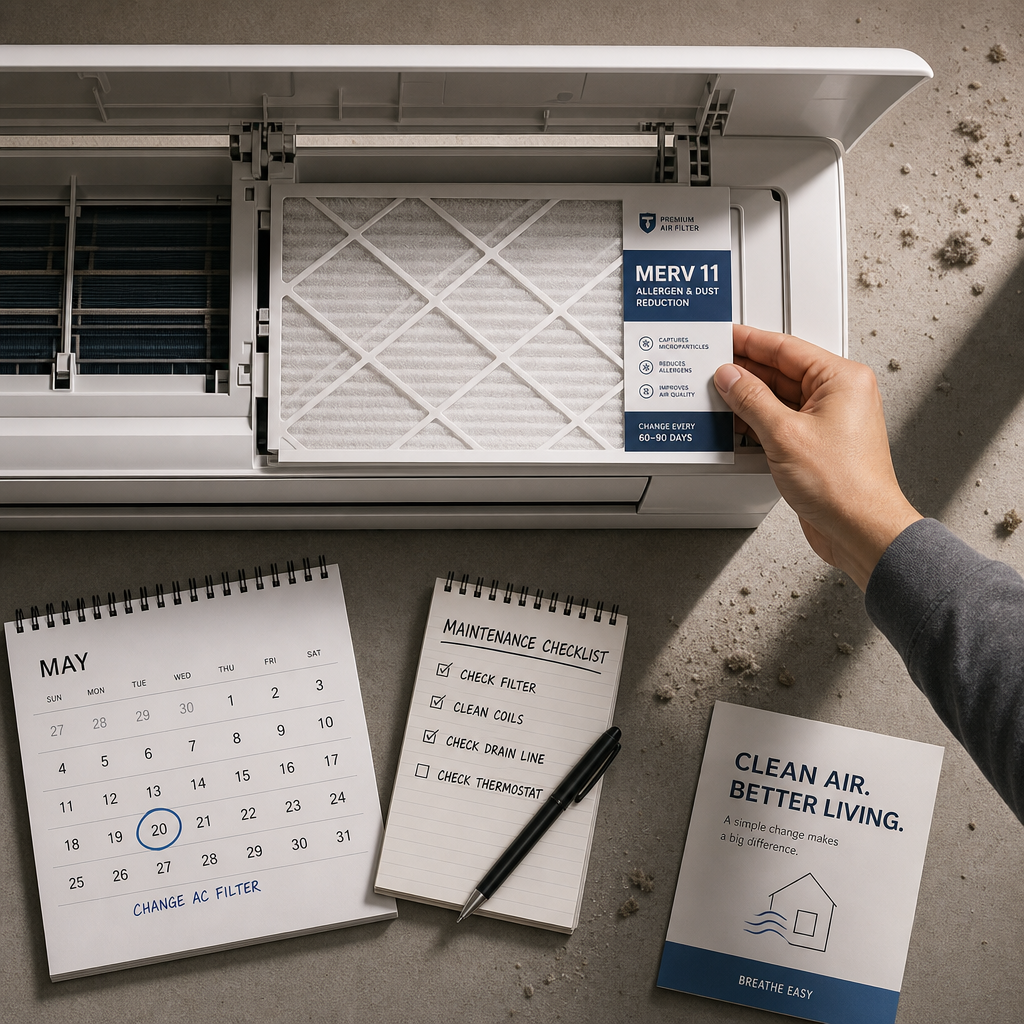
Pleated filters are the right choice for most Arizona residential systems. The increased surface area handles high-volume airflow without restricting it excessively, and the filtration is good enough to catch the fine desert dust that damages system components. For homes with pets or allergy sufferers, MERV 11 is the practical ceiling before airflow restriction becomes a concern on standard residential systems.
High-MERV and HEPA Filters (MERV 13+)
These filters are highly effective at capturing fine particles, but they create significant static pressure in systems not designed for them. In practice, putting a MERV 16 filter in a standard residential air handler in Scottsdale will eventually cause the blower to work so hard that you burn out the motor. If you want HEPA-level air filtration, the right answer is a whole-home air purifier installed as a dedicated component, not a retrofit filter. Brewer's carries and installs dedicated indoor air quality systems that handle this correctly.
Comparison of Filter Replacement Approaches
The table below summarizes the three most common approaches Arizona homeowners take and how each performs during a Phoenix summer.
| Approach | Replacement Frequency in Summer | Real-World Result in Arizona |
|---|---|---|
| Package Label Schedule (every 90 days) | Once per quarter | Filter clogs within 4 to 6 weeks. Reduced airflow strains the compressor. Energy bills rise 10 to 15 percent. Risk of evaporator coil freeze in monsoon humidity spikes. |
| Monthly Inspection and Replacement | Every 3 to 4 weeks | System maintains rated airflow. Energy consumption stays closer to spec. Compressor is protected from heat stress. Recommended by Brewer's technicians for Phoenix-area homes. |
| Bi-Weekly Check with Replacement as Needed | Every 2 to 3 weeks for pet owners and high-dust homes | Best protection for system longevity and indoor air quality. Adds minimal annual cost compared to the expense of a coil cleaning or premature compressor replacement. |
Warning Signs Your Filter Is Already Overdue
Many homeowners in Tempe and Mesa do not find out their filter is clogged until something goes wrong with the system. These are the signs to watch for before that happens.
If your AC is running longer cycles than usual to reach the set temperature, that is often a restricted airflow problem caused by a dirty filter. The system is working harder because less air is getting through the coil. A second clear signal is reduced airflow from your supply vents. Hold your hand near a register. If the air coming out feels weak compared to what you normally expect, check the filter first before calling for service.
Frozen evaporator coils are another consequence of filter neglect that surprises homeowners. When airflow across the coil drops too low, the refrigerant gets too cold and the coil ices over. A frozen coil in July is almost always a dirty filter or low refrigerant, and the filter check costs nothing. Ice on the indoor unit, water pooling near the air handler, or a sudden loss of cooling capacity all point to this problem.
"Replacing a dirty, clogged filter with a clean one can lower your air conditioner's energy consumption by 5 to 15 percent." U.S. Department of Energy, Energy Saver resources on cooling
A dusty smell coming from the vents is a late-stage indicator. By the time you can smell the dust being pushed through the system, the filter has been saturated for a while and particulate has likely started collecting on the coil and duct surfaces. At that point, a filter change alone may not resolve the issue and a professional inspection is worth scheduling.
How Indoor Air Quality Connects to Filter Changes
Arizona homeowners spend a significant portion of the year with their homes sealed against extreme heat. That means your indoor air is recycled constantly through your HVAC system, and what your filter does not capture stays circulating in your living space. The connection between HVAC filter change frequency in Phoenix and indoor air quality is direct and measurable.
The EPA categorizes indoor air quality as a significant health concern, noting that indoor air can be 2 to 5 times more polluted than outdoor air. In Arizona, where monsoon season adds mold spores to an already high-particulate environment, this matters more than it does in most of the country. A clean filter is your first line of defense against circulating allergens, fine dust, and biological particles.
Homes in Ahwatukee and Chandler that are near desert open space deal with particularly high pollen and organic particulate loads during spring and late summer. If you or anyone in your household notices increased allergy symptoms, sneezing, or eye irritation during periods when you should be comfortable indoors, a dirty filter is the first thing to check before assuming it is a seasonal allergy issue that cannot be addressed.
Brewer's Air Conditioning and Heating offers indoor air quality solutions, including whole-home air purifiers and UV light systems, that work alongside regular filter changes to address what a filter alone cannot handle. For households with serious respiratory concerns, that combination is worth discussing with a technician on your next service visit.
Frequently Asked Questions
How often should I change my AC air filter in Arizona during summer?
During peak summer months from May through September, replace your filter every 3 to 4 weeks. If you have pets, live near active construction, or have a single-story home with low return air vents, check every 2 weeks and replace when the filter surface is visibly dirty. The standard 90-day schedule on the package does not apply to Arizona's climate or run times.
What MERV rating is best for Phoenix area homes?
For most standard residential HVAC systems in the Phoenix area, a MERV 8 to 11 pleated filter is the right choice. It captures fine desert dust and allergens without restricting airflow enough to stress the blower motor or compressor. If you want higher filtration than MERV 11 can provide, the correct solution is a dedicated whole-home air purifier, not a higher-rated filter installed in your existing slot.
Does a dirty filter really affect my energy bill?
Yes, and the effect is significant. The U.S. Department of Energy states that replacing a clogged filter with a clean one can reduce AC energy consumption by 5 to 15 percent. During an Arizona summer when your system runs 14 or more hours per day, that translates directly to measurable savings on your APS or SRP bill each month.
Can a clogged air filter damage my AC system?
A clogged filter is one of the leading causes of preventable AC failures in Arizona. Restricted airflow causes the evaporator coil to ice over, forces the blower motor to work beyond its rated load, and makes the compressor run hotter and longer than designed. Over a Phoenix summer, that accelerated stress shortens the lifespan of the most expensive components in your system. A 10-dollar filter change is a reasonable trade against a 1,500-dollar compressor repair.
Should I change my filter more often if there is a dust storm?
Yes. After any significant haboob or dust storm, inspect your filter within 24 hours. Arizona dust storms can push an extreme volume of fine particulate through your return air system in a matter of hours. If the filter looks heavily loaded, replace it immediately regardless of how recently you last changed it. This single habit prevents a large percentage of post-storm AC service calls.
Does it matter what brand of filter I use?
Brand matters less than MERV rating, physical size accuracy, and filter construction quality. Use a pleated filter in the correct size for your return air opening. Avoid fiberglass flat filters for Arizona systems, as they allow fine desert dust to pass through and coat your evaporator coil. Consistent quality from a reliable brand is preferable to switching between whatever is on sale. If you are unsure what size your system requires, a Brewer's technician can confirm it during a service visit.
How does air filter replacement connect to my HVAC warranty?
Both Trane and Lennox, two of the primary brands serviced by Brewer's Air Conditioning and Heating, specify regular filter maintenance as a condition of warranty coverage. Failure to maintain the filter is considered owner negligence and can be cited to deny a warranty claim. Keep a simple log with the date of each filter change. A photo on your phone with the date attached is enough documentation if a warranty question ever comes up.
Have you noticed your AC struggling to keep up during the hottest weeks? Share what your current filter change schedule looks like and whether it has made a difference in your home's performance or comfort.
References
- U.S. Department of Energy official resources on home cooling efficiency and air filter guidance
- U.S. Environmental Protection Agency resources on indoor air quality and airborne particulate matter
- ASHRAE homepage for professional standards on HVAC filtration, MERV ratings, and ventilation guidelines
- Consumer Reports independent testing and ratings for air filters and HVAC maintenance products
- Statista data and statistics on HVAC industry trends, energy consumption, and residential cooling market
About the Author
Mark Ybarra
Mark Ybarra is the owner and leader of Brewer's Air Conditioning & Heating, a trusted HVAC company serving Tempe, Phoenix, Scottsdale, Mesa, and surrounding Arizona communities since 1982. After working in multiple roles within the company, Mark officially took ownership in 2018 and continues to uphold Brewer's long-standing commitment to integrity, exceptional service, and customer satisfaction.
Need HVAC Help?
Serving Phoenix, Tempe, Scottsdale, Mesa & surrounding areas since 1982.